Page | 17
VENTILATION & CHIMNEY CONNECTIONS
1. Vent system installation must be in
accordance with National Fuel Gas Code, ANSI
Z223.1/NFPA 31/NFPA 54 latest revision and
applicable provisions of local building codes.
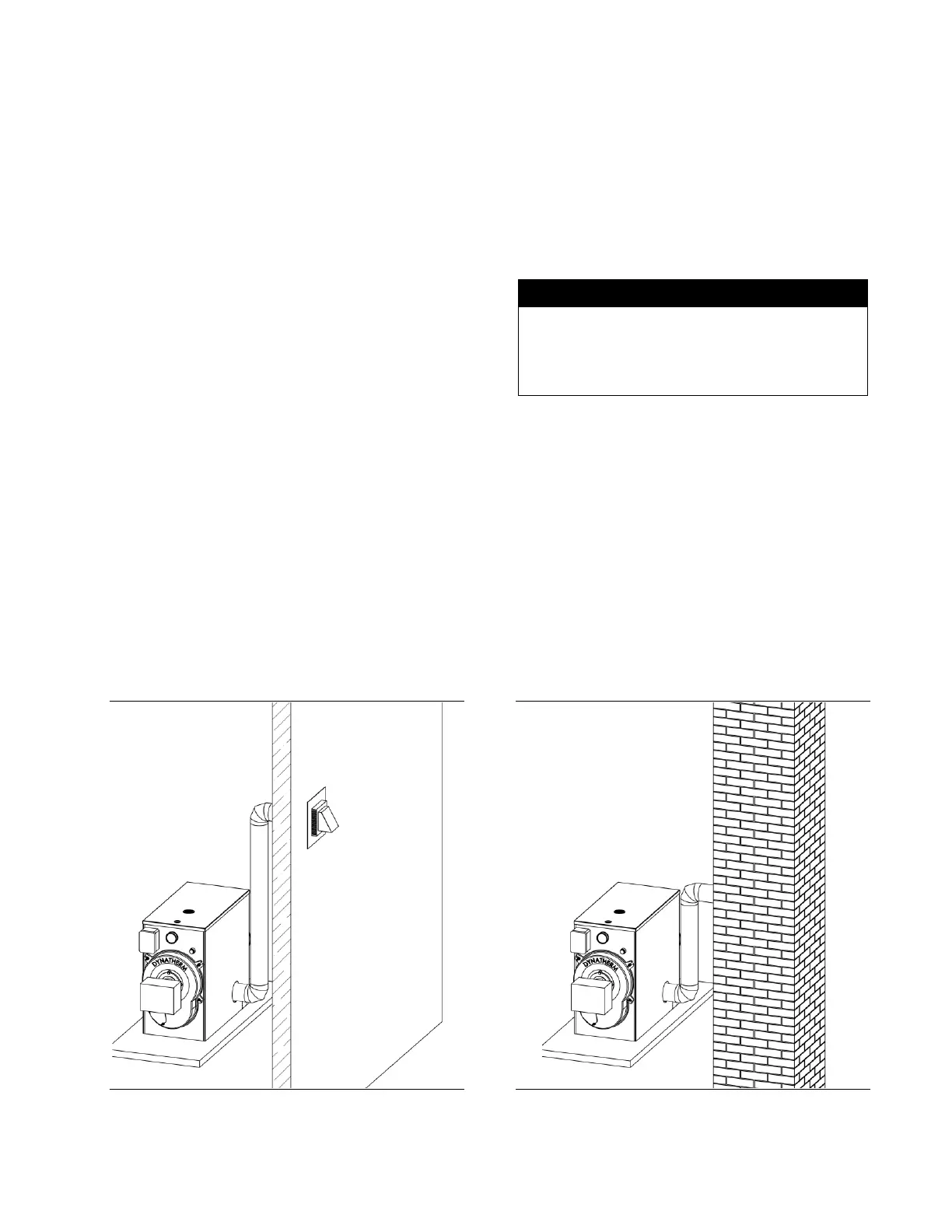
2. Direct vent and chimney vent are the two
applications that are recommended and
approved by Dynatherm™ when installed
according to the proper installation
instructions.
a. See Figures 6 & 7 below for basic
diagrams.
3. A power vent is an optional feature that is
only approved when installed per the power
vent installation instructions.
4. A draft regulator should NOT be installed with
the boiler.
5. The Dynatherm™ boiler is a positive pressure
boiler in which the flue gases are being forced
through the boiler instead of being drawn out
by natural drafts.
6. If venting through the chimney, make sure
the chimney is clean of fly ash or carbon.
7. If the chimney is in poor condition, unlined or
unprotected from precipitation, condensation
will flow down the inside of the chimney and
in some cases, the outside of the chimney.
a. This can be eliminated with the
installation of an H-stack cap or other
stack-capping devices similar to the
Wigwam cap.
8. Since the size of the flue connection is 5"
round, breaching to the chimney or wall
should be a 5" pipe.
The 5” flue cannot be reduced. Reducing the
flue size can cause the boiler to build up
condensation, which could result in property
damage or serious injury and void the warranty.
9. The flue pipe should be as short as possible
and not exceed three 90° elbows in the
chimney or wall breaching.
10. The flue side not being used should be
capped off with a stainless steel flue cap.
11. Because this is a forced draft system, all joints
in the flue pipe must be made gas tight by
sealing with thermosetting pressure sensitive
tape.
12. Do not install a fireplace duct on the same
flue section as the boiler.
Figure 6 – Direct Vent
Figure 7 – Chimney Vent


 To Next Page