
 Need help?
Do you have a question about the ebm-papst R2E225-AX28-29 and is the answer not in the manual?
Defines the meaning of hazard level symbols (DANGER, WARNING, CAUTION, NOTE) used in the operating instructions.
Specifies that the device must only be handled by qualified and trained technical personnel.
Outlines fundamental safety practices, including workplace cleanliness and avoiding modifications.
Emphasizes the importance of guards and protective devices for preventing serious injury from moving parts.
Warns about risks from rotating parts, entanglement of clothing or hair, and the need for safe standstill.
Provides safety precautions for unpacking and installing the device, avoiding damage and ensuring secure mounting.
Details crucial safety steps for electrical hookup, including protective earth connection and using appropriate cables.
Outlines prerequisites for switching on, including proper installation, safety mechanisms, and checks for damage.
This document provides comprehensive operating instructions for the R2E225-AX28-29 device, a built-in component designed for conveying air. It emphasizes safety, proper usage, and maintenance to ensure optimal performance and longevity.
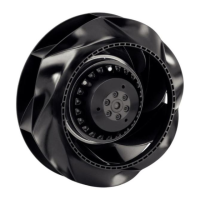
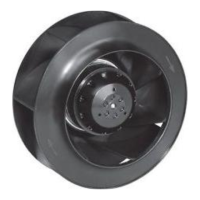
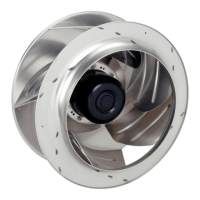
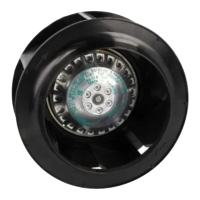
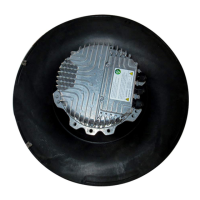
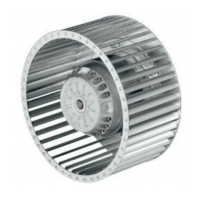
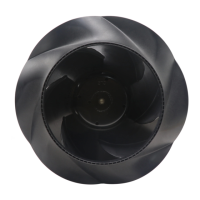
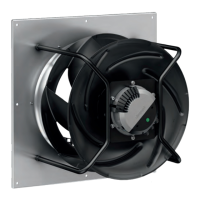
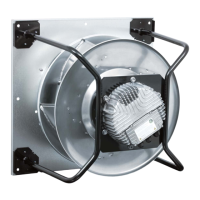
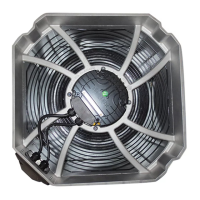
The R2E225-AX28-29 is an external rotor motor fan primarily designed for air conveyance. It operates by drawing in and expelling air, making it suitable for integration into various systems that require controlled airflow. The device is intended to operate within specific ambient air pressure and temperature ranges, ensuring efficient and reliable performance. Its design incorporates a thermal overload protector (TOP) for internal motor protection, enhancing its operational safety. The fan's impeller, made of PA plastic, features eleven blades and rotates clockwise when viewed toward the rotor, facilitating effective air movement. The motor is equipped with ball bearings, designed for maintenance-free operation over a long service life.
The device is designed for straightforward integration into customer applications. It requires a secure mechanical connection, ensuring it is firmly positioned and free from excessive vibration. When connecting to air ducts, it is recommended to use vibration-isolating elements like compensators to prevent damage and ensure smooth operation. Electrical connection involves a single-phase power supply, and it is crucial to match the device's nominal voltage and frequency with the power source. The device has external leads, and the protective earth (PE) connection must be established first for safety. The motor run capacitor, if not pre-installed by the manufacturer, must also match the specified requirements.
The R2E225-AX28-29 is designed to operate with all protective devices in place, and adherence to the provided operating instructions is essential for safe and intended use. It is crucial to avoid operating the device in an unbalanced state, which could be caused by dirt deposits or ice formation, as this can lead to severe vibration and potential damage. Resonant operation or operation with severe vibration, including vibration transmitted from the customer installation, is also prohibited. The device should not be used in medical equipment with life-sustaining functions, nor should it convey solids, abrasive particles, or highly corrosive air, unless specifically designed and protected for such environments. Conveying air with high dust content, such as sawdust, is also considered improper use. The device should not be painted or operated near flammable materials or in explosive atmospheres.
Voltage control can be implemented, but it is important to note that current overshoots may occur with transformers or electronic voltage regulators (e.g., phase control), potentially leading to noise, vibration, and bearing damage. If using a variable frequency drive, sinusoidal filters on all poles (phase-phase and phase-ground) between the drive and the motor are recommended to protect against high-voltage transients and harmful bearing currents. The heating-up of the motor when using voltage control or variable frequency drives must be checked by the customer after installation.
Regular maintenance is crucial for ensuring the long service life and proper operation of the R2E225-AX28-29. This includes routine checks for proper operation and soiling, with the frequency of checks adjusted based on the degree of soiling in the operating environment.
Cleaning: The preferred method for cleaning the device is dry cleaning, typically using compressed air. It is imperative to clean the fan only when it is not in motion, with the power supply interrupted and secured against renewed switch-on. Aggressive cleaning agents, water jets, or high-pressure cleaners must not be used, as they can damage the device. Acids, alkalis, or solvent-based cleaning agents are also prohibited. Pointed or sharp-edged objects should not be used for cleaning. All cleaning agents must be completely removed after cleaning. Dirt deposits on the motor housing can cause overheating, while soiling of the impeller can lead to vibration, shortening the fan's service life. If severe vibration occurs, the fan should be switched off immediately and cleaned. If cleaning does not eliminate vibrations, rebalancing may be necessary, and the manufacturer should be contacted. If severe corrosion is visible on load-bearing or rotating parts, the device must be switched off immediately and replaced, as repairing such parts is not permitted. After cleaning, operating the fan at maximum speed for two hours can help evaporate any ingressed water.
Safety Inspection: Regular safety inspections are vital. These include visual inspections of the contact protection cover for intactness or damage, and checks for damage to blades and housing, performed at least every six months. Any damaged parts should be repaired or replaced. Fastening of cables and the protective earth terminal should be visually inspected at least every six months and refastened if loose. Insulation of cables should be checked for damage, and defective cables replaced. The impeller should be inspected for wear, deposits, corrosion, and damage, and cleaned or replaced as needed. Condensation drainage holes should be checked for clogging and cleared if necessary. Abnormal bearing noise, detected acoustically, indicates a need to replace the device.
Disposal: For ecological disposal, the product components should be separated into categories such as steel and iron, aluminum, non-ferrous metals (e.g., motor windings), plastics (especially with brominated flame retardants), and insulating materials. Ferrite magnets, used in external rotor motors, can be disposed of in the same way as normal iron and steel. Electrical insulating materials, cables, and wires, being made of similar materials, should be treated similarly. Electronic components, including circuit boards and electrolytic capacitors, should be disposed of according to proper procedures for electronic scrap. Due to the presence of heavy parts, disassembly should be performed or supervised by qualified personnel, with components secured to prevent them from falling and causing injury or damage.
By following these guidelines, users can ensure the safe, efficient, and long-lasting operation of the R2E225-AX28-29 device, while also adhering to environmental protection standards.
 General
| Manufacturer | ebm-papst |
|---|---|
| Model Number | R2E225-AX28-29 |
| Category | Fan |
| Type | Axial Fan |
| Voltage | 230 V |
| Frequency | 50/60 Hz |
| Air Flow | 90 m³/h |
| Housing Material | Plastic |
| Impeller Material | Plastic |
| Protection Class | IP54 |



 To Next Page