OPERATION SRM-2120
32 X7507821400
© 10/24 ECHO Incorporated
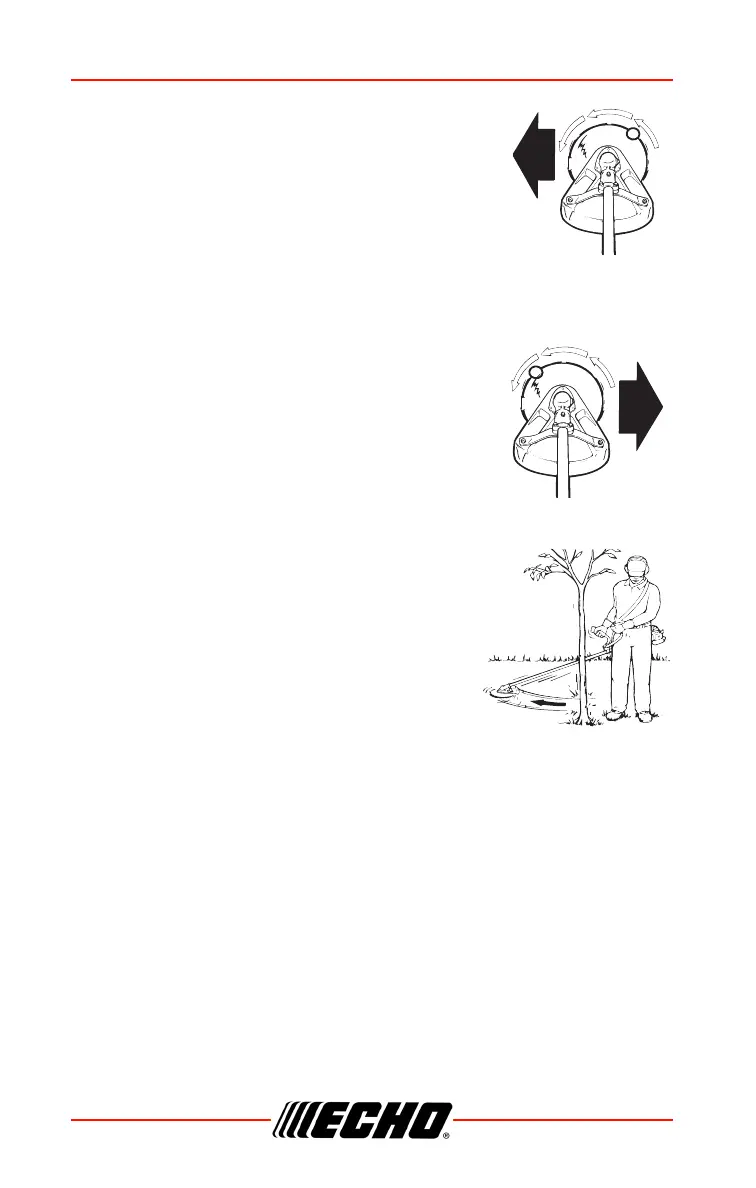
Kickout
Kickout is also a reactive force caused by
resistance to cutting, but the direction of blade
thrust is lateral (to the left or right of the blade),
instead of forward or back toward the operator. In
most cases, Push, Pull, and Kickout can be
reduced or eliminated by:
• Using the correct blade for the cutting job
• Using properly sharpened blades
• Applying consistent, even force to the blade during
the cut
• Avoiding obstacles and ground hazards
• Using extra care when cutting harder materials
such as extremely dry brush, saplings, and small
trees
• Cutting from a stable, secure position
Blade Cutting Problems
Binding - Blades may bind in the cut if dull or
forced. Binding can damage blade, and result in
blade breakage or injury from fragments and flying
debris. If a blade binds in a cut, don’t try to get it
out by applying “up and down” force to pry the cut
open. Applying prying force to the blade can bend
the blade, and result in blade failure and injury.
To free a blade that is bound in the cut, stop the
unit, and support the trimmer or brushcutter to keep stress off the blade.
Push the tree away from the entry point of the cut to open the cut, and pull
the blade directly away from the cut in a straight-line motion. Use caution
when releasing the tree to avoid being struck by spring-back or falling.
Inspect the blade for damage before proceeding. Sharpen teeth if dull, or
replace blade if cracked, bent, missing teeth, or otherwise damaged.
To prevent binding:
• Keep blades sharp
• Avoid excessive pressure during cutting
• Do not exceed cutting capacity of blade
• Do not use blades with damaged or missing cutting teeth
• Do not tilt blade during cutting


 To Next Page