63
NITROGEN PURITY AND FLOW RATE PROCEDURES
Nitrogen Purity Level Check Procedure
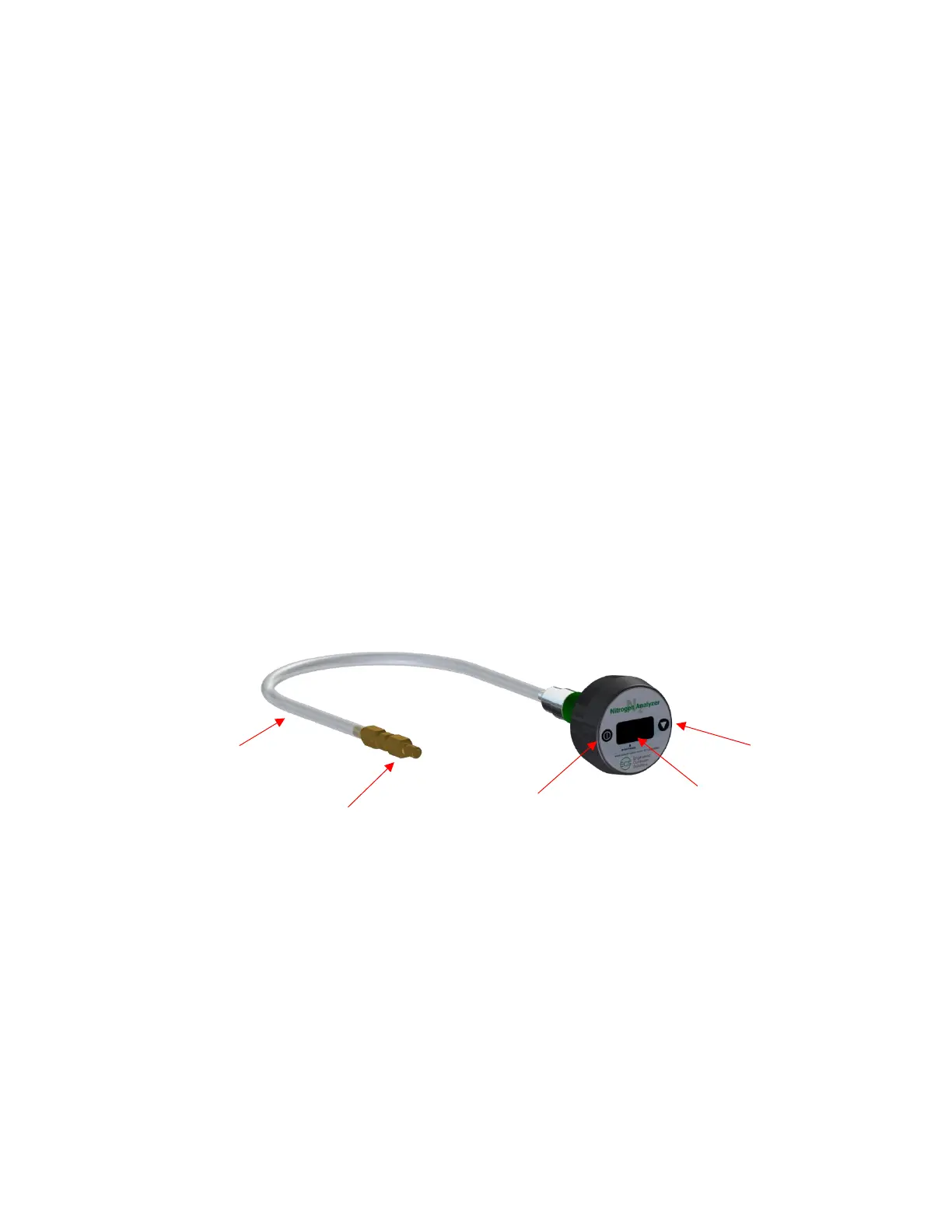
Nitrogen purity level in the fire sprinkler system can be checked by inserting the Handheld Gas Analyzer
(PHGA-1) into the nitrogen sampling port in the nitrogen generator cabinet or the gas sampling port on
the PAV-D/DQ and PSV-D/DE Vents.
1. Power On the PHGA-1 by pressing the power on button.
2. Calibrate the PHGA-1 by pressing and holding the calibration button for three (3) seconds until
CAL is displayed.
NOTE: To calibrate analyzer, unscrew sampling hose from analyzer and move back and forth until
reading is displayed.
a. PHGA-1 must be recalibrated if nitrogen percentage displayed is above 80.1% or below
78.1% when reading normal atmosphere, not connected to the nitrogen generator
cabinet/vent.
b. Recommended to recalibrate analyzer daily when in use.
3. Once the PHGA-1 is calibrated, insert the quick disconnect of the sampling hose into the sampling
port in the nitrogen generator cabinet/vent.
NOTE: Nitrogen generator must be operating (running) and in Nitrogen Production Mode to
sample nitrogen in cabinet.
Vent must be open to sprinkler system pressure to sample nitrogen in sprinkler system.
4. Allow one (1) minute for the PHGA-1 to stabilize, verify and document reading on PHGA-1
(nitrogen level should be approximately 98%). If nitrogen level from generator is below 96%,
contact ECS.
Handheld Gas Analyzer - Factors Influencing Accurate Readings
1. Elevation changes will affect the accuracy of the nitrogen purity readings. The deviation of the
nitrogen purity can be approximately 1% per 250 feet of elevation.
a. Calibration of the instrument should be performed when elevation at which the product
used changes more than 500 feet.
2. Temperature effects the accuracy of the nitrogen purity readings. The gas analyzer will hold
calibration and correctly read nitrogen purity ±3% when thermal equilibrium within the operating
temperature range. The device must be thermally stable when calibrated and allowed to
thermally stabilize after experiencing temperature changes before readings are accurate.
a. For best results, perform the calibration procedure at a temperature close to the
temperature where analysis will occur.
b. Allow adequate time for the sensor to equilibrate to a new ambient temperature.


 To Next Page