3-14
4125 SIDE SCAN SONAR SYSTEM 0004823_REV_C
3
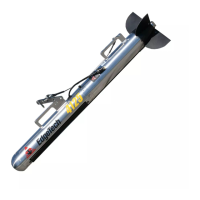
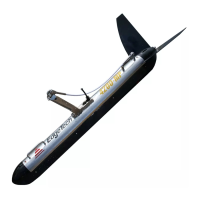
The 4125 Tow Vehicle can be towed at speeds of up to 4.8 knots while still meeting NOAA and IHO-44S
specifications of 3 pings on a 1-meter cubed target at 100 meters. Shown in Figure 3-6 is a 4125 Tow
Vehicle being deployed.
CAUTION
The deployment instructions below are only meant as a general guide.
Due to varying conditions, exact deployment methods will change and it
is up to the end user to modify their deployment procedure to match the
conditions they are working under.
CAUTION!
When lowering the tow vehicle in an area where the bottom topography
is not known, be careful not to strike the bottom or a submerged object.
Otherwise, damage to the tow vehicle may occur. In addition, at all times
during the survey, carefully monitor tow vehicle altitude, as failure to do
so may result in the tow vehicle hitting the bottom or becoming snagged.
CAUTION!
Do not tow the tow vehicle too close to the survey vessel. Towing in this
manner can cause the tow vehicle to be pulled in against the hull of the
ship due to the low pressure of the propeller wash and the effect of the
water flowing by the hull. In addition, sonar reflections from the hull may
be evident in the records.
CAUTION!
Do not tow the tow vehicle with the nose angled up or down. Doing so can
degrade the sonar imagery. Verify that the tow vehicle is as level as
possible when towing it. Adjust the position of the tow arm so the towfish
is as level as possible.



 To Next Page