22
Interval cooking
Continuously alternating steaming and hot air
This form of preparation is specially suitable for:
• Roasting large pieces of meat and for baking
bread.
• Defrosting and heating pre–cooked, portioned
meals. Large pieces of meat should be cut up be-
fore heating.
Use normal baking moulds or heat–resistant
moulds and baking ware.
The temperatures depend on the type of food. Around
120°C to 160°C for heating. For baking and roasting
correspondingly higher.
Details can be found in the table on page 35.
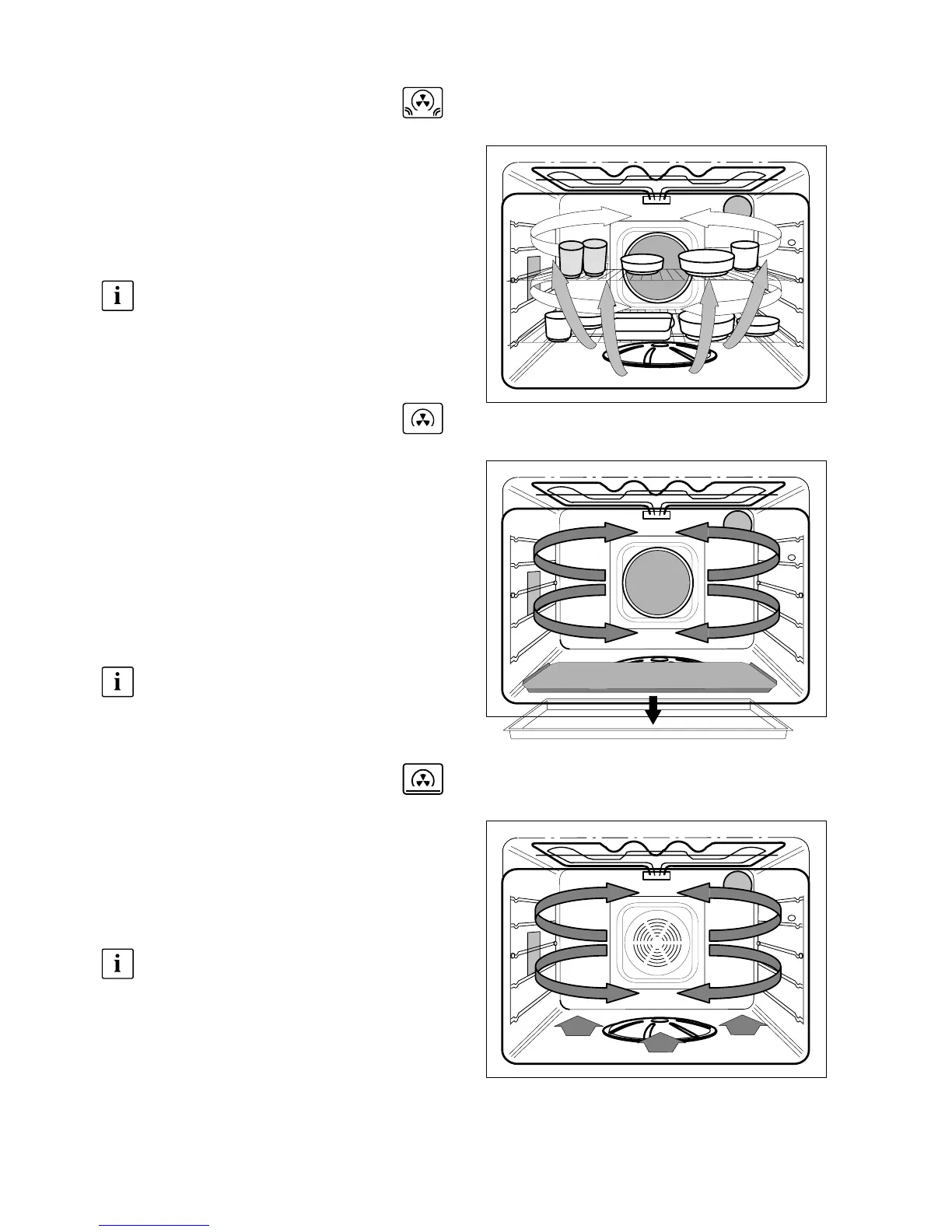
Hot air
The oven is heated by circulating hot air. The fan at the
oven back wall intensively moves the hot air in the oven
and thus ensures even cooking. Any temperature be-
tween 40 and 230 °C can be selected.
With the hot air function, heat is supplied to the food
more quickly than by the conventional method. The
temperature can therefore be set around 25 °C lower
for top and bottom heat than stated in recipes.
Depending on the food you can use up to 3 runner le-
vels. Refer to the baking and roasting table page 36.
You can avoid excessive soiling like this:
In case of fatty roasts, with hot air and turbo-
grill, use the high rim baking tray with the in-
sertion sieve – this one is available as optional
extras.
Pizza setting
The application of the pizza setting function is advan-
tageous when baking pizzas, fruit or curd pies on the
sheet or quiches, etc. This setting combines hot-air
function and bottom heat.
The radiant heat results in strong crust formation and
avoids a thorough wetting of the dough.
Roasting or baking at equal temperature may
take place in two upper runner levels, however,
without the effect of radiant heat.
Exchange the sheets after half the cooking
time.
Refer to the baking and roasting table page 39.



 To Next Page