21
Manual Supplement
00809-0200-4853, Rev AB
Rosemount 3051S Series Pressure Transmitter
November 2017
Rosemount 3051S Series Pressure Transmitter
6.15 PIL detection technology
PIL basics
Pressure transmitters are used in pressure, level, and flow measurement applications. Regardless of
application, the transmitter is rarely connected directly to the pipe or vessel. Small diameter tubes or
pipes commonly called impulse lines are used to transmit the pressure signal from the process to the
transmitter. In some applications, these impulse lines can become plugged with solids or frozen fluid in
cold environments, effectively blocking the pressure signals (Figure 13). The user typically does not
know that the blockage has occurred. Because the pressure at the time of the plug is trapped, the
transmitter may continue to provide the same signal as before the plug. Only after the actual process
changes and the pressure transmitter’s output remains the same may someone recognize that plugging
has occurred. This is a typical problem for pressure measurement, and users recognize the need for a
plugged impulse line diagnostic for this condition.
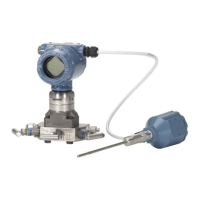
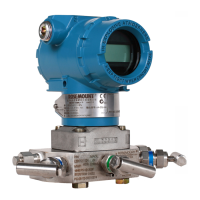
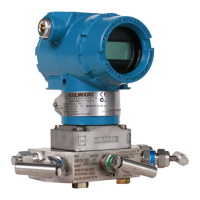
Figure 13. PIL Basics
Testing at Emerson and other sites indicates that SPM technology can detect plugged impulse lines.
Plugging effectively disconnects the transmitter from the process, changing the noise pattern received
by the transmitter. As the diagnostic detects changes in noise patterns, and there are multiple sources of
noise in a given process, many factors can come into play. These factors play a large role in determining
the success of diagnosing a plugged impulse line. This section of the product manual will acquaint users
with the basics of the plugged impulse lines and the PIL diagnostic, the positive and negative factors for
successful plugged line detection, and the do’s and don’ts of installing pressure transmitters and
configuring and operating the PIL diagnostic.
6.16 PIL physics
The physics of PIL detection begins with the fluctuations or noise present in most pressure and
Differential Pressure (DP) signals. In the case of DP flow measurements, these fluctuations are produced
by the flowing fluid and are a function of the geometric and physical properties of the system. The noise
can also be produced by the pump or control system. This is also true for pressure measurements in flow
applications, though the noise produced by the flow is generally less in relation to the average pressure
value. Pressure level measurements may have noise if the tank or vessel has a source of agitation. The
noise signatures do not change as long as the system is unchanged. In addition, these noise signatures
are not affected significantly by small changes in the average value of the flow rate or pressure. These
signatures provide the opportunity to identify a plugged impulse line.



 To Next Page
 Loading...