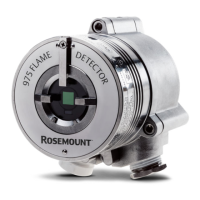
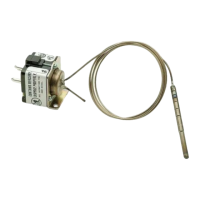
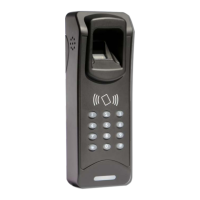
2 Installation
2.1 Installation guidelines
Installation should comply with the National Fire Protection Association (NFPA) 72E or any
other local and international regulations and standards, as applicable to flame detectors
and installation of Ex approved products. To ensure optimal performance and efficient
installation, consider the following guidelines.
Sensitivity
To determine the level of sensitivity, consider the following:
• Size of fire at the required distance to be detected
• Type of flammable materials
• Proximity to false alarm sources
Wiring
The wire gauge must be designed according to the distance from the detector to the
controller and the number of detectors on the same power line.
To fully comply with EMC directive and protect against interference caused by radio
frequency interference (RFI) and electromagnetic interference (EMI), the cable to the
detector must be shielded and the detector must be grounded. The shield should be
grounded at the detector end.
Spacing and location
The number of detectors and their locations in the protected area are determined by:
• Size of the protected area
• Sensitivity of the detectors
• Obstructed lines of sight
• Cone of view of the detectors
Environment
Dust, snow, or rain can reduce the detector’s sensitivity and require more maintenance
activities.
The presence of high intensity emission sources may affect sensitivity.
2.2
Preparation for use
The installation sequence may vary according to the physical structure of the site.
Note
Installation steps are also detailed in the Rosemount 975 Quick Start Guide supplied with
the detector.
The following tools are required for installation. These are standard tools and are not
supplied with the detector.
Manual Installation
00809-1400-4975 September2023
Rosemount 975 9



 To Next Page