20
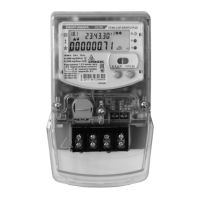
The terminals for connecting the meter to the network, to interface lines and to pulse outputs are closed with a
transparent terminal cover.
3 PREPARING THE METER FOR OPERATION
3.1 Unpacking
3.1.1 After unpacking, inspect the meter visually, verify that there are no mechanical damages, and check the
presence and integrity of the seals.
3.2 Preparing for operation
3.2.1 The meters produced by the manufacturer have factory settings. Changes to factory settings are made in
accordance with the САНТ.411152.107-05.1 РП by companies authorized to configure the meter.
ATTENTION! PRESENCE OF READINGS ON THE METERING DEVICE IS CAUSED BY CHECKING THE METER
AT THE MANUFACTURER’S, AND DOES NOT ATTEST TO ITS WEAR OR OPERATION.
3.3 Installation procedure
3.3.1 Connect the electric meter to a three-phase AC network with a rated voltage indicated on the meter panel.
To do this, remove the terminal cover of and connect the lead wires by securing them in the terminals of the block
according to the wiring diagram printed on the cover, or on the front panel, or in Annex C.
When installing a meter, the wire (cable)
2
must be stripped of insulation to approximately the amount shown in
Table 4. The stripped part of the wire should be smooth, without bends. Insert
the wire into the terminal clamp without tilts. It is not allowed to get a wire with insulation into the clamping area,
as well as for the stripped area to protrude outside the block. First, tighten the top screw. Pull the wire lightly to make
sure that it has been clamped. Then tighten the bottom screw. After several minutes, tighten the connection again.
The diameter of the wires connected to the meter is shown in Table 3.1.
2
The range of the wire diameter is specified based on the possibility of its connection to the meter block. The required cross-section
(and therefore the diameter) of the wire is selected depending on the value of the maximum current.


 To Next Page