6
1.5 Insulation resistance between the casing and electrical circuits, at least:
20 MΩ — under conditions of clause 2.5;
7 MΩ – at an ambient air temperature (40±2) °С, relative air humidity of 93%.
1.6 The meter must be installed and operated in accordance with the applicable rules for technical operation of
electrical installations.
1.7 Do not put foreign objects on the meter, avoid bumps.
2 METER DESCRIPTION
2.1 Purpose
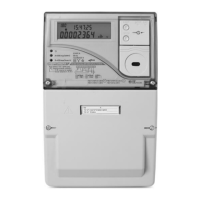
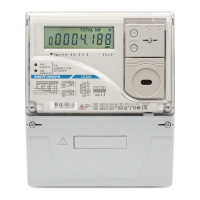
The meter is three-phase, transformer connection or direct connection (depending on the version), it is designed
to measure active and reactive electrical energy in three-phase four-wire AC circuits.
The meter has the following functions:
• multi-tariff electricity metering (with three tariffing levels - event-based, external and time-based tariffing);
• maintenance of the retrospective (recording the current values of energy storage devices: at the end of the
billing period (month), at the end of the day, at the end of the year and upon occurrence of a specific event);
• maintaining a load profile, with the ability to customize the type of the parameters stored and the averaging
time;
• measuring network parameters: voltage frequency, phase currents, phase voltages, phase-to-phase (line)
voltages (with non-standardized accuracy), angles between current and voltage by phases; power factor by phases
and the three-phase power factor, active, reactive, full power by phases and total;
• measuring Unified Power Quality Index (UPQI) in accordance with class «S» of the measurement process
specifications in IEC 61000-4-30:2008: stable voltage deviation, network frequency deviation, duration and depth
of voltage dips, duration and maximum value of overvoltage, interruptions in power supply;
• power quality analysis for compliance with quality standards in accordance with EN50160:2010;
• indicating the instance of violating an individual power quality indicator on the LCD (disabled by default);


 To Next Page