Need help?
Do you have a question about the Envertech EVT800 and is the answer not in the manual?
Important instructions for installation and maintenance of the EVT800 microinverter.
General safety guidelines and precautions for using Envertech equipment safely.
Explains how the microinverter maximizes energy production via MPPT for each PV module.
Presents technical specifications and data for the EVT800 microinverter.
Procedure for energizing the system by turning on circuit breakers.
Explanation of LED status lights and common error reporting.
Step-by-step guide to diagnose and fix an inoperable microinverter.
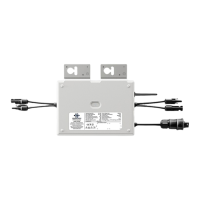
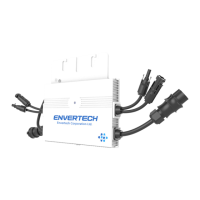
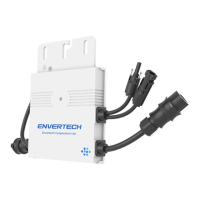
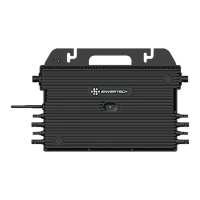
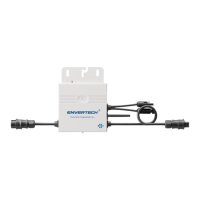
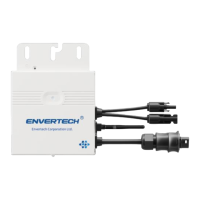
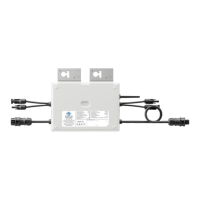
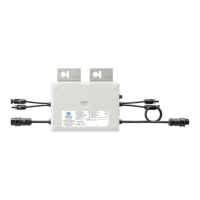
The Envertech EVT800-B is an on-grid microinverter system designed to maximize energy production from photovoltaic (PV) arrays. This system utilizes world-top-class technology to convert the direct current (DC) generated by PV modules into alternating current (AC) for use in a utility grid. The microinverter is a key component in a distributed PV system, offering enhanced reliability and simplified design compared to traditional inverter systems.
The primary function of the EVT800-B microinverter is to convert the DC power from individual PV modules into AC power that can be fed into the utility grid. Each EVT800-B microinverter is designed to connect to one or two PV modules, allowing for individual Maximum Peak Power Point Tracking (MPPT) for each module. This unique configuration ensures that the maximum power available from each PV module is exported to the utility grid, regardless of the performance of other PV modules in the array. This means that even if individual PV modules are affected by shading, soiling, orientation, or module mismatch, the Envertech microinverter optimizes the performance of its associated PV module, resulting in maximum energy production from the overall PV system.
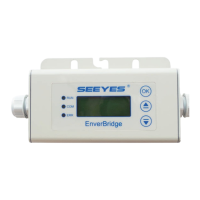
The Envertech microinverter system also includes optional monitoring capabilities through the EnverBridge device, the EnverPortal web platform, and the EnverView mobile app (available for iOS and Android). These tools allow users to view real-time and historical performance data of their solar system, enabling effective energy harvest management and system reliability monitoring. The EnverBridge acts as a communication gateway, collecting data from the microinverters and reporting it to the EnverPortal server.
The EVT800-B microinverter system is designed for simple installation and operation. PV systems using Envertech microinverters are highly flexible in design, allowing for combinations of PV modules of any type, orientation, and quantity. The microinverters can be quickly mounted on the PV rack, directly beneath each PV module, which eliminates the need for cumbersome traditional inverters. Low voltage DC wires connect directly from the PV module to the co-located microinverter, mitigating the risk of exposure to dangerously high DC voltage.
Installation involves several key steps: verifying grid and PV panel voltage compatibility, mounting microinverters onto the rack (with the trademark facing downward to avoid rain and sun), grounding the system according to national standards, installing a Wi-Fi antenna for better signal, fastening AC cables, connecting to the grid (either directly to an air switch or via a plug), and finally, connecting PV modules to the microinverters. Once all connections are complete, the PV system can be switched on. The microinverter will start producing power approximately 3 minutes after the main AC circuit breaker is turned on. The entire system is typically detected within 10 minutes as microinverters communicate through the power lines to the EnverBridge.
The EVT800-B also features a built-in Wi-Fi module, allowing direct connection to a router for monitoring purposes. Wi-Fi configuration can be done via the EnverView app or through a computer's WLAN settings by connecting to the microinverter's serial number and accessing a web interface. This allows users to register their system and bind microinverters for monitoring through the EnverPortal or EnverView app. The system supports local mode operation using a USB flash drive with an EnverBridge device for historical data query and time calibration.
The microinverter is equipped with a range of protective functions, including internal overvoltage/undervoltage protection, faulty grounding protection, grid monitoring, and current monitoring in grounding DC current. These features contribute to the system's overall safety and reliability.
The Envertech EVT800-B microinverter is designed for optimal reliability and minimal maintenance. Its distributed nature ensures that there is no single point of failure in the PV system, enhancing overall system uptime. The microinverter casing is designed for outdoor installation and complies with the IP67 protection level, offering robust protection against environmental elements.
For troubleshooting, the microinverter provides LED status indications. A blinking green LED indicates normal start-up operation, while a continuously red blinking LED signifies an issue, such as waiting for sufficient sunlight, or an inability to detect the utility grid within operable voltage/frequency range. If the LED blinks red after DC power is applied, it indicates a start-up failure.
Troubleshooting an inoperable microinverter involves a systematic approach: checking AC breakers, verifying grid connection and voltage within allowable ranges, confirming AC line voltage at the junction box, ensuring proper AC branch circuit connection (including checking for damage), and re-connecting PV modules' DC connectors. It is crucial to disconnect AC power before disconnecting PV modules from the microinverter. The AC and DC connectors are rated as disconnecting points only when used with an Envertech microinverter.
The EVT800-B microinverter contains no user-serviceable parts. Users are explicitly warned not to attempt repairs, as this will void the warranty. In case of failure, users should contact Envertech customer service or their direct supplier to initiate the replacement process and obtain an RMA (Return Merchandise Authorization) number.
For proper disposal, the device should not be discarded with residential waste. Envertech encourages users to return the equipment to their dealer for recycling or send it to an approved recycling unit in their area, in compliance with regulations on recycling management of electrical and electronic wastes. This ensures environmentally responsible end-of-life treatment for the device.

 To Next Page

 General