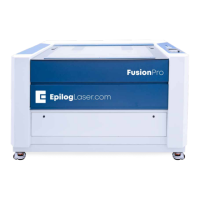
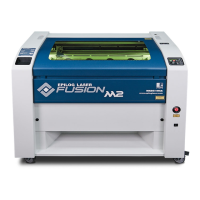
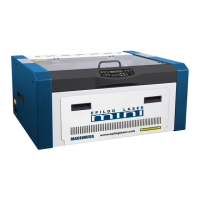
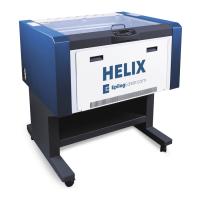
This document outlines the procedure for upgrading an Epilog Laser Mini or Helix engraver with a new laser tube. The upgrade process is divided into several key procedures, starting with the removal of the old laser tube, followed by the installation of an adapter bracket, potentially new fans, a new power supply unit (PSU) bracket, and finally, the new laser tube itself. The manual emphasizes safety precautions throughout the process, particularly when dealing with electrical components and heavy objects.
Function Description
The Epilog Laser Tube Upgrade is designed to replace the existing laser tube in an Epilog Mini or Helix engraver, likely to enhance performance, replace a faulty component, or upgrade to a different laser power. The laser tube is the core component responsible for generating the laser beam used in engraving and cutting operations. By upgrading the laser tube, users can ensure their engraver continues to operate effectively and efficiently, potentially achieving better engraving quality or faster processing speeds depending on the new tube's specifications. The upgrade also involves installing supporting components like an adapter bracket and, in some cases, new fans and a PSU bracket, which are crucial for the proper functioning and integration of the new laser tube within the existing engraver chassis.
Usage Features
The upgrade process is a hands-on procedure requiring the user to interact directly with the internal components of the engraver. It involves disconnecting and reconnecting various electrical cables and data lines, unscrewing and screwing in mounting hardware, and carefully handling delicate and heavy components.
- Tool Requirements: The procedure necessitates a standard set of tools, including a Phillips Head Screwdriver, SAE (US Sized) Allen Keys, Locking Pliers, and a Nut Driver/Wrench (5/16"). These tools are essential for disassembling and reassembling the engraver's internal structure and securing the new components.
- Component Handling: Users will need to carefully handle the old and new laser tubes, which can weigh between 10 and 20 lbs (4.5 to 9 kg). The manual explicitly cautions users to take proper precautions when lifting heavy objects to prevent injury or damage to the equipment.
- Electrical Disconnection: A critical first step is to ensure the engraver is powered off and unplugged before beginning any work. This is a fundamental safety measure to prevent electrical shock. The process involves disconnecting several electrical connections, including the Red Dot Pointer, Grey Data Cable, and the Red and Black Power Harness from the laser tube and the PSU.
- Mechanical Installation: The installation involves several mechanical steps:
- Removing the Old Laser Tube: This includes unscrewing captive green thumb screws and sliding the tube out of its mounting.
- Installing the Adapter Bracket: This requires removing an existing shoulder screw and a spacing standoff, then fastening the new MT266 adapter bracket with a new shoulder screw and provided screws. This bracket is crucial for adapting the new laser tube to the existing engraver chassis.
- Installing New Fans (Optional): For specific Mini 24 and Helix models, the procedure may involve replacing the fan tray. This includes locating and unplugging the fan wire harness, removing the wire harness holder, and then removing and replacing the fan tray by unfastening and fastening nuts. This step is designed to ensure adequate cooling for the new laser tube, which might have different thermal requirements.
- Installing the New PSU Bracket (Optional): If the engraver has a specific type of silver PSU (Figure A), the PSU needs to be rotated and a new MT525 bracket installed. This involves disconnecting PSU output and power receptacle wires, unscrewing the PSU, removing its old mounting bracket, rotating the PSU, and then fastening the new bracket. This reorientation and new bracket ensure the PSU fits correctly with the new laser tube setup.
- Installing the New Laser Tube: The new laser tube is installed by aligning its mounting bracket slots with shoulder screws on the engraver chassis, hanging the tube, and then sliding it into place. Finally, the three green thumb screws are tightened to secure the laser tube.
- Electrical Reconnection: After mechanical installation, all previously disconnected electrical and data cables must be reconnected. This includes the Red and Black power wires, the Grey data cable, and the thin Red and Black red dot pointer wires.
- Rear Panel Replacement: After all internal components are installed and connected, any loose wires are tucked away, and the rear panel of the engraver is replaced. If a new PSU bracket was installed, a new rear panel might be provided to accommodate the PSU's new orientation.
- Post-Installation Alignment: The manual explicitly states that after the installation, the laser must be aligned before use. This is a critical step to ensure the laser beam is accurately directed for precise engraving and cutting.
Maintenance Features
While the document primarily focuses on the upgrade procedure, it implicitly touches upon maintenance aspects by providing detailed instructions for component replacement.
- Component Replacement: The entire document is a guide for replacing a major component (the laser tube) and its associated parts. This detailed instruction set serves as a maintenance guide for users who need to perform this specific upgrade or replacement.
- Safety Precautions: The emphasis on powering off and unplugging the engraver, as well as the caution regarding hazardous electrical current and handling heavy objects, are crucial maintenance safety protocols. These precautions are designed to protect the user and prevent damage to the equipment during any internal work.
- Technical Support: The manual directs users to contact Epilog Technical Support if they encounter any problems or require alignment instructions. This highlights the availability of professional assistance for complex issues that may arise during or after the upgrade, ensuring that users can maintain their engraver's functionality.
- Optional Upgrades: The inclusion of optional fan and PSU bracket installations suggests that the upgrade process can also address potential maintenance needs related to cooling or power supply compatibility, ensuring the longevity and optimal performance of the engraver with the new laser tube.

 Need help?
 General

 To Next Page