24
After Sales Support
(AU) 1300 886 649 (NZ) 0800 836 761 | tempo.org/support
Installation (Cont.)
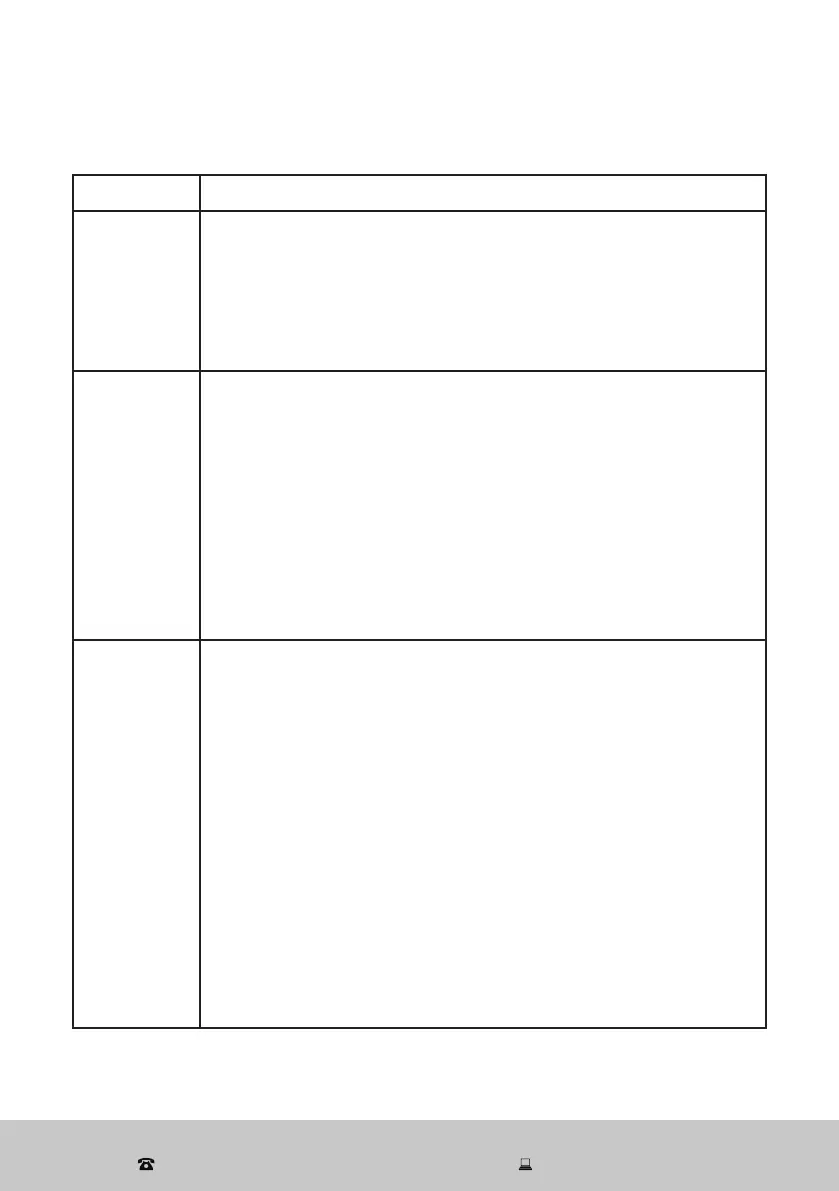
Complete the following inspections before attempting a test run.
Description Inspection method
Electrical
safety
inspection
• Check whether the power supply voltage complies with the
required specification.
• Check whether there are any incorrect or missing connections
between the power lines, signal line and earth wires.
• Check whether the earth resistance and insulation resistance
comply with requirements.
Installation
safety
inspection
• Confirm the direction and smoothness of drainage pipe.
• Confirm that the joint of refrigerant pipe is installed fully and
properly.
• Confirm the safety of outdoor unit, mounting plate and
indoor unit installation.
• Confirm that the valves are fully open.
• Confirm that there are no foreign objects or tools left inside
the unit.
• Ensure that the installation of indoor unit air inlet grille and
panel has been completed.
Refrigerant
leakage
detection
• Ensure that no refrigerant is leaking from the piping joint, the
connector of the two valves of the outdoor unit, the valve
spool, the welding port, etc., where leakage is likely to occur.
• Foam detection:
Apply soapy water or foam evenly to the areas where leakage
may occur, and observe for any bubbles. If no bubbles
appear, it indicates that there are no leaks.
• Leak detection:
Use a professional leak detector and follow the operation
instructions to detect potential leakage points. Each position
should be tested for at least 3 minutes.
If leakage is detected, tighten the nut and retest until no
leakage is present.
Upon completion of leak detection, insulate the exposed pipe
connector of the indoor unit with thermal insulation material
and wrap it with insulation tape.


 To Next Page