1
In order for your child to use this child restraint
safely in the rear-facing position, they MUST
meet all of the following requirements:
• 2.3 to 18 kg (5 to 40 lbs) AND
•At least 48 cm (19 inches) tall AND
•Top of head is at least 25 mm (1 inch) below
the top of the child restraint seat back.
DO NOT use this or any child restraint with a
premature infant until after consulting your doctor.
Premature infants may have difficulty breathing
when in a sitting position.
The American Academy of Pediatrics recommends that
children ride in the rear-facing position to the highest
weight or height allowed by the child restraint.
Note: Once your child exceeds 18 kg (40 lbs) OR
is 94 cm (37 inches) tall OR the top of their head is
within 25 mm (1 inch) of the top of the child re-
straint seat back, they MUST use this child restraint in
the forward-facing position.
In order for your child to use this child restraint
safely in the forward-facing position, they MUST
meet all of the following requirements:
•10to22.6kg(22to50lbs)AND
•
Between 71 and 119 cm (28 and 47 inches) tall AND
•Atleastoneyearofage
Note: Once your child exceeds 22.6 kg (50 lbs) OR
is taller than 119 cm (47 inches), they can no
longer safely use this child restraint, and you should
consider using a booster seat.
To Use with a Larger Child
To Use with a Smaller Child
U.S. REGULATORY NOTICE
This child restraint meets all applicable requirements of
Federal Motor Vehicle Safety Standard 213.
For Canadian Models
CANADIAN REGULATORY NOTICE
This child restraint meets all applicable requirements of
Canadian Motor Vehicle Safety Standards CMVSS 213
and 213.1.
Child Requirements
•No restraint can guarantee absolute protection from
injury in every crash.
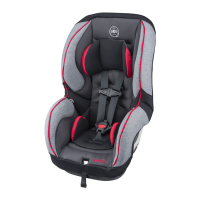
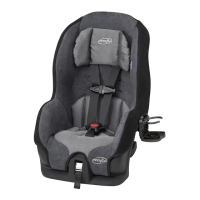
•This child restraint is designed for use by children in
rear-facing and forward-facing positions. To use this
child restraint properly, children MUST meet weight/
size specifications as follows:









 To Next Page