Page 17 of 17
COMPRESSED AIR (applies to Model B5 burner only, the K5 burner has
integral air pump)
1. A minimum 2 CFM at 40 psi is needed into the burner. Use a hydraulic quick disconnect
or put ample flex in the line to swing burner open when servicing. A dedicated air
compressor at the heater in lieu of using the shop’s air system is acceptable. A compressor
of 3/4 to 1.5 HP is typical, with a storage tank is a plus. Consult your installer for models
available. Drain all compressors frequently to help keep moisture from entering burner.
2. Many burner service problems are from “rusty” air causing burner components to fail. It is
wise to use a oiler and/or regulator to treat & reduce air pressure entering the burner to
approximately 60 psi. Wear on burner parts will be reduced and ignition more reliable.
Providing a drip leg with valve near the burner to trap water, scale, and rust is also a good
idea. If water is present take all measures to remove it. The air solenoid may stick and
other components may rust and fail.
3. SERVICE TIP: 80% of service problems can be avoided by keeping contaminants like rust
chips, water, pipe dope, insects from reaching burner through the air and oil lines.
OIL PUMP MOUNTING
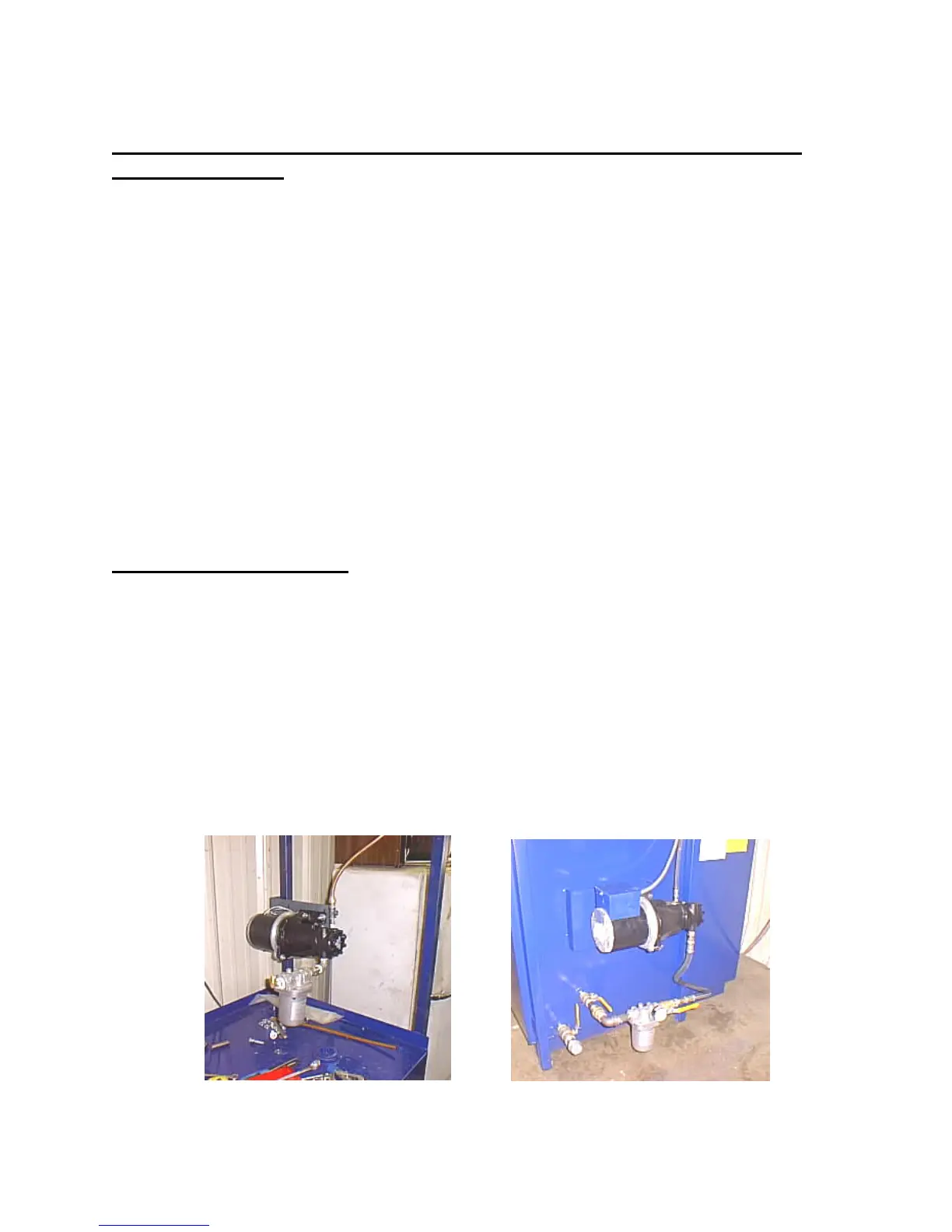
1. Consult your dealer for best plumbing methods before starting. Mount the pump as near
the oil supply tank as possible. Minimize suction distance or lift for best operation. You
may mount the pump above the tank to suction lift oil to the pump or another option is to
place the pump below the tank level to gravity feed or siphon oil to the pump. Do not
exceed 10 psi into the pump inlet in any arrangement or the seal may leak. Allow space for
service. Be sure to meet all building and fire code requirements.
2. Any pump/motor orientation is acceptable as long as the pump shaft is horizontal. You
may rotate the pump head on the mount to simplify plumbing connections. Be sure the
motor and pump shafts are aligned and coupling set screws are tight before operating.
Above Tank Mount Below Tank Level Mount



 To Next Page