ghy”. Vehicle manufacturers produce towable
cars and trucks that are designed to be capable
of being towed behind a larger vehicle, such as
a motor home, with all wheels down.
Caution should be exercised when selecting a
vehicle for dinghy towing. If not, battery drain
on the electrical system could occur, the trans-
mission of the vehicle could be damaged, the
vehicle may be too heavy to pull, among other
concerns.
Before selecting the vehicle that will be towed,
consult the vehicle manufacturers instructions
to ensure the vehicle is approved by the manu-
facturer for dinghy (four wheels down) towing.
Any aftermarket products that modify the din-
ghy for towing should also be approved by the
vehicle manufacturer.
Make sure that the dinghy weight and attaching
hardware do not exceed the motor home hitch
receiver rating. Make sure that the weight of the
motor home and dinghy together; do not exceed
the gross combination weight rating (GCWR)
of the motor home. Make sure that tow bars and
hitch equipment is rated to handle the weight of
the vehicle you intend to tow.
In addition, the dinghy must be equipped with
its own independent auxiliary brake system that
is activated any time the motor home brakes are
applied.
Because of State/Province regulations, care
must be exercised when wiring the dinghy for
all lighting requirements.
Check with the DMV of your State and/or
States (and Provinces) you will be traveling
through for their requirements.
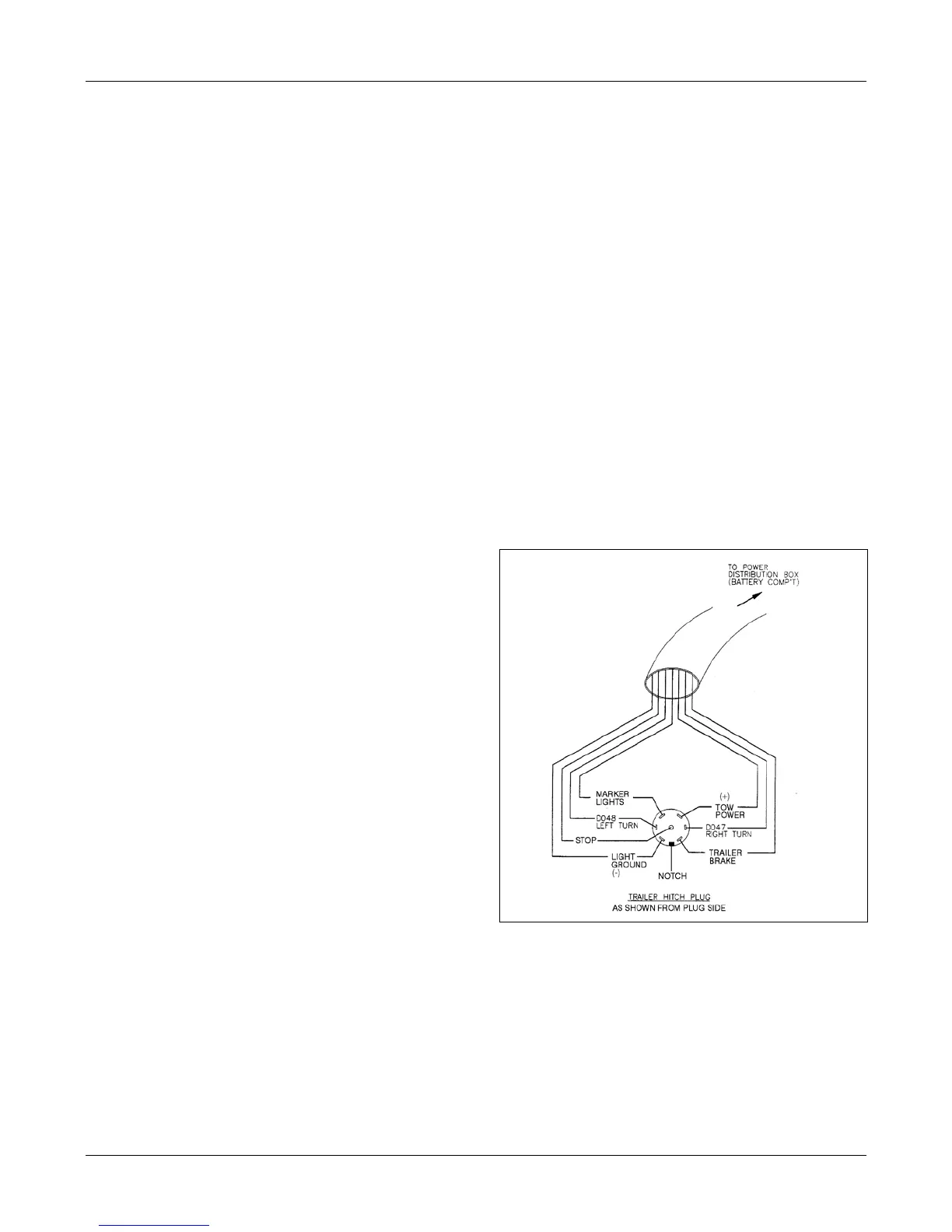
TOWED VEHICLE WIRING
Your motor home is equipped with an electri-
cal connector, from here on referred to as a
hitch plug, which provides an electrical connec-
tion for your towed vehicle. The hitch plug is
located at the rear of the motor home near the
hitch receiver. It is a 7 position connector wired
as follows:
Please note this connector does not provide
separate positions for the two turn signals and
brake lights. This is necessary for the towed
vehicles that do not have separate amber turn
signals in addition to the red brake lights.
05-5
On The Road




 To Next Page