On The Road
Starting in 2010 your vehicle will require “die-
sel exhaust uid.” This uid is carried in a
container in an outside storage compartment.
Consult your Chassis Operator’s/Owner’s
Guide/Manual for additional information. There
is also replacement actions for the uid that is
outlined in the chassis manuals.
Modern fuel systems may build up vapor pres-
sure within the tank as the fuel warms during
use or hot weather. Under certain conditions,
sudden release of this pressure when removing
the fuel cap can cause fuel to spray from the ll
opening, creating a re hazard.
To protect the fuel system from excessive pres-
sure or vacuum , or from sudden release of pres-
sure, replace lost or damaged fuel ll caps with
caps of the same design which are available
from your Fleetwood motor home dealer.
Clean up fuel spills immediately. Fuel spilled on
the motor home could damage the exterior n-
ish, and is a serious re hazard.
Fuel Types and Drive Ability
Issues
Your motor home’s automotive fuel and emis-
sions systems are sophisticated and engineered to
meet Federal and State emissions standards. They
are sometimes sensitive to fuel types and blends,
particularly fuels blended for certain altitudes and
climates. Fuel suppliers provide customers with
the correct fuel for their location and seasonal
conditions. Sometimes, though, fuel blended for
winter is supplied during summer months.
API REFUELING ADVISORY
The American Petroleum Institute (API) offers
the following consumer advisory and safety
guidelines on vehicle refueling to help consum-
ers avoid potential problems with refueling and
static electricity.
One of many possible causes of static electric-
ity build-up is reentering your vehicle during
refueling, particularly in cool or cold and dry
climate conditions. This can cause a build-up of
static electricity similar to shufing your feet on
the carpet when the air in your home is dry. If
you return from your vehicle interior to remove
the lling nozzle without discharging the static
build-up, in rare circumstances, a brief ash re
could occur at the lling point if the static
discharges and the resulting spark ignites fuel
vapors around the ll spout.
A simple precaution to help avoid this potential
problem is to stay near the vehicle’s fueling
point. Do not get back into your vehicle during
refueling – even when using the nozzle’s auto-
matic hold-open latch. If you must reenter your
vehicle, discharge the static electricity build-up
when you get out by touching the outside metal
portion of your vehicle, away from the lling
point, before attempting to remove the nozzle.
ENGINE FAN
When the engine is under load or requires
maximum cooling, the engine fan turns faster.
The fan may become noisy at high speed and
when maximum cooling is required. High speed
fan noise can sometimes be misinterpreted as
transmission slippage. This is not the case. This
fan noise indicates that the fan is doing what it
is supposed to do. This noise is not a defect in
the fan or the transmission.
EXHAUST SYSTEM HEAT
Your motor home engine has been designed to
conform to Federal and State emission require-
ments. To meet these requirements, engine
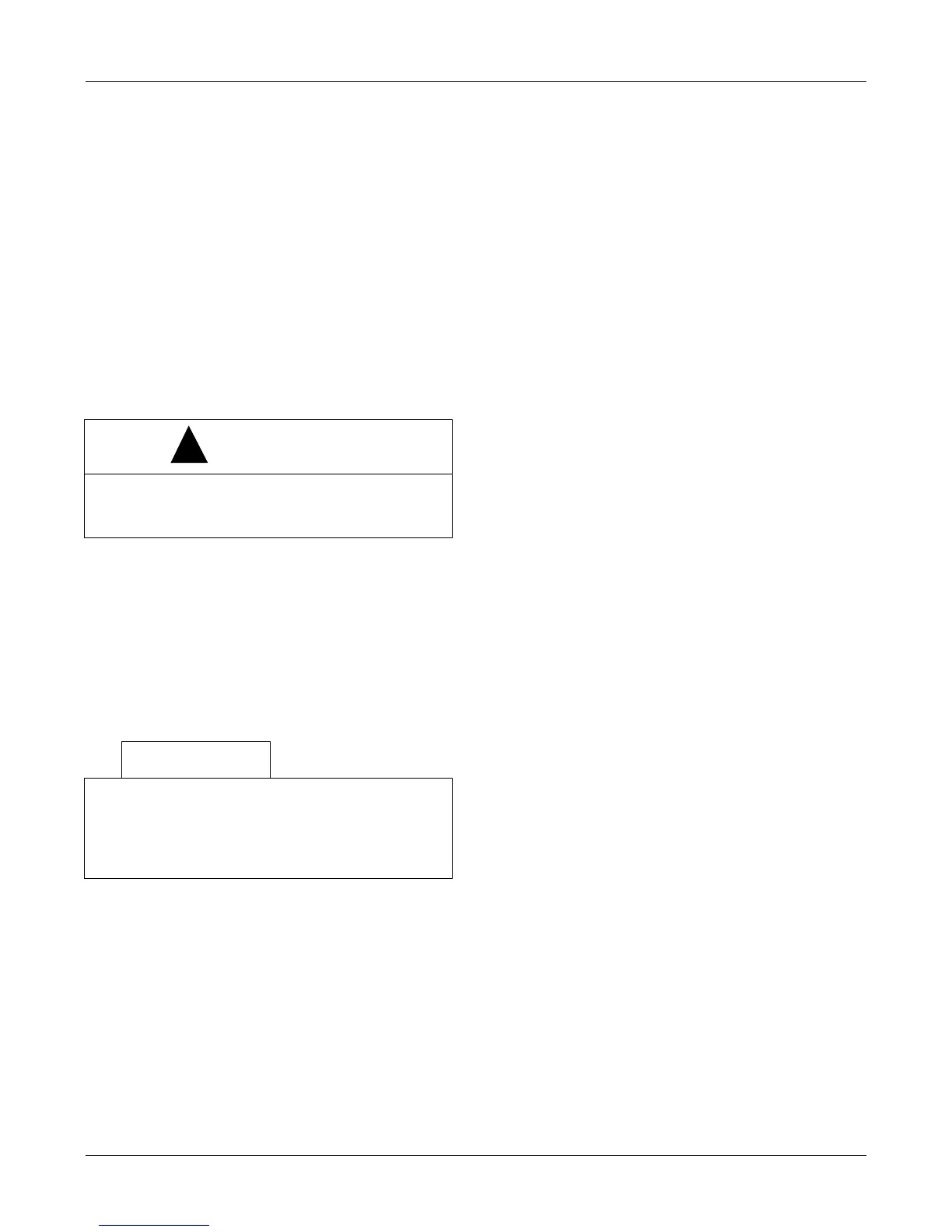
WARNING
When removing the fuel ll cap, rotate it slowly only
far enough to allow the pressure to release. After any
“hissing” sound stops, remove the cap completely.
!
NOTE
Fuel for the generator is taken from the main fuel tank
through a special feeder tube which is higher in the
tank than the feeder tube to the motor home engine.
This arrangement prevents the generator from run-
ning the motor home fuel tank dry.
3
05-17



 To Next Page