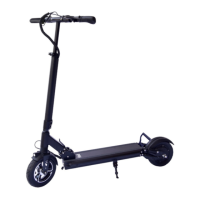
Riding
Before using your scooter, make sure to visually inspect it for any signs of
damage or loose parts or screws. Every scooter is individually tested before
shipping from the factory, but we recognize that it has travelled far and in
rare cases, it can get damaged during transport. If something does not feel
or look right, reach out to fluidfreeride.
Always wear protective gear such as helmet, knee and elbow pads.
Start slowly to familiarize yourself with the behavior of your scooter. Press
the throttle gently for a slow take off. Always slow down when riding over
bumps or on rough or wet road conditions. The faster you ride your
scooter, the longer it will take you to stop.
• Ensure you have sufficient runway ahead of you. Do not use the
scooter indoors.
• Put both of your hands on the handlebar.
• Step with one foot on the scooter, kick it lightly with your other foot to
bring it slightly in motion.
• Step with your second foot onto the board, hold on tight and push the
accelerator gently.
Braking
Your scooter is equipped with an electric brake, a rear drum brake and a
rear step on brake. It is up to you which one you prefer using.
To slow down during normal operations, release the throttle and press the
electric brake lever lightly. The more you press this lever, the harder you
will brake. The slower you are, the more responsive the electric brake will
be. At higher speeds, this brake is less effective.
The drum brake is operated by pulling front brake lever while the rear step
on brake is operated with your foot, simply stepping onto the mudguard,
and pushing it down towards the rear tire.
At higher speeds, and in emergency brake situations we recommend you
press both the electric brake lever, and you pull the drum brake lever.
The scooter is also equipped with a regenerative braking system.
Whenever you use the electric brake lever, the controller will use the


 To Next Page