16
Tools
All tools should be mounted on a baseboard. They cannot have undercuts and must be produced with
slightly angular sides (‘draft angle’) to aid release. Vent holes are needed to allow the air to be evacuated
from pockets and sharp angles on the tool. Providing these holes are kept small they will not leave marks on
the surface of the finished moulding.
Tools made from wood or medium density fibreboard (MDF) are easily constructed and can give short runs
of good quality mouldings at a low cost. (see notes below)
The use of close-grained wood will avoid grain patterns appearing on the mouldings.
Plaster of Paris may be used for one-offs but the plaster must be allowed to properly dry out. (See notes
below)
Metal tools have the advantages of carrying fine detail and being more resistant to both distortion and
surface damage. Metal tools should be pre-heated before use. A cool metal mould will absorb some of the
heat from the plastic sheet before it can take up the full definition.
Resin tools combine most of the advantages of metal moulds with relative ease of manufacture. Various
resinous materials are commercially available especially for vacuum forming tool production.
Repairs to the vacuum circuit can be costly. The use of talc as a release agent is not recommended.
It may clog the vacuum circuit.
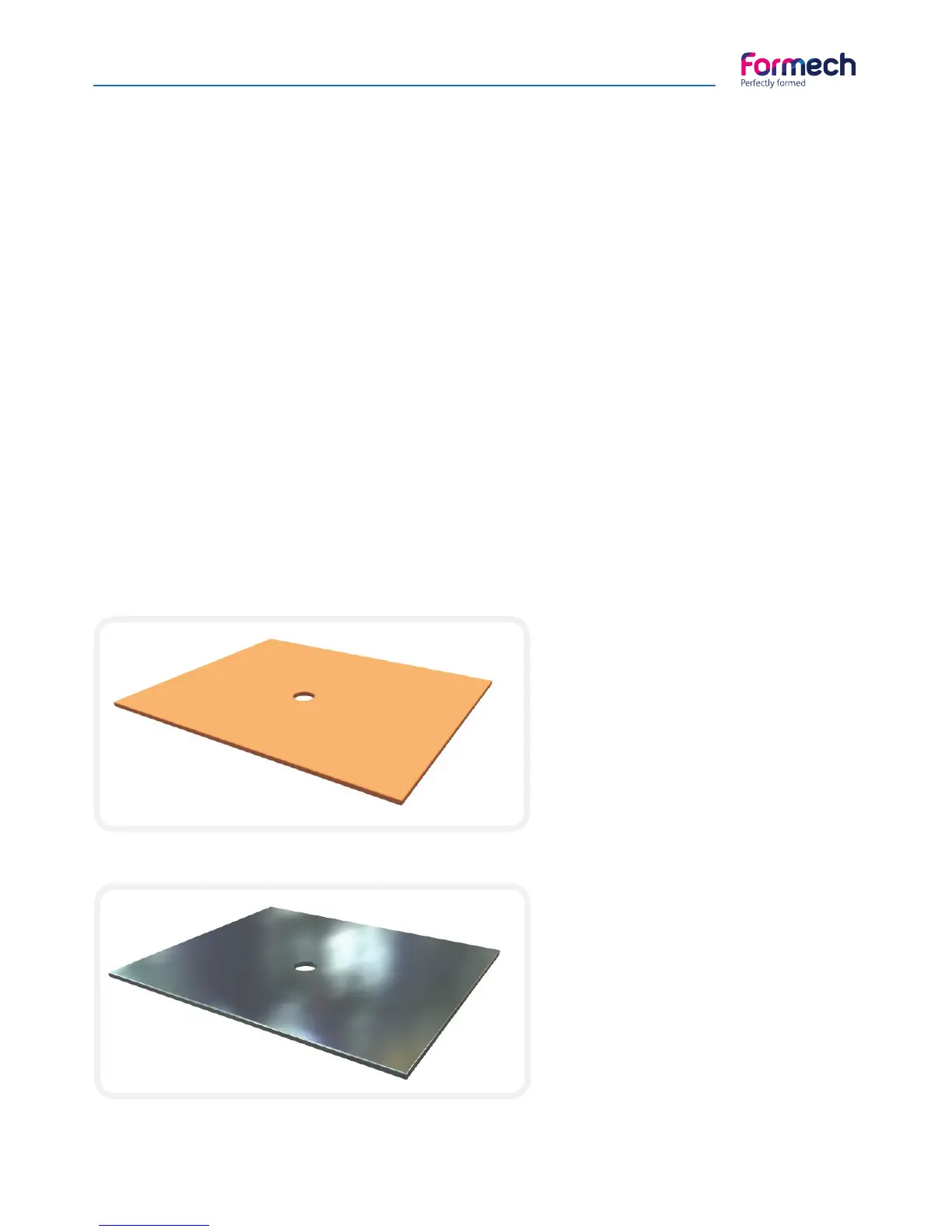
MDF Baseboard
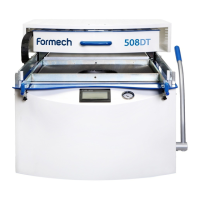
Aluminium Baseboard



 To Next Page