Oil Pressure
*
Engine Model
At Idle Speed:
psi (kPa)
At Rated RPM:
psi (kPa)
Cummins ISX 10 (69) min. 35–45 (241–310)
Cummins ISM 10 (69) min. 35–45 (241–310)
Cummins N14 10 (69) min. 35–45 (241–310)
Detroit Diesel S60 12 (83) min. 50 (345) min.
MBE4000 7 (50) 36 (250) min.
*
Oil pressures are given with the engine at operating temperature. With
the engine cold, oil pressure may be higher. Individual engines may vary
from the listed pressures; observe and record pressures when the engine
is new to create a guide for checking engine condition.
Table 2.1, Oil Pressure Specifications
Coolant Temperature Gauge
During normal engine operation, the coolant tem-
perature gauge should read 175 to 195°F (79 to
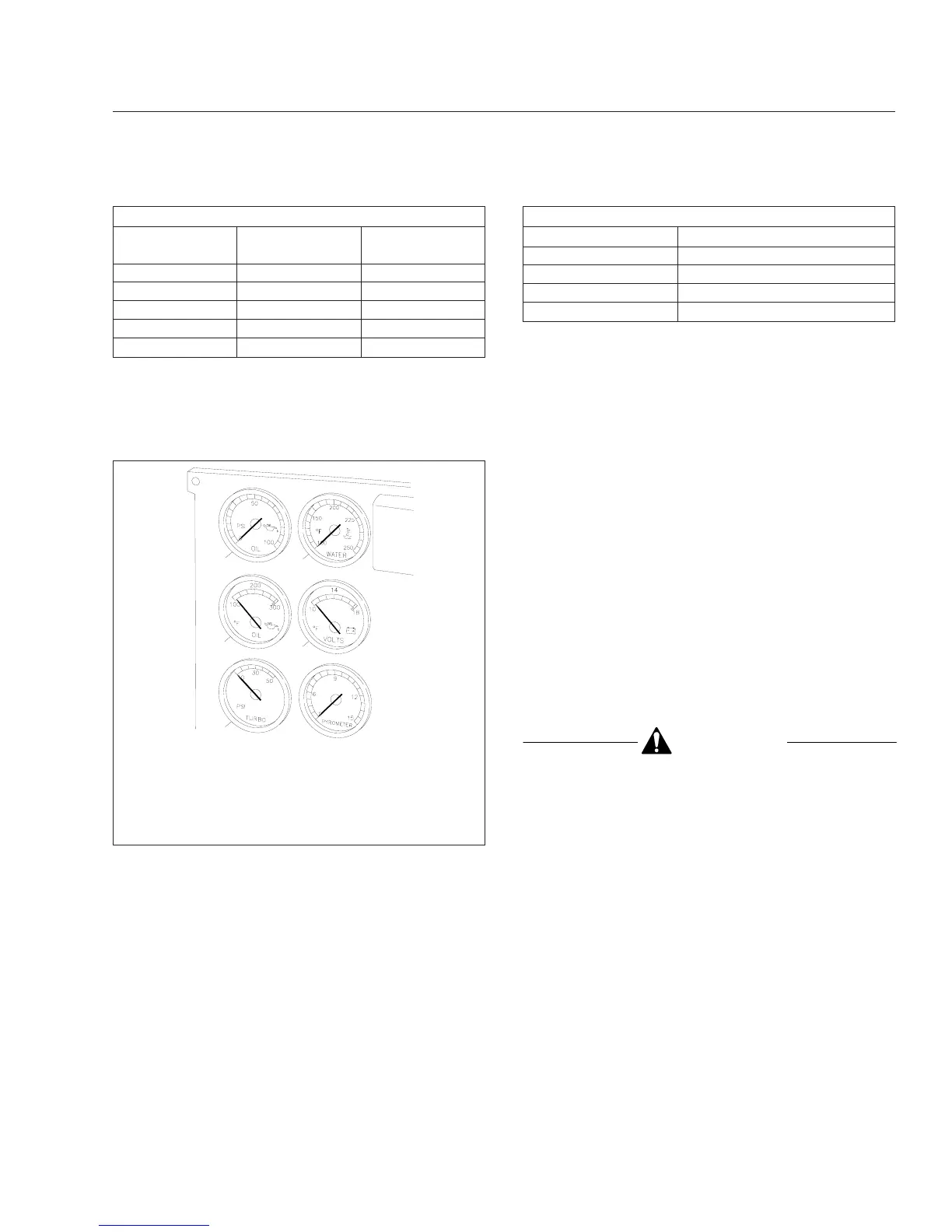
91°C). See Fig. 2.16. If the temperature remains
below 160°F (71°C) or exceeds the maximum tem-
perature shown in Table 2.2, inspect the cooling sys-
tem to determine the cause. See the
Columbia
®
Workshop Manual
for troubleshooting and repair pro-
cedures.
Maximum Coolant Temperature
Engine Make Temperature: °F (°C)
Caterpillar 215 (101)
Cummins 220 (104)
Detroit Diesel 215 (101)
Mercedes-Benz 221 (105)
Table 2.2, Maximum Coolant Temperature
Engine Oil Temperature Gauge,
Optional
During normal operation, the engine oil temperature
gauge should read:
•
190 to 220°F (88 to 104°C) for Caterpillar en-
gines;
•
180 to 225°F (82 to 107°C) for Cummins en-
gines;
•
200 to 230°F (93 to 110°C) for Detroit Diesel
engines;
•
181 to 203°F (83 to 95°C) for Mercedes-Benz
diesel engines.
Under heavy loads, such as when climbing steep
grades, temperatures that exceed the normal oil tem-
perature range for a short period are not unusual.
See Fig. 2.16.
CAUTION
A sudden increase in oil temperature that is not
caused by a load increase may indicate mechani-
cal failure. Bring the vehicle to a safe stop and
investigate the cause to prevent further damage.
Do not operate the engine until the cause has
been determined and corrected.
Voltmeter
The voltmeter indicates the vehicle charging system
voltage when the engine is running and the battery
voltage when the engine is stopped. By monitoring
the voltmeter, the driver can be aware of potential
charging system problems and have them fixed be-
fore the batteries discharge enough to create starting
difficulties. See Fig. 2.16.
The voltmeter will normally show approximately 13.7
to 14.1 volts when the engine is running. The voltage
of a fully charged battery is 12.7 to 12.8 volts when
f601126
02/12/96
1
2
3
4
5
6
1. Engine Oil Pressure Gauge
2. Coolant Temperature Gauge
3. Engine Oil Temperature Gauge (optional)
4. Voltmeter
5. Turbocharger Boost Pressure Gauge (optional)
6. Pyrometer (optional)
Fig. 2.16, Instrument Panel Gauges (left side)
Instruments and Controls Identification
2.14



 To Next Page