General Information
See the manufacturer’s engine operation manual
for specific reccomendations for your engine.
1.
Operate the engine at low load when the engine
is first started. After normal oil pressure is
reached and the temperature gauge needle be-
gins to move, the engine may be operated at full
load.
Electronic engines automatically idle at a slightly
higher speed for the correct warm up time after a
cold engine start. These electronic engine sys-
tems will reduce the idle speed to normal rpm
when the engine has warmed sufficiently to oper-
ate the vehicle.
2.
Select a gear that allows a smooth, easy start
without increasing engine speed above low idle
or slipping the clutch. Engage the clutch
smoothly. Jerky starts waste fuel and put stress
on the drivetrain.
3.
It is seldom necessary to accelerate the engine
to governed speed in the lower gears to get the
vehicle moving, except in a high-power-demand
situation such as starting on a grade. To con-
serve fuel, start off in low gear, and develop only
the engine speed needed to get rolling. Then,
increase engine speed gradually as upward gear
shifting progresses. This technique will get the
vehicle up to the desired cruising speed while
minimizing noise emission and maximizing fuel
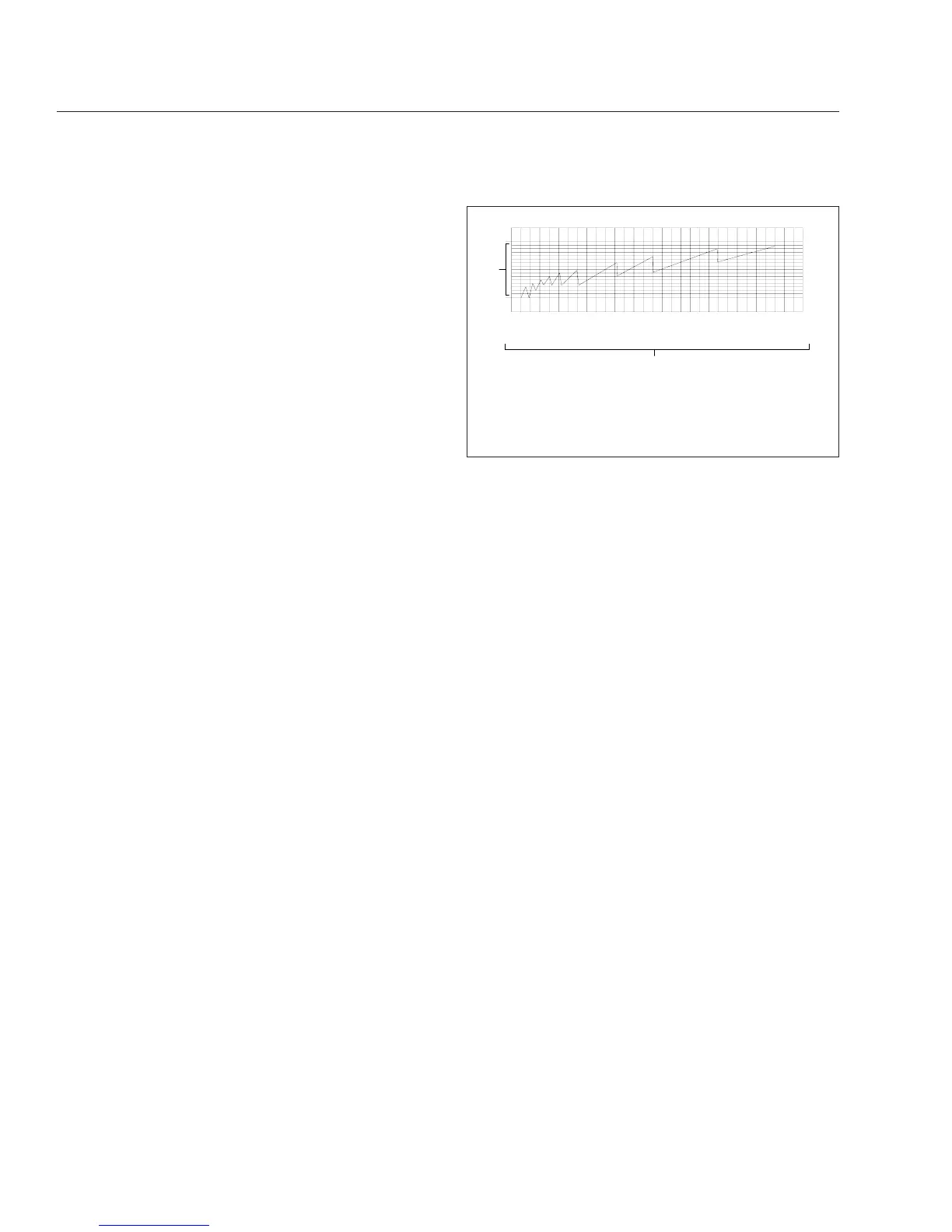
economy. A progressive shift pattern is illustrated
in Fig. 7.8.
Electronic engines can be programmed to limit
engine rpm while the vehicle is operated in the
lower and higher gears. This feature assists the
driver in following "progressive shifting"
techniques.
4.
For highway cruising, and for best fuel economy,
run the engine at 80 to 90 percent of rated rpm
to maintain highway speed. Proper gear selec-
tion should permit cruising in the economy range
with no appreciable sacrifice in desired highway
speed.
It is okay to operate below rated rpm at full
throttle if you are satisfied with the way the ve-
hicle performs. However, there are times when
hilly terrain, high winds, or other conditions make
it impractical to operate without reserve power.
Such conditions are better met if the vehicle is
operated in a lower gear with reserve power
available for changes in terrain, wind, etc.
Driving on Hills
1.
When approaching a hill, open the throttle
smoothly to start the upgrade at full power, then
shift down as desired, to maintain the optimum
vehicle speed.
NOTE: A momentary hesitation in throttle re-
sponse will occur when a vehicle with a turbo-
charged engine is started on a grade.
Do not
disengage the clutch. The rpm will recover, and
the vehicle will accelerate up the grade.
2.
On uphill grades, begin downshifting when the
engine rpm falls to 1200 rpm. Fuel economy will
be best if you let the engine lug back to around
this speed before you downshift. Downshift until
a gear is reached in which the engine will pull
the load. Let the engine lug down if you can
make it to the top of a hill without downshifting.
3.
If going up a hill causes a steady decline in en-
gine rpm, downshift as required until the engine
can maintain a stable uphill speed. Make full use
of each gear before going to a lower gear. By
remaining in a gear until arriving at the speed of
the next lower gear, the vehicle will top the grade
in the best possible time on less fuel and fewer
shifts.
4.
The driver can greatly improve driving skill by
learning the vehicle’s shift points for all gears. By
knowing rather than guessing where the shift
points are, it is possible to avoid overspeeding
010
(16)
20
(32)
30
(48)
40
(64)
50
(80)
60
(97)
f250319
11/02/95
1
2
3
4
1. Governed RPM
2. Engine RPM
3. Idle RPM
4. Miles (kilometers) per Hour
Fig. 7.8, Progressive Shift Pattern
Engines and Clutches
7.11


 To Next Page