© Fulton Group N.A., Inc. 2022
INSTALLATION EDR-SOLA-IOM-2022-0216 SECTION 2
2-12
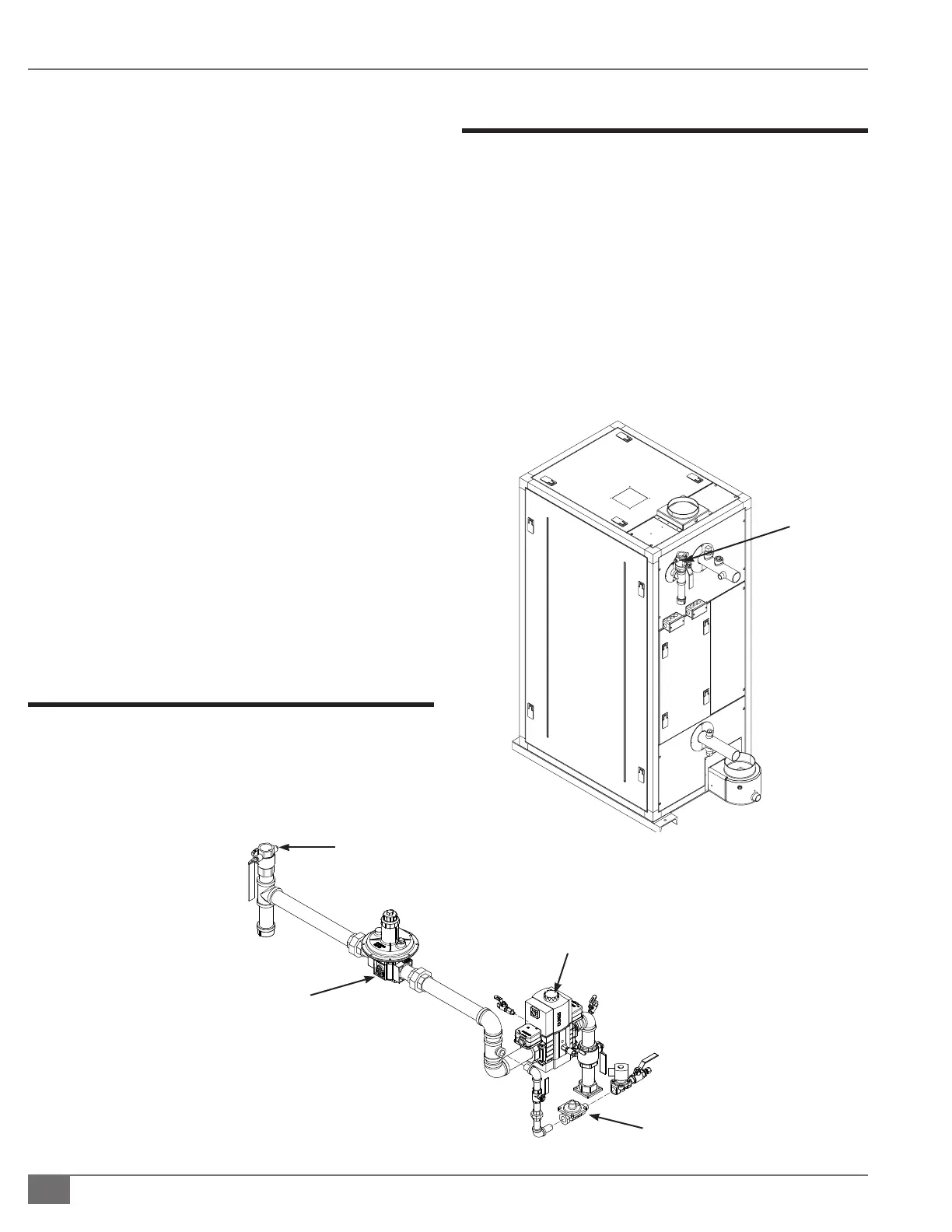
Fuel Train Inlet
Note: Measure Inlet
gas pressure here
Eliminate System Air
NOTE: There are no built-in boiler air eliminating features.
Adhere to the following for air elimination:
1. The installation of an air separator and air eliminator (air
vent) is required.
2. To prevent scale corrosion in boiler and associated
piping, make up water must be kept to a minimum. This
is best achieved by ensuring immediate repair of all
leaks and that system pressure is maintained.
3. If a sealed diaphragm-type expansion tank is used,
install an air eliminator in the hot water piping at the air
separator on the suction side of the system circulator(s).
4. If an air cushion type expansion tank is used, pipe tank
directly into boiler supply on the suction side of the
system circulator(s).
5. On multi-zoned systems (or a system with both space
and domestic water heating), air elimination must be
provided either in the common piping or on every loop.
6. When the boiler is installed at a higher level than
baseboard radiation (if used), air elimination must be
provided directly above the unit.
Fill the Boiler With Water
Gas Supply Piping
This boiler features a gas red fully modulating burner
requiring gas delivery at a relatively constant pressure
and caloric content. This ensures ecient and reliable
combustion. A lock-up style regulator is factory-mounted in
the gas train. Do not modify the gas train.
The gas train (See Figure 8) pressure requirements are
detailed on the boiler data plate, located at the rear of the
boiler.
This boiler is factory test red and combustion is adjusted per
the Factory Test Fire Report.
FIGURE 8 TYPICAL GAS TRAIN VARIES BY SIZE/MODEL
FIGURE 9 MEASURING INLET GAS PRESSURE
Measure
inlet supply
gas pressure
here
Lockup Regulator
with Integral Vent Limiter
Main Gas Valve
(see Figure 26)
Ignition Enrichment Regulator
with Integral Vent Limiter
To be sure that the boiler is not air-bound, open the pressure-
relief valve located at the rear of the boiler. Leave the relief
valve open until a steady ow of water is observed. Close the
valve and nish lling the system.



 To Next Page