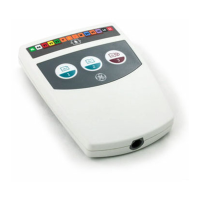
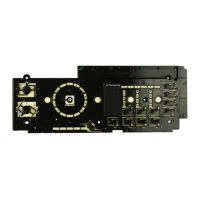
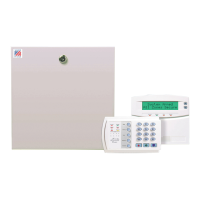
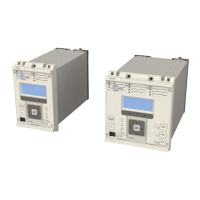
The ZP3-ECU Extinguishing Control Unit is a critical component in a fire detection and extinguishing system, designed to manage the release of extinguishing agents to combat fires. It integrates with a main Fire Control Panel (ZP3/ZP5) and can be augmented with optional Extinguishing Status/Repeater Units and a Door Monitor Board for enhanced system control and monitoring.
Function Description:
The ZP3-ECU acts as an interface between fire detection devices and the extinguishing agent release mechanism. Upon receiving activation signals from mapped inputs (e.g., smoke sensors), it initiates a sequence of events, including sounding fire bells, activating discharge sirens, and ultimately, releasing the extinguishing agent. The unit incorporates deliberate delays to allow for personnel evacuation before agent discharge. It monitors various aspects of the extinguishing system, reporting faults to the main control panel and providing local indications through LEDs. Key functionalities include:
- Fire Detection Integration: Receives signals from fire detection devices (e.g., Ziton Z-SDT2 smoke sensors) to initiate the extinguishing sequence.
- Extinguishant Release Control: Manages the activation of actuators connected to extinguishing cylinders, ensuring timely and controlled release of agents like water, dry chemical, or foam.
- Audible and Visual Alarms: Activates fire bells and discharge sirens to alert occupants and indicate system status.
- Delay Management: Incorporates configurable delay times before extinguishant discharge, with a "hold off" button to reset the delay for additional evacuation time.
- System Monitoring: Continuously monitors the status of various components, including manual release circuits, actuator circuits, extinguishant pressure, fire bell circuits, and discharge siren circuits.
- Fault Reporting: Reports any malfunctions or abnormal conditions to the main Fire Control Panel (ZP3/ZP5) and provides local fault indications via LEDs and a buzzer.
- Manual/Automatic Operation: Features a key switch to toggle between automatic and manual operation modes, allowing for system arming or disarming as needed.
- Locked-Off/Reset Functionality: A key switch for locking off the system (preventing discharge) and resetting it after an event or fault.
Important Technical Specifications:
While specific electrical ratings are not exhaustively detailed, the manual provides some insights:
- Actuator Output: Provides a 24 V output across actuator terminals (TB3 terminals 7 and 8) for releasing the extinguishant.
- Fire Bell Output: Provides a 24 V output across TB1 terminals 6 and 7 for the extinguishant discharged siren.
- Monitored Circuits: Utilizes End-Of-Line (EOL) resistors for monitoring the integrity of various circuits, including manual release, actuator, extinguishant pressure, fire bell, and discharge siren circuits.
- Power Supply: Operates on a 24 Volt power supply, with a 6.3 Amp fuse for the surge-protected 24V supply to Status and Repeater units.
- Fuses: Includes fuses for the detonator (5 Amp) and fire bell/ext. bell (2 Amp each).
- Communication: Communicates with the main Fire Control Panel (ZP3/ZP5) to report events and faults.
Usage Features:
The ZP3-ECU is designed for straightforward operation and system management:
- Front Fascia Controls: Features pushbuttons for "Silence" (for fire bell output) and a "More Time" button (to reset the discharge delay).
- Key Switches: Includes "Lockoff/Reset" and "Auto/Manual" key switches for secure system control.
- LED Indicators: Provides clear visual status indications through various LEDs on the front fascia, such as "POWER," "AUTO/MANUAL," "FIRE," "FAULT," "Extinguishant Discharged," "Extinguishant Pressure Low," "Fire Bell Fault," and "Extinguishing Bell Fault."
- Optional Units: Supports optional Extinguishing Status/Repeater Units for remote monitoring and control, and an Extinguishing Control Door Monitor Board for monitoring door lock status.
- System Configuration: The system's behavior, including delay times and input/output mappings, is configured during installation and commissioning, as detailed in the ZP3 Fire Control Panel Installation and Commissioning Manual.
Maintenance Features:
The manual emphasizes routine maintenance to ensure optimal system performance and reliability:
- Preventive Maintenance:
- Daily Checks: Involve cleaning the outer surface of the unit and checking the smooth operation of key switches.
- Weekly Maintenance: Focuses on reviewing reports from the ECU to the main Fire Control Panel, checking front panel LED indications (only POWER and AUTO/MANUAL should be illuminated under normal conditions), testing the AUTO/MANUAL key switch, and logging tests.
- Quarterly Maintenance: Requires suitably trained personnel and involves a comprehensive inspection of actuation voltage, testing of fire bell outputs, actuator outputs (using an 18 ohm, 5 W resistor), discharge siren outputs, and the "hold off" function. It also includes checks of optional Status/Repeater Units and the Door Monitor Board.
- Fault Finding and Corrective Maintenance:
- Diagnostic LEDs: The ECU main board features six diagnostic LEDs (Ext. Pressure Low, Fire Bell Fault, Detonator Fault, Extinguishing Bell Fault, Ext. Relay, Relay) that illuminate to indicate specific faults within the extinguishing system.
- Fault Reporting: The main Fire Control Panel reports faults with detailed descriptions, panel indications (yellow Fault LED, buzzer, display messages), probable causes, and corrective actions.
- Troubleshooting Procedures: Provides step-by-step corrective actions for various faults, including "Device Unaccepted," "Relay not Responding," "Device Type Fault," "Device Offline," and general extinguishing control unit faults (Manual Extinguishant Release, Extinguishant Actuator, Extinguishant Pressure, Fire Bell, Extinguishant Discharge Siren, Extinguishant Pressure Verification Switch, Power Fault).
- Log Books: Emphasizes the importance of maintaining a logbook to record all events, servicing, tests, and system changes.
- Pre-requisites: Before maintenance, ensure availability of small hand tools, a digital multimeter, system drawings, and a detailed system specification.
- Precautions: Strict warnings against using high-voltage instruments on detection/alarm lines with devices connected, replacing components while power is connected, and using incorrect fuse ratings.
- System Arming: Procedures for safely arming the system after maintenance, including restoring actuators and removing transit pins.
The ZP3-ECU is designed for robust and reliable operation, with a strong emphasis on both preventive and corrective maintenance to ensure the effectiveness of the fire extinguishing system.

 Need help?
 General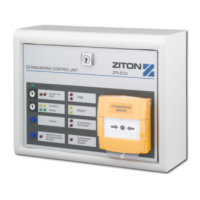

 To Next Page