-34-
Model G0690/G0691 (Mfg. 11/10+)
The riving knife included with this machine is 0.1"
(2.5mm) thick and is only designed for 10" diam-
eter blades.
When choosing a main blade, make sure the
blade size meets the requirements listed below.
The thickness of the blade body and teeth can be
measured with calipers or any precision measur-
ing device.
Blade Size Requirements:
• Body Thickness: 0.071"-0.094" (1.8-2.4mm)
• Kerf (Tooth) Thickness: 0.102"-0.126"
(2.6-3.2mm)
Blade Requirements
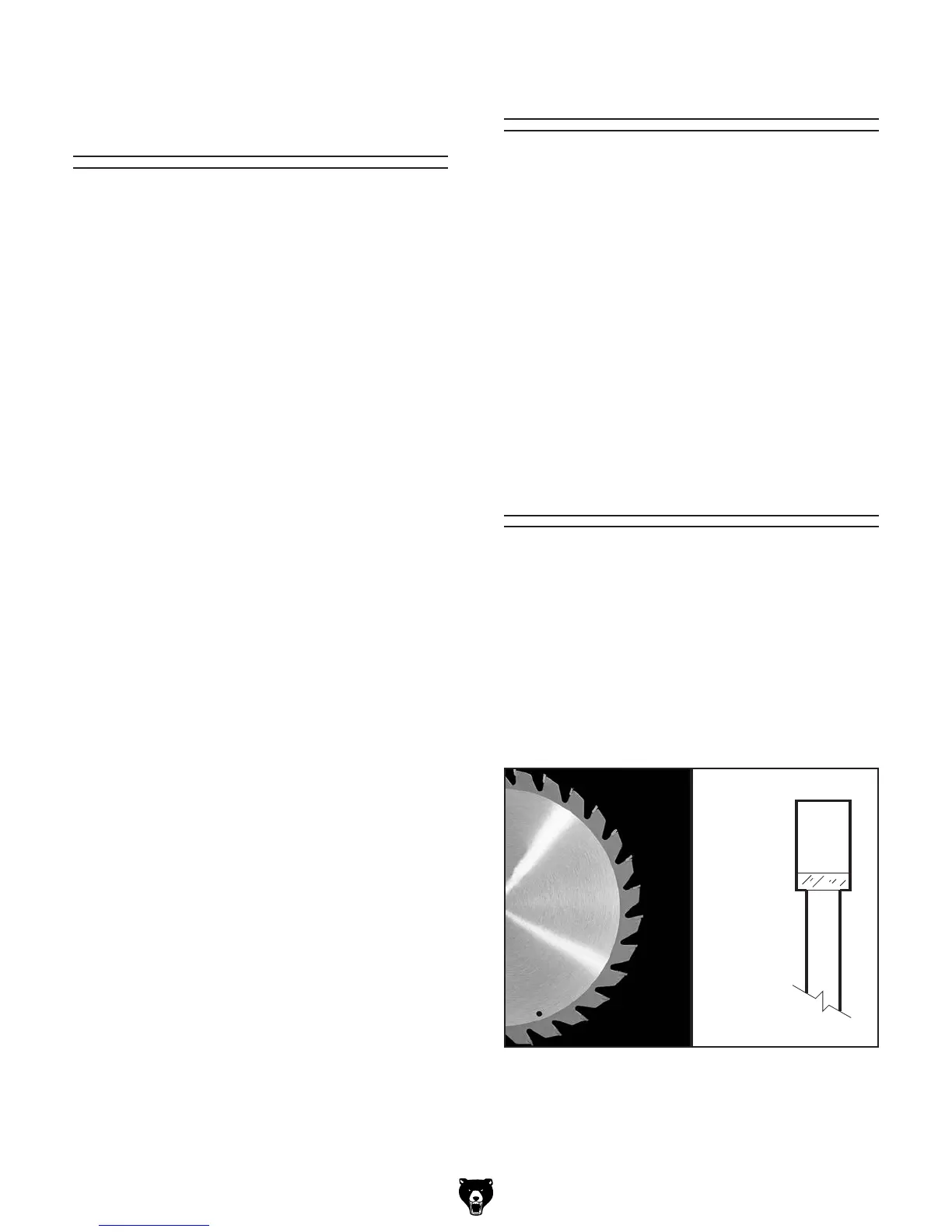
Figure 44. Ripping blade.
Blade Selection
This section on blade selection is by no means
comprehensive. Always follow the saw blade
manufacturer's recommendations to ensure safe
and efficient operation of your table saw.
Ripping Blade Features:
•
Best for cutting with the grain
20-40 teeth
Flat-top ground tooth profile
Large gullets for large chip removal
Flat
Top
Blade
Workpiece
Inspection
Some workpieces are not safe to cut on this
machine or may need to be modified before they
can be safely cut. Before cutting, inspect all
workpieces for the following:
• Material Type:Thismachineisintendedfor
cutting natural and man-made wood prod
ucts, laminate covered wood products,
someplastics.Cuttingdrywallor
backerboardcreatesextremelyfinedust
may reduce the life of the motor
ThismachineisNOTdesignedtocut
glass,stone,tile,etc.;cuttingthese
withatablesawgreatlyincreasestherisk
injuryanddamagetothesaworblade.
Foreign Objects: Nails, staples, dirt,
and other foreign objects are often embed
ded in wood. While cutting, these
canbecome dislodged and hit the
cause kickback, or break the blade,
mightthen fly apart. Always visually
yourworkpiecefortheseitems. Iftheycan’
beremoved,DONOTcuttheworkpiece.
Large/Loose Knots: Loose knots
become dislodged during the cutting opera
tion. Large knots can cause kickback
machine damage. Choose workpieces
donothavelarge/looseknotsorplan
toavoidcuttingthroughthem.
Wet or “Green” Stock:Cuttingwoodwith
moisturecontentover20%causesunneces
sarywearontheblades,increasestherisk
kickback,andyieldspoorresults.
Excessive Warping:Workpieceswithexces
sivecupping,bowing,ortwistingaredanger
ous to cut because they are unstable
maymoveunpredictablywhenbeingcut.
Minor Warping:Slightlycupped
can be safely supported with cupped
facing the table or fence; however, work
piecessupportedonthebowedsidewill
rock
duringthecut,whichcouldcausekickback.


 To Next Page