The Hach ISENA381 is a digital, combination ion-selective electrode (ISE) probe designed for measuring sodium concentration in various water samples, including wastewater, drinking water, and general water samples. This device is part of the Intellical ISENA381 series, which are known for their integrated design and ease of use. The probe features a refillable design with a built-in temperature sensor and a double ceramic pin reference junction, ensuring accurate and stable measurements. A 59-mL bottle of electrode filling solution is supplied with the probe to facilitate initial setup and maintenance.
Function Description:
The ISENA381 probe measures sodium ion concentration in a range from 0.023 mg/L (1x10⁻⁶ M) to 23,000 mg/L (1 M) Na⁺. It operates on the principle of ion-selective measurement, where the potential difference across the ion-selective membrane is proportional to the logarithm of the ion activity in the sample. The integrated temperature sensor allows for automatic temperature compensation, ensuring accurate readings across varying sample temperatures. The double ceramic porous pin reference junction provides a stable reference potential, which is crucial for precise ISE measurements. The probe is designed for use with Hach meters that support Intellical ISE probes, allowing for seamless integration and data acquisition.
Important Technical Specifications:
- Probe type: Digital, combination ion selective probe with a double junction, refillable junction reference and a built-in temperature sensor.
- Measurement range: 0.023 mg/L (1x10⁻⁶ M) to 23,000 mg/L (1 M) Na⁺.
- Accuracy: ±0.02 mV or 0.05% (the larger value).
- Electrode resistance: < 800 MΩ at 25 °C (77 °F).
- Reference type: Ag/AgCl.
- Reference junction: Double ceramic porous pin junction.
- Slope: –59 mV/pNa (90 to 110% at 25 °C (77 °F) per Nernstian theoretical value).
- Linear region: 1.4 mg/L to 23,000 mg/L Na⁺.
- Temperature accuracy: ±0.3 °C (±0.54 °F).
- Temperature sensor type: 30 kΩ NTC thermistor.
- Operating temperature: 0 to 50 °C (32 to 122 °F).
- Storage temperature: 5 to 40 °C (41 to 104 °F).
- Response time in linear region: 1 to 2 minutes in sample concentration > 1.4 mg/L.
- Minimum sample volume: 25 mL.
- Minimum immersion depth: 25.4 mm (1 in.).
- Electrode filling solution: 0.02 M NH₄Cl.
- Storage solution: Long-term storage: 0.02 M NH₄Cl. Short-term storage: User-prepared solution of 100-mg/L sodium standard solution and one sodium ISA powder pillow per 25 mL.
- Sensor material: pH glass.
- Cable connection: M12 digital output and connector.
- Dimensions: Diameter: 12 mm (0.47 in.). Length: 175 mm (6.9 in.) total; 103 mm (4.1 in.) below head.
- Cable length: ISENA38101: 1 m (3.3 ft); ISENA38103: 3 m (9.8 ft).
- Warranty: 1 year on the probe. This warranty covers manufacturing defects, but not improper use or wear.
- Certifications: CE, FCC/ISED.
Usage Features:
The ISENA381 probe is designed for ease of use, with clear instructions for preparation, calibration, and sample measurement.
- Preparation for use: New probes are filled with electrolyte filling solution and come with a soaker bottle for storage. Before first use, the protective tape must be removed from the filling hole. The probe requires conditioning by soaking in a 100 mg/L sodium standard solution for at least 1 hour (or 8 hours for best results) to ensure proper stabilization. The filling hole must be open during use to ensure proper operation.
- Calibration: Calibration is a critical step for accurate measurements. The process involves preparing sodium ISA rinse solution and standard solutions. The meter guides the user through the calibration process, which typically involves a two-point calibration using standard solutions. Stirring the standards and samples at a slow and constant rate is recommended to prevent vortex formation. Air bubbles below the sensor should be avoided as they can cause slow response or errors.
- Sample Measurement: For sample measurements, the probe is rinsed with sodium ISA rinse solution and then immersed in the sample. Sodium Ionic Strength Adjustor (ISA) powder is added to the sample to ensure constant ionic strength. Stirring is required during measurement. The meter will display the sodium concentration, and the stabilization time should be observed for accurate readings.
- Interferences: The sensing element can measure some other ions that are known to interfere with the method. The probe's response to other ions usually increases the mV potential and causes a positive error. Common interferences include silver, hydrogen, lithium, potassium, and thallium. The manual provides a table of selectivity coefficients for these interferences.
Maintenance Features:
Regular maintenance is essential for the best accuracy, stabilization time, and life of the probe.
- Cleaning the probe: Mineral or sample buildup on the sensing element can lead to incorrect readings, slow stabilization times, and calibration errors. The probe should be cleaned regularly by rinsing with sodium ISA rinse solution and then soaking the glass bulb for 12 to 16 hours in Hach Electrode Cleaning Solution. After cleaning, the probe should be conditioned in a 100 mg/L sodium standard solution for 1 minute.
- Filling the probe: The electrolyte filling solution needs to be maintained at the correct level. If the dispensing tip becomes clogged, it should be removed and soaked in warm ISA rinse solution. The filling hole should be open when filling the probe.
- Replacing the filling solution: If the filling solution becomes contaminated, it should be replaced. This involves tilting the probe, opening the filling hole, using a plastic transfer pipet to remove the contaminated solution, rinsing the inner probe three times with deionized water, and then rinsing three times with new filling solution before refilling.
- Storage: For short-term storage (24 hours or less), the probe should be kept in a solution of 100 mg/L Na⁺ standard solution with one Sodium Ionic Strength Adjustor (ISA) Powder Pillow. The probe should not be stored in deionized water or in samples. For long-term storage (more than 24 hours), the filling hole should be closed, and the probe should be kept in a vertical position with the sensor and reference junction below the liquid level in the soaker bottle, filled with 0.02 M NH₄Cl. Before use after long-term storage, the probe needs to be conditioned in a 100 mg/L Na⁺ standard solution for 8 hours or more.
Troubleshooting:
The manual provides a comprehensive troubleshooting guide for common issues such as slow stabilization, inaccurate measurements, and calibration problems. This includes solutions for dirty glass sensors, contaminated filling solutions, clogged reference junctions, unconditioned probes, and issues related to stirring speed or air bubbles. It also covers checks for slope value and standard additions to verify probe performance.

 Need help?
 General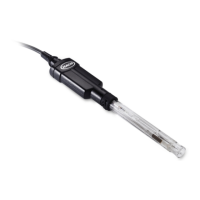

 To Next Page