7
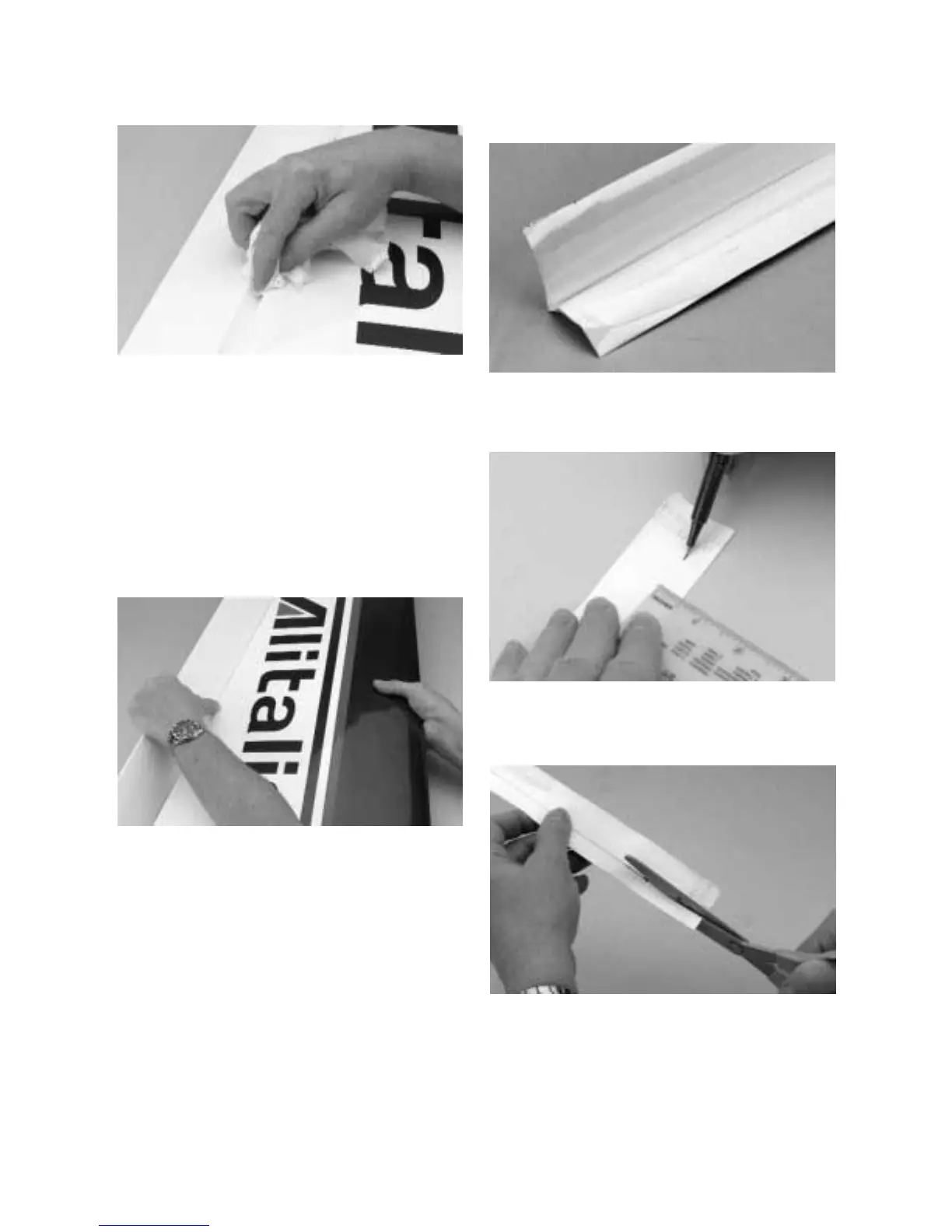
Step 6. Using CA remover/debonder and a paper towel,
remove any excess CA glue that may have accumulated on the
wing or in the aileron hinge area.
Step 7. Repeat this process with the other wing panel,
Step 8. After both ailerons are hinged, firmly grasp the wing
panel and aileron to check to make sure the hinges are securely
glued and cannot be pulled out. Do this by carefully applying
medium pressure, trying to separate the aileron from the wing
panel. Use caution not to crush the wing structure.
Note: Work the aileron up and down several times to
"work in" the hinges and check for proper movement
Sealing the Hinge Gaps
It’s important that the aileron and elevator hinge lines be sealed
airtight to improve flight performance and reduce the risk of
flutter. Sealing the hinge line has several advantages. A sealed
hinge line gives a greater control response for a given control
deflection. It also offers more precise, consistent control
responses and makes trimming easier.
Caution: Sealing the aileron and elevator hinge line should
be considered mandatory on any larger performance model!
Failure to do so may cause control surface flutter, resulting in
a crash.
Step 9. Cut two pieces of Clear UltraCote
®
(HANU887 not
included) for sealing the ailerons to approximately 3" x 33". Fold
both pieces of UltraCote down the center with the adhesive side
to the outside making a sharp crease at the fold.
Step 10. Using a ruler, measure 1
1
/2" from the folded crease
and mark the pieces with a felt-tipped pen or pencil.
Step 11. Using a sharp hobby knife with a #11 blade and a
straight edge, carefully cut through both layers of UltraCote
®
covering at the 1
1
/2" point marked in Step 2. Cut both pieces.



 To Next Page