EasyManua.ls Logo

Harbor Freight Tools Predator 63584 - User Manual

Harbor Freight Tools Predator 63584
22 pages
Print Icon
To Next Page IconTo Next Page
Loading...
!"#"$%&'(%)*+#"$*%,$-%.$$/-00)))1.,(+&(2(*"3.$14&5
65,"7%&'(%$*4.8"4,7%#'//&($%,$-%/(&9'4$#'//&($:.,(+&(2(*"3.$14&5
65,"7%&'(%*83"8*%#'//&($%,$-%/(*9,$&(:.,(+&(2(*"3.$14&5
Owners Manual & Safety Instructions
Save This Manual Keep this manual for the safety warnings and precautions, assembly,
operating, inspection, maintenance and cleaning procedures. Write the product’s serial number in the
back of the manual near the assembly diagram (or month and year of purchase if product has no number).
Keep this manual and the receipt in a safe and dry place for future reference. 19f
Using a generator indoors CAN
KILL YOU IN MINUTES.
Generator exhaust contains carbon monoxide.
This is a poison you cannot see or smell.
NEVER use inside
a home or garage,
EVEN IF doors and
windows are open.
Only use OUTSIDE
and far away from
windows, doors,
and vents.
When unpacking, make sure that the product is intact
and undamaged. If any parts are missing or broken,
please call 1-888-866-5797 as soon as possible.
Copyright
©
2017 by Harbor Freight Tools
®
. All rights reserved.
No portion of this manual or any artwork contained herein may be reproduced in
any shape or form without the express written consent of Harbor Freight Tools.
Diagrams within this manual may not be drawn proportionally. Due to continuing
improvements, actual product may differ slightly from the product described herein.
Tools required for assembly an d se rv ic e may n ot b e in cl uded.
Read this material before using this product.
Failure to do so can result in serious injury.
SAVE THIS MANUAL.
Question and Answer IconNeed help?

Do you have a question about the Harbor Freight Tools Predator 63584 and is the answer not in the manual?

Summary

Introduction and Safety Warnings

Carbon Monoxide Hazard Warning

Alerts to the danger of carbon monoxide poisoning from generator exhaust.

General Safety Precautions

Emphasizes reading the manual and checking for damage before use.

Generator Specifications

Technical Specifications Overview

Details output, displacement, engine type, fuel, oil capacity, and dimensions.

Safety Information and Definitions

Warning Symbols and Definitions

Explains hazard alert symbols (Danger, Warning, Caution) and their meanings.

Important Safety Instructions

Critical safety advice for operating the generator safely and preventing injury.

Setup Precautions

Grounding and Electrical Setup

Covers proper grounding, connections to building electrical systems, and electrician requirements.

Operating Precautions: Safety

Carbon Monoxide and Ventilation Safety

Crucial warnings about using the generator outdoors and away from living spaces.

Fire and Fuel Safety

Precautions against fire hazards related to fuel handling and operation.

Operating Precautions: General Usage

Electrical Safety and Load Management

Guidelines on avoiding overloading, electric shock, and managing electrical loads.

Personal and Environmental Safety

Advice on noise, pacemakers, dress code, cleanliness, and hazardous atmospheres.

Equipment Handling and Transport

Instructions for safe transport, securing the unit, and general equipment care.

Parallel Kit and Service Procedures

Parallel Kit Usage Guidelines

Safety rules for connecting two generators using a parallel kit.

Service and Refueling Precautions

Service Preparation Steps

Steps to take before performing maintenance or cleaning on the generator.

Refueling Safety Precautions

Critical safety steps to follow when refueling the generator.

Setup and Control Panel

Grounding and Battery Connection

Procedures for grounding the generator and connecting the electric start battery.

Control Panel Components Overview

Identification and function of various controls and outlets on the generator's panel.

Generator Component Identification

Generator Front View Components

Labels and identification of parts visible on the generator's front.

Generator Rear and Interior Components

Labels and identification of parts on the generator's rear and interior.

Display Screen Information

Display Screen Symbology

Explanation of icons and symbols shown on the generator's digital display.

Operational Indicator Meanings

Details the meaning of various indicators like voltage, amperage, and runtime.

Operation: Pre-Start and Fueling

Pre-Start Inspection Procedures

Essential inspection steps before starting the generator to ensure proper function.

Checking and Filling Engine Oil

Step-by-step guide for checking and adding the correct engine oil.

Checking and Filling Fuel Tank

Instructions for safely checking and filling the fuel tank with appropriate gasoline.

Starting the Engine: Manual Start

Manual Start Procedure

Detailed steps for starting the generator using the manual pull-start method.

Engine Start Troubleshooting

Common issues and checks if the engine fails to start.

Engine Break-in Period Guidance

Guidance on allowing the engine to stabilize after starting.

Starting the Engine: Electric Start and Break-in

Electric Start Procedure

Step-by-step instructions for starting the generator using the electric start button.

Engine Break-in Period Details

Requirements and duration for the engine's initial break-in period.

Connecting Loads to the Generator

12 VDC Output Usage Guidelines

Guidelines for using the 12VDC receptacle for charging batteries.

Connecting 120 VAC Loads

How to calculate power draw and connect 120VAC appliances safely.

Generator Operational Indicators and Modes

Overload and Low Oil Indicators

Explains the function of overload and low oil shutdown indicators.

Economy (ESC) Switch Functionality

Details how to use the Economy switch for noise and fuel efficiency.

Digital Display Screen Monitoring

How to use the display screen to monitor generator status.

Stopping the Engine

Emergency Shutoff Procedure

How to quickly stop the engine in an emergency situation.

Normal Shutdown Procedure

Step-by-step guide for safely shutting down the generator under normal conditions.

Maintenance Overview and Schedule

General Maintenance Safety Warnings

Safety precautions to prevent accidental starting and equipment failure during maintenance.

Maintenance Schedule and Frequency

A schedule outlining recommended maintenance tasks and their frequency.

Fuel and Oil Maintenance Procedures

Detailed Fueling Procedures

Comprehensive steps for safely checking and filling the fuel tank.

Engine Oil Change Instructions

Detailed guide on how to change the engine oil, including draining and refilling.

Engine Component Maintenance

Air Filter Element Cleaning

Instructions for cleaning the air filter elements for optimal engine performance.

Spark Arrestor Cleaning and Safety

Procedure for cleaning the spark arrestor and related safety warnings.

Spark Plug Maintenance

Spark Plug Inspection and Cleaning

Steps for inspecting the spark plug's condition and cleaning it.

Spark Plug Replacement and Installation

Guidance on replacing the spark plug, including gap adjustment and tightening.

Generator Storage

Preparing Engine for Storage

Steps for cleaning, fueling with stabilizer, and lubricating for storage.

Storage Area and Post-Storage

Advice on selecting a storage location and procedures after storage.

Troubleshooting Engine Start Problems

Fuel System Troubleshooting

Diagnosing and resolving issues related to fuel supply and quality for engine start.

Ignition and Compression Issues

Troubleshooting problems related to the spark plug, ignition system, and engine compression.

Engine Oil and Spark Arrestor Checks

Checking engine oil level and spark arrestor for start-up issues.

Troubleshooting Performance and Operation

Engine Performance Issues

Diagnosing and resolving engine misfires, knocking, and backfiring.

Engine Stoppage and Load Issues

Addressing sudden engine stops and issues when running under heavy load.

Device Power and Operation Issues

Troubleshooting when connected devices lack power or operate abnormally.

Summary

Introduction and Safety Warnings

Carbon Monoxide Hazard Warning

Alerts to the danger of carbon monoxide poisoning from generator exhaust.

General Safety Precautions

Emphasizes reading the manual and checking for damage before use.

Generator Specifications

Technical Specifications Overview

Details output, displacement, engine type, fuel, oil capacity, and dimensions.

Safety Information and Definitions

Warning Symbols and Definitions

Explains hazard alert symbols (Danger, Warning, Caution) and their meanings.

Important Safety Instructions

Critical safety advice for operating the generator safely and preventing injury.

Setup Precautions

Grounding and Electrical Setup

Covers proper grounding, connections to building electrical systems, and electrician requirements.

Operating Precautions: Safety

Carbon Monoxide and Ventilation Safety

Crucial warnings about using the generator outdoors and away from living spaces.

Fire and Fuel Safety

Precautions against fire hazards related to fuel handling and operation.

Operating Precautions: General Usage

Electrical Safety and Load Management

Guidelines on avoiding overloading, electric shock, and managing electrical loads.

Personal and Environmental Safety

Advice on noise, pacemakers, dress code, cleanliness, and hazardous atmospheres.

Equipment Handling and Transport

Instructions for safe transport, securing the unit, and general equipment care.

Parallel Kit and Service Procedures

Parallel Kit Usage Guidelines

Safety rules for connecting two generators using a parallel kit.

Service and Refueling Precautions

Service Preparation Steps

Steps to take before performing maintenance or cleaning on the generator.

Refueling Safety Precautions

Critical safety steps to follow when refueling the generator.

Setup and Control Panel

Grounding and Battery Connection

Procedures for grounding the generator and connecting the electric start battery.

Control Panel Components Overview

Identification and function of various controls and outlets on the generator's panel.

Generator Component Identification

Generator Front View Components

Labels and identification of parts visible on the generator's front.

Generator Rear and Interior Components

Labels and identification of parts on the generator's rear and interior.

Display Screen Information

Display Screen Symbology

Explanation of icons and symbols shown on the generator's digital display.

Operational Indicator Meanings

Details the meaning of various indicators like voltage, amperage, and runtime.

Operation: Pre-Start and Fueling

Pre-Start Inspection Procedures

Essential inspection steps before starting the generator to ensure proper function.

Checking and Filling Engine Oil

Step-by-step guide for checking and adding the correct engine oil.

Checking and Filling Fuel Tank

Instructions for safely checking and filling the fuel tank with appropriate gasoline.

Starting the Engine: Manual Start

Manual Start Procedure

Detailed steps for starting the generator using the manual pull-start method.

Engine Start Troubleshooting

Common issues and checks if the engine fails to start.

Engine Break-in Period Guidance

Guidance on allowing the engine to stabilize after starting.

Starting the Engine: Electric Start and Break-in

Electric Start Procedure

Step-by-step instructions for starting the generator using the electric start button.

Engine Break-in Period Details

Requirements and duration for the engine's initial break-in period.

Connecting Loads to the Generator

12 VDC Output Usage Guidelines

Guidelines for using the 12VDC receptacle for charging batteries.

Connecting 120 VAC Loads

How to calculate power draw and connect 120VAC appliances safely.

Generator Operational Indicators and Modes

Overload and Low Oil Indicators

Explains the function of overload and low oil shutdown indicators.

Economy (ESC) Switch Functionality

Details how to use the Economy switch for noise and fuel efficiency.

Digital Display Screen Monitoring

How to use the display screen to monitor generator status.

Stopping the Engine

Emergency Shutoff Procedure

How to quickly stop the engine in an emergency situation.

Normal Shutdown Procedure

Step-by-step guide for safely shutting down the generator under normal conditions.

Maintenance Overview and Schedule

General Maintenance Safety Warnings

Safety precautions to prevent accidental starting and equipment failure during maintenance.

Maintenance Schedule and Frequency

A schedule outlining recommended maintenance tasks and their frequency.

Fuel and Oil Maintenance Procedures

Detailed Fueling Procedures

Comprehensive steps for safely checking and filling the fuel tank.

Engine Oil Change Instructions

Detailed guide on how to change the engine oil, including draining and refilling.

Engine Component Maintenance

Air Filter Element Cleaning

Instructions for cleaning the air filter elements for optimal engine performance.

Spark Arrestor Cleaning and Safety

Procedure for cleaning the spark arrestor and related safety warnings.

Spark Plug Maintenance

Spark Plug Inspection and Cleaning

Steps for inspecting the spark plug's condition and cleaning it.

Spark Plug Replacement and Installation

Guidance on replacing the spark plug, including gap adjustment and tightening.

Generator Storage

Preparing Engine for Storage

Steps for cleaning, fueling with stabilizer, and lubricating for storage.

Storage Area and Post-Storage

Advice on selecting a storage location and procedures after storage.

Troubleshooting Engine Start Problems

Fuel System Troubleshooting

Diagnosing and resolving issues related to fuel supply and quality for engine start.

Ignition and Compression Issues

Troubleshooting problems related to the spark plug, ignition system, and engine compression.

Engine Oil and Spark Arrestor Checks

Checking engine oil level and spark arrestor for start-up issues.

Troubleshooting Performance and Operation

Engine Performance Issues

Diagnosing and resolving engine misfires, knocking, and backfiring.

Engine Stoppage and Load Issues

Addressing sudden engine stops and issues when running under heavy load.

Device Power and Operation Issues

Troubleshooting when connected devices lack power or operate abnormally.

Overview

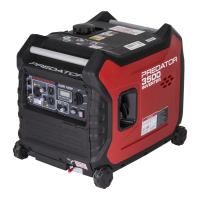
This document serves as the Owner's Manual and Safety Instructions for the Predator 3500 Watt Portable Inverter Generator. It provides comprehensive guidance on the safe operation, maintenance, and troubleshooting of the device, ensuring users can maximize its lifespan and performance while minimizing risks.

Function Description

The Predator 3500 Watt Portable Inverter Generator is designed to provide portable electrical power for various applications. It generates 120VAC at 60Hz and 25A (single phase), with a nominal 12VDC output at 8A. The generator offers 3000 running watts and a maximum of 3500 starting watts, making it suitable for powering a range of tools and appliances. Its inverter technology ensures a stable and clean power output, which is crucial for sensitive electronics. The generator is equipped with multiple receptacles, including two NEMA #5-20 (3-prong, 120VAC) outlets, one NEMA #L5-30 (3-prong, 120VAC) outlet, and one 12VDC two-pin outlet, offering versatility in connecting different electrical loads. The engine is a 212cc horizontal single-cylinder, 4-stroke, OHV, forced air-cooled unit, designed for efficient and reliable power generation.

Usage Features

The generator incorporates several features to enhance user experience and safety during operation.

  • Starting the Engine: The manual details both manual and electric start procedures. For manual start, users must move the Economy (ESC) Switch to OFF, turn the Combination Switch to START, and then pull the Starter Handle. For electric start, after setting the ESC Switch to OFF and the Combination Switch to START, users press and hold the Starter Button. The OUTPUT light illuminates when the engine starts and power is produced, after which the Combination Switch is moved to RUN.
  • Economy (ESC) Switch: This switch allows users to limit noise and fuel consumption for lighter generator loads by turning it ON. For full speed operation, heavy loads, or 12VDC output, it should be turned OFF.
  • Connecting Loads: The manual emphasizes calculating power draw by multiplying volts and amps to determine wattage, ensuring the total electrical rating of connected devices does not exceed the generator's running wattage or startup surge limits. It advises plugging in appliances from largest to smallest load and warns against allowing the generator to run out of fuel with devices attached, as this can cause power spikes and damage.
  • 12VDC Output: The 12VDC receptacle is specifically for charging 12-volt lead-acid batteries using an appropriate charge controller (not included). It's crucial not to use any 120VAC outlet while using the 12VDC outlet and to ensure connected devices do not draw more than 8 amps. A reset button is available if the 12VDC circuit protection trips.
  • Digital Display Screen: The generator features a digital display that monitors operating status, showing indicators for voltage (V), amperage (A), volt amps/watts (VA), and current/accumulative run time (Hour). It also displays warning symbols for AC overvoltage (U>), AC undervoltage (U<), generator output overcurrent (I>), generator output short circuit, inverter overheating, and maintenance time, providing immediate feedback on the generator's health and potential issues.
  • Overload Indicator: The OVERLOAD light turns on if the generator is overloaded, indicating that the total combined load exceeds the unit's running power. Users are instructed to turn off and disconnect all electrical devices, stop the engine, and reduce the load before restarting.
  • Low Oil Indicator: If the engine oil level is too low, the LOW OIL light illuminates, and the engine automatically shuts off. The engine cannot be restarted until the proper amount of oil is added.
  • Grounding: The generator must be earth-grounded in accordance with all relevant electrical codes and standards. A #4 AWG grounding wire (not included) should connect the Grounding Terminal on the Control Panel to an earth-driven copper or brass rod (electrode).
  • Parallel Kit Compatibility: The generator is designed to be used with a Parallel Kit (sold separately) for increased power output. Specific instructions for connecting and using the Parallel Kit are provided, emphasizing that only two identical Inverter Generators should be connected and that the kit should not be removed or connected while the generator is running.
  • Safety Precautions: The manual extensively covers safety, including warnings about carbon monoxide poisoning (emphasizing outdoor use only), fire hazards (especially during refueling), electrical shock prevention, and the importance of wearing personal protective equipment like safety goggles and hearing protection. It also advises against operating the generator in explosive atmospheres or near flammable materials.

Maintenance Features

Regular maintenance is crucial for the generator's longevity and safe operation. The manual provides a detailed schedule and procedures for various maintenance tasks.

  • Pre-Start Checks: Before each use, users must inspect the engine and generator for damaged, loose, or missing parts. Crucially, the engine's crankcase must be filled with oil before first use, and the oil level checked before every subsequent use.
  • Checking and Filling Engine Oil: The manual outlines steps to check the oil level using the dipstick and add SAE 10W-30 oil as needed, ensuring the level is at the edge of the hole.
  • Engine Oil Change: A procedure for changing engine oil is provided, which involves removing the oil drain plug, tilting the generator to drain used oil, and then refilling with fresh SAE 10W-30 oil. The break-in period (first 30 hours of use) requires an oil change after this period.
  • Checking and Filling Fuel: Users are instructed to clean the fuel cap and surrounding area, unscrew the cap, remove and clean the strainer, then fill the fuel tank with 87+ octane or higher unleaded gasoline treated with a fuel stabilizer additive. It explicitly warns against using gasoline with more than 10% ethanol (E10) or E85 ethanol, as this voids the warranty.
  • Air Filter Element Maintenance: This involves loosening screws to remove the Access Panel, then removing and checking the air filter elements for dirt. Cleaning instructions for both paper and foam filter elements are provided, including using pressurized air for paper filters and washing with mild detergent for foam filters.
  • Spark Arrestor Maintenance: The manual details how to remove the grate and spark arrestor to clean it with a wire brush, emphasizing the importance of securing it back in place to prevent brush fires.
  • Spark Plug Maintenance: This section covers removing the spark plug, inspecting it for oil or deposits, cleaning it with a dry rag or emery paper, and replacing it if cracked or chipped. It specifies using only F7RTC type spark plugs or equivalent, adjusting the gap, applying anti-seize material to threads, and tightening it properly to prevent overheating or engine block damage.
  • Storage: For extended storage (over 20 days), the manual provides a comprehensive procedure:
    • Cleaning: Clean the engine with a dry cloth after it cools, avoiding water.
    • Fuel: Fill the tank with stabilizer-treated gasoline. It also details draining untreated gasoline if it has been sitting for a month.
    • Lubrication: Change engine oil, clean around the spark plug, pour a tablespoon of engine oil into the cylinder, replace the spark plug (leaving the cap disconnected), and pull the Starter Handle to distribute oil.
    • Storage Area: Store the generator in a dry, level, well-ventilated area away from ignition sources and out of reach of children.
    • After Storage: Before restarting after storage, users are advised to drain old fuel and refill with fresh fuel if untreated gasoline has been sitting for a month or if the engine does not start.
  • Troubleshooting: A detailed troubleshooting guide is included, listing common problems (e.g., engine will not start, engine misfires, engine stops suddenly, engine knocks, engine backfires, attached device doesn't have power, attached device operates abnormally), their possible causes (fuel-related, ignition-related, compression-related, engine oil-related, spark arrestor-related, device-related), and probable solutions.

The manual stresses that many maintenance procedures require a qualified technician, and users should not attempt repairs they are uncertain about. It also highlights the importance of maintaining labels and nameplates for important information.

Harbor Freight Tools Predator 63584 Specifications

General IconGeneral
Model63584
TypePortable Generator
Engine Type4-stroke OHV
Fuel TypeGasoline
Starting SystemRecoil
Voltage120V
Frequency60 Hz
Outlets1 x 12V DC

Related product manuals