6 Instruction manual ICON
Information Symbols
Note
Note, non-compliance with which can lead to operating malfunctions or damage.
Pictorial Note
This symbol, together with its number, refers to the relevant illustration at the end of the
instructions.
2.3 Proper Use
The use which the machine is intended for, is described in Section 1.2.
The following applies to safe operation:
The details at Section 1.3, “Technical Data“, count as mandatory operating limits and ratings.
Shearing other animals, in particular dangerous animals such as beasts of prey and the like,
counts as misuse. This could lead to circumstances dangerous to life and limb.
2.4 Safety Principles
2.4.1 Drive Connections
Only connect the machine up to undamaged, inspected shearing drive shafts & motors
(shearing plants). Damaged shafts or motors can cause lock up which can cause serious injury.
Defective installations can cause an electric shock or a short circuit.
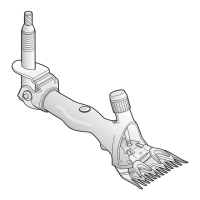
Make sure to use the correct type of drive coupling, i.e. only connect a worm-drive type
handpiece to a worm-drive type shearing drive (Illustration 1, Item 1) and a pin-drive handpiece
to a pin-drive shearing drive (Illustration 1, Item 2). Do not mix the two system as it can cause
malfunction and unexpected behaviour of the whole system.
Servicing and cleaning must only be carried out when the machine is removed from the drive
(shearing plants).
Never leave the machine unsupervised when connected to a shearing drive. Keep children
away from the working area and store the machine out of their reach.
2.4.2 Servicing and Checking Requirements
Only operate the machine if it is undamaged and in a proper condition. Any defects to the
housing (barrel) or the drive shaft connection should be rectified by a repair or service agent.
2.4.3 Noise Emission / Personal Protective Equipment
Wear Ear Protectors !
Typical sound emission when working are >70 dB(A). We recommend that ear protectors
should always be worn when working.
Illustr. 1


 To Next Page