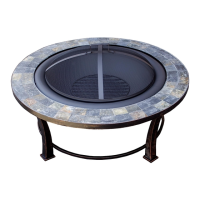
This document is the owner's manual for the Hiland Premium Series Outdoor Fire Pit Table, Model # FS-2017-FPT. It provides comprehensive instructions for assembly, operation, maintenance, and safety precautions related to the gas-fired outdoor infrared patio heater.
Function Description:
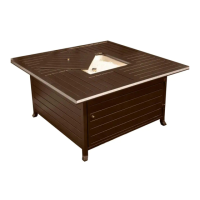
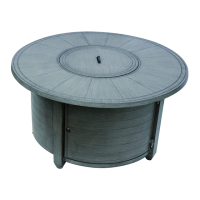
The Hiland Outdoor Fire Pit Table is a gas-fired appliance designed for outdoor use to provide warmth and ambiance. It operates using propane gas and is intended for decorative heating purposes. The unit is designed to be a freestanding fire pit table, featuring a central burner area where glass beads are placed, and a surrounding table surface. The design incorporates a control compartment for managing the gas flow and ignition, and a storage area for a standard 20 lb. propane cylinder.
Usage Features:
The fire pit table is designed for ease of use with several features to ensure a safe and enjoyable experience. It is fueled by propane gas, which is supplied from a standard 20 lb. propane cylinder (sold separately). The connection between the cylinder and the fire pit is made via a hose and regulator assembly, which must be securely attached and leak-tested before operation.
The ignition process involves turning a control knob to the "OFF" position, fully opening the LP cylinder valve, and then pushing in and turning the gas control knob counterclockwise to "IGNITE." The unit is designed to light with an audible clicking sound. Once lit, the flame intensity can be adjusted by turning the control knob to "HIGH" for maximum heat or "LOW" for a lower temperature.
The fire pit is intended for outdoor use only and should never be operated inside a building, garage, or any other enclosed area. Adequate fresh air ventilation is crucial for safe operation. Users are advised to ensure the surrounding areas are clear of combustible materials, gasoline, and other flammable vapors or liquids. The unit should be placed on a hard and level surface, maintaining minimum clearances from combustible materials: two feet from the sides and rear, and six feet from the ceiling.
For initial start-up or after a cylinder change, the control knob should be held in for two minutes to purge air from the gas lines before proceeding with ignition. If the burner fails to remain lit, all valves should be closed, and a waiting period of at least five minutes should pass before attempting to relight. The burner is designed to display blue and yellow flames; excessive yellow flame or thick black smoke indicates an airflow obstruction, requiring the unit to be turned off and inspected.
The fire pit includes a burner cover, which should be placed on the burner when the unit is not in use to protect it from the elements.
Maintenance Features:
Regular maintenance is essential to ensure years of outstanding performance and safe operation of the fire pit table.
- Cleaning: Exterior surfaces should be cleaned with warm soapy water. Flammable or corrosive cleaning agents should never be used. The area around the burner must be kept dry at all times, and the control valve assembly should never be submerged in water. If submerged, it must be replaced.
- Airflow and Ventilation: It is imperative to keep the control compartment, burners, and circulating air passageways clean and unobstructed. Signs of possible blockage include gas odor with extreme yellow flame tipping, the fire pit not reaching the desired temperature, excessively uneven glow, or popping noises. Spiders and insects can nest in burner orifices, creating dangerous conditions. Burner holes should be cleaned using a heavy-duty pipe cleaner, and compressed air can help clear smaller particles. Carbon deposits, which can create a fire hazard, should be cleaned with warm soapy water.
- Inspection: The fire pit should be thoroughly inspected before each use and at least annually by a qualified service person. The hose assembly should be checked for excessive abrasion, cuts, or wear, and suspected areas should be leak-tested. Any damaged hose must be replaced with a manufacturer-specified replacement. The burner should also be inspected for damage and replaced if necessary.
- Storage: Between uses, the control knob should be turned OFF, and the LP source disconnected. The fire pit should be stored upright in an area sheltered from direct contact with inclement weather (rain, sleet, hail, snow, dust, and debris). Covering the fire pit can protect exterior surfaces and prevent build-up in air passages. During periods of extended inactivity or when transporting, the LP source should be disconnected, and the cylinder moved to a secure, well-ventilated outdoor location. The LP cylinder should never be left exposed to direct sunlight or excessive heat.
- Corrosion Prevention: In salt-air environments, corrosion occurs more quickly. Users should frequently check for corroded areas and repair them promptly. Applying a high-quality automobile wax to the exterior surfaces (not the burner) can help maintain the appearance of the fire pit.
- Leak Testing: A leak test must be performed outdoors before initial use and whenever gas connections are loosened or removed. This involves applying a solution of liquid dishwashing detergent and water to all connections. The appearance of bubbles indicates a leak, requiring the connection to be tightened or the component replaced.
Only a qualified service person should repair gas passages and associated components. Users are cautioned to allow the fire pit to cool before attempting any service.


 To Next Page
 General