EasyManua.ls Logo

Hitachi UST-52105 - User Manual

Hitachi UST-52105
48 pages
Print Icon
To Next Page IconTo Next Page
Loading...
i
MN1-5064 Rev.16
Notes for operators and responsible maintenance personnel
★
Please read through this Instruction Manual carefully prior to use.
★
Keep this Instruction Manual together with the ultrasound diagnostic instru-
ment for any future reference.
© Hitachi, Ltd. 2013, 2017. All rights reserved.
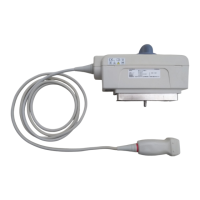
Electronic Sector Probe
UST-52105
Instruction Manual
MN1-5064 Rev.16

Table of Contents

Question and Answer IconNeed help?

Do you have a question about the Hitachi UST-52105 and is the answer not in the manual?

Overview

This document is the Instruction Manual for the Electronic Sector Probe UST-52105, manufactured by Hitachi, Ltd. It provides essential information for the safe and efficient operation, maintenance, and disposal of the ultrasound probe.

Function Description

The UST-52105 is an ultrasound probe intended for use by medical professionals to perform ultrasonic observations of surrounding organs when placed in direct contact with the skin. It operates by converting electrical vibrations into mechanical vibration energy to emit pulse-shaped ultrasonic waves into the body. The probe then receives reflected ultrasonic waves, which are converted back into electrical signals and processed to display an image of the region of interest on an ultrasound diagnostic instrument.

Important Technical Specifications

  • Application regions: Circulatory organs, general areas.
  • Form of application to patient: Surface.
  • Compatible instruments: SSD-α5, SSD-α10, Prosound α 7, Prosound F75, ARIETTA 70.
  • Field of view: 90°.
  • Frequency: 2.5 to 4.3 MHz.
  • Cable length: 1.8 m.
  • Weight: 900 g.
  • Service life: Three years.
  • Range of applied part: Ultrasonic irradiation area, probe tip itself, and 1 m of the cable near the probe tip.
  • IPX7 range: As shown in the figure in section 2-2.
  • Classification based on degree of protection against electric shock: Type BF applied part.
  • Classification for protection against ingress of liquids: IPX7 (Watertight equipment).
  • Operation mode: Continuous operation.
  • Environmental conditions (Operating):
    • Ambient temperature: 10°C to 40°C (50°F to 104°F).
    • Relative humidity: 30% to 75%.
    • Atmospheric pressure: 700 hPa to 1060 hPa.
    • Altitude: 3,000 m or less.
  • Environmental conditions (Storage):
    • Ambient temperature: -10°C to 50°C (14°F to 122°F).
    • Relative humidity: 10% to 90%.
    • Atmospheric pressure: 700 hPa to 1060 hPa.
  • Measurement tolerances: The manual specifies testing for sensitivity and resolution.

Usage Features

  • Connection and Removal: The probe connects to an ultrasound diagnostic instrument via a lock lever mechanism. To connect, align the lock lever to the RELEASE position, firmly insert the connector, and then turn the lever clockwise to the LOCK position. Removal follows the reverse procedure. It is crucial to ensure the power switch is OFF or the image is frozen before connecting or removing the probe.
  • Operation: The ultrasonic irradiation area of the probe is brought into contact with the skin surface. The image is displayed on the monitor of the ultrasound diagnostic instrument. Users are cautioned against using excessive force, scanning for longer than necessary, or using unapproved equipment.
  • Safety Precautions: The manual emphasizes reading safety information carefully, categorized into "Danger," "Warning," "Caution," and "Note." Key warnings include not using the probe on eyes, not disassembling or repairing it, and ensuring proper cleaning, disinfection, and sterilization before use. Operators must wear medical gloves during examinations.
  • Start-up Check: Before each use, a visual check of the probe tip, ultrasonic irradiation area, cable, and connector is mandatory to identify any abnormalities. Verification of cleaning, disinfection, and sterilization is also required. Finally, the probe's operation must be checked by connecting it to the diagnostic instrument and confirming the displayed image and frequency match the selected probe.

Maintenance Features

  • Cleaning, Disinfection, and Sterilization: The manual provides detailed instructions for reprocessing the probe, which is crucial for preventing infection.
    • Pre-cleaning: Immediately after use, flush the probe with tap water to remove blood or fluid and wipe the surface with a gauze pad.
    • Containment and Transportation: Place the contaminated equipment into a shock and damage-proof container for transport.
    • Manual Cleaning: Involves using a detergent (e.g., ENZOL®/Cidezyme®) at a specific temperature (15-30°C) and concentration (1.6%). The probe is submerged, scrubbed with a soft cloth, rinsed, and submerged again in deionized water.
    • Manual Disinfection: Utilizes a disinfectant solution (e.g., Cidex® OPA, Glutaral, Ortho-phthalaldehyde, Benzonium chloride, Didecyl dimethylammonium chloride, Dimethyl-dioctyl-ammonium-chloride, Peracetic acid, Hydrogen peroxide) at specific concentrations and temperatures for a minimum contact time of 5 minutes. This is followed by rinsing with deionized water.
    • Automated Cleaning and Disinfecting: The UST-52105 probe cannot withstand automated cleaning and disinfecting.
    • Drying: After cleaning and disinfection, wipe the probe with a lint-free cloth or towel. If using a drying heater, the temperature limit is 60°C. Natural drying should be between 15-30°C for a minimum of 4 hours.
    • Packaging: Store the disinfected probe in a dustproof environment or package it in a pouch suitable for sterilization (ISO 11607-1 and ISO 11607-2 compliant).
    • Sterilization: The probe is compatible with STERRAD® sterilization (using hydrogen peroxide 58% density) and liquid sterilization (USA only, using hydrogen peroxide, peracetic acid, glutaraldehyde, or glutaral). Specific instructions are provided for each method, including warnings against using STERRAD if the probe is not compatible.
  • Periodic Inspection:
    • Safety Tests: Conducted annually by a qualified technician to check patient leakage current (AC and F-type applied part) according to IEC 60601-1:2005.
    • Testing of Measurement Tolerances: Performed annually to assess sensitivity and resolution.
  • Storage: After cleaning, disinfection, and sterilization, the probe should be stored in its storage case under specified environmental conditions (ambient temperature -10°C to 50°C, relative humidity 10% to 90%, atmospheric pressure 700 hPa to 1060 hPa).
  • Moving and Transporting: When moving or transporting the probe, it should be prepared and packed in a cardboard box for additional protection, ensuring it is protected from physical impact.

Hitachi UST-52105 Specifications

General IconGeneral
BrandHitachi
ModelUST-52105
CategoryMeasuring Instruments
LanguageEnglish

Related product manuals