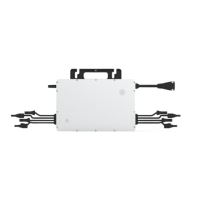
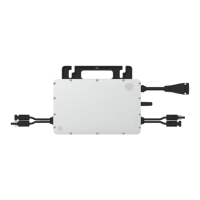
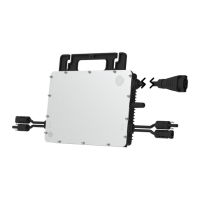
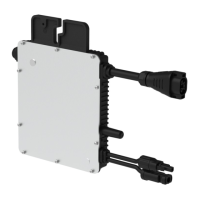
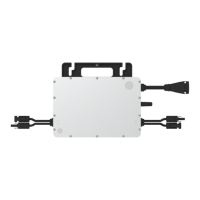
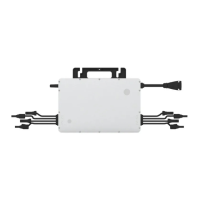
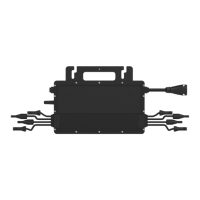
The Hoymiles Single-phase Microinverter, specifically the HMS-600/700/800/900/1000-2T series, is a crucial component in a grid-tied PV inverter system. Its primary function is to convert direct current (DC) generated by solar PV modules into alternating current (AC) suitable for feeding into the public grid. This system is designed for 2-in-1 microinverters, meaning each microinverter connects to two PV modules.
Function Description
At its core, the microinverter system is composed of multiple microinverters working in conjunction. Each microinverter operates independently, a key feature that ensures maximum power generation from each individual PV module. This independent operation is achieved through Maximum Power Point Tracking (MPPT) at the module level. This means that if one PV module experiences shading or a fault, the performance of other modules connected to the same microinverter, or other microinverters in the system, remains unaffected. This significantly boosts the overall power production of the solar system.
The microinverter also provides module-level data monitoring. It continuously tracks the current, voltage, and power output of each connected PV module. This granular data is collected by a Hoymiles gateway Data Transfer Unit (DTU) via wireless transmission, utilizing Sub-1G technology, and then sent to the Hoymiles S-Miles Cloud monitoring platform. This allows users to monitor their system's performance in detail, identifying any underperforming modules or potential issues.
A significant safety aspect of this microinverter is its handling of DC voltage. Unlike traditional string inverters that can carry hundreds of volts of DC, the microinverter operates with a much lower DC voltage, typically a few dozen volts (less than 80 volts). This drastically reduces safety hazards during installation and operation.
The HMS-1000 series microinverters utilize Sub-1G wireless communication for enhanced stability with the Hoymiles DTU gateway. This technology offers a substantially longer range and superior interference suppression compared to 2.4GHz bands (like Wi-Fi or Zigbee), making it particularly well-suited for industrial or commercial PV power plants and rooftop installations where communication reliability is paramount. Sub-1G operates on 868 MHz or 915 MHz bands, covering 1.5 to 2 times longer distances than 2.4GHz spectrum and consuming less power.
Usage Features
The Hoymiles microinverter is designed for high efficiency and reliability. It boasts a peak efficiency of 96.50% and static MPPT efficiency of 99.80%, with dynamic MPPT efficiency reaching 99.76% even in overcast weather conditions. The power factor is adjustable, ranging from 0.8 leading to 0.8 lagging, offering flexibility for grid requirements. Its robust design includes an IP67 (NEMA 6) enclosure, providing excellent protection against environmental elements, and 6000 V surge protection, ensuring durability and longevity.
Installation of the microinverter requires careful positioning. It should be installed underneath the PV module, with all DC connections also protected from direct sunlight, rain, snow buildup, and UV exposure. The silver side of the microinverter should face up towards the PV module to aid in heat dissipation. A minimum of 2 cm of space around the microinverter enclosure is necessary to ensure adequate ventilation and prevent overheating.
Connecting multiple PV modules to the microinverter involves connecting PV modules to the DC input ports. If the original cables are not long enough, DC extension cables can be used, provided they comply with local regulations. The AC Trunk Cable is used to connect the microinverter to the power distribution box. The spacing of the AC Trunk Cable connectors should match the spacing between microinverters. The AC end cable then connects to the distribution box and the local grid network. Any vacant AC Trunk Ports must be sealed with an AC Trunk Port Cap to ensure water and dust-proof protection.
For system monitoring, an installation map is created by peeling the serial number label from each microinverter and affixing it to a designated location on the map. After installation, the system is energized by turning on the AC breaker of the branch circuit and then the main AC breaker of the house. The system will typically begin generating power within two minutes. A monitoring system is then set up using the DTU and the S-Miles Cloud platform, following the respective user manuals and quick installation guides.
Maintenance Features
Routine maintenance of the microinverter system is crucial for optimal performance and longevity. Only authorized personnel are permitted to carry out maintenance operations and are responsible for reporting any anomalies. Personal protective equipment, such as gloves and goggles, must always be used during maintenance.
Regular checks of environmental conditions are recommended to ensure they have not changed over time and that the equipment is not exposed to adverse weather conditions or obstructions. If any operating anomalies are detected, the equipment should not be used until the fault is fixed and working conditions are restored. Annual inspections of various components are advised, along with cleaning the equipment using a vacuum cleaner or special brushes. It is important to note that cleaning should not be done with rags made of filamentary or corrosive materials to avoid corrosion and electrostatic charges.
Troubleshooting a malfunctioning microinverter involves a systematic approach. This includes checking if the utility voltage and frequency are within the specified range, verifying the connection to the utility grid, and ensuring all AC breakers are functioning correctly. The DC connections between the microinverter and PV modules should also be checked, along with confirming that the PV modules' DC voltage is within the allowable range. If problems persist, contacting Hoymiles customer support is recommended.
Crucially, users are explicitly warned against attempting to dismantle or repair the microinverter themselves, as there are no user-serviceable parts inside for safety and insulation reasons. All repairs must be performed with qualified spare parts by a licensed contractor or authorized Hoymiles service representative. If the AC output wiring harness is damaged, the equipment should be scrapped as it cannot be replaced.
In cases of microinverter replacement, the process involves de-energizing the AC branch circuit breaker, removing the PV module, and ensuring no current flows in the DC wires before disconnecting the DC and AC connectors. The fixing screws are then loosened, and the microinverter is removed from the racking. For replacement in the monitoring platform, the new microinverter's serial number is noted, and the replacement unit is installed. On the monitoring platform, the "Device List" page is accessed, and the "Replace Device" function is used to input the new microinverter's serial number, completing the station change.
Decommissioning the microinverter involves disconnecting it from DC input and AC output, removing all connection cables, and then removing the microinverter from its frame. It should be packed in its original packaging or a suitable carton box for storage or transportation. The storage temperature range for the microinverter is -40 to 85°C. Proper disposal of microinverters in accordance with local regulations is essential to prevent environmental harm.



 To Next Page

 General