Need help?
Do you have a question about the HP M27fe and is the answer not in the manual?
Items with a surface greater than 10 sq cm, such as Display Board*1, Main Board*1.
All types including standard alkaline, coin or button style batteries.
Include all Li-Ion batteries if more than one is provided with the product.
Components containing mercury, e.g., in lamps, display backlights, scanner lamps.
Displays with a surface greater than 100 sq cm, including gas discharge lamps panel*1.
Measuring greater than 2.5 cm in diameter or height.
Includes HDMI, VGA, and Power cords.
Plastics weighing > 25 grams, not including PCBs or PCAs.
Includes cartridges, print heads, tubes, vent chambers, and service stations.
Standard screwdriver for disassembly.
Specific screwdriver for slothead screws.
Steps for removing the external enclosure, including stand and rear cover.
Procedure for removing acetate tapes and disconnecting LVDS/LED cable.
Steps for removing the rear cover supporter and motherboard (M/B).
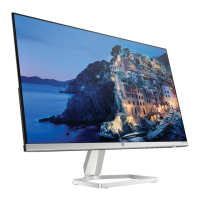
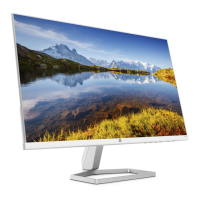
This document outlines the disassembly procedures for HP M27fe FHD Monitors, including models HP M27fe FHD Monitor-NA and HSD-0091-K. It is primarily intended for end-of-life recyclers and treatment facilities to facilitate the removal of components and materials requiring selective treatment, as defined by the EU directive 2012/19/EC on Waste Electrical and Electronic Equipment (WEEE). The overarching function of this guide is to ensure environmentally responsible recycling and disposal of the product by detailing the necessary steps for component separation.
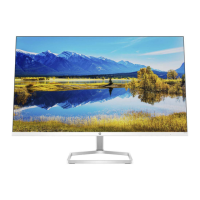
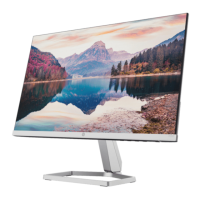
The monitor itself functions as a display unit, providing visual output for connected devices. While the document focuses on its end-of-life handling, the inherent usage features of such a monitor include displaying high-definition content, likely for personal computing, professional work, or entertainment purposes. The "FHD" in its name indicates Full High Definition, suggesting a resolution suitable for clear and detailed imagery. The "M27fe" designation likely refers to a 27-inch display, a common size for desktop monitors, offering ample screen real estate for various applications. Its design, as implied by the disassembly instructions, involves a stand for desktop placement, and connections for video input (HDMI, VGA) and power. The presence of a "Main Board" and "Display Board" indicates its core electronic functionality for processing video signals and driving the display panel.
From a maintenance perspective, this document primarily addresses end-of-life maintenance, which involves disassembly for recycling rather than user-level upkeep. However, the instructions implicitly suggest certain aspects of the monitor's construction that might relate to repairability or internal access. For instance, the use of screws for attaching the rear cover, hinge, and internal components implies a design that allows for internal access, albeit requiring specific tools like screwdrivers. The mention of "acetate tapes" on the LVDS/LED cable suggests a method of securing internal wiring, which would need to be carefully handled during any internal maintenance or repair. The document's emphasis on selective treatment for components like Printed Circuit Boards (PCBs), Liquid Crystal Displays (LCDs), and electrolytic capacitors highlights the need for specialized handling due to their material composition, which could include hazardous substances or valuable recoverable materials.
The selective treatment requirements underscore the importance of proper disposal to minimize environmental impact. PCBs, with their complex circuitry and various materials, often contain heavy metals and other substances that necessitate careful processing. LCDs, particularly those with backlights, can contain mercury, requiring specific handling to prevent its release into the environment. Electrolytic capacitors, especially larger ones, may contain substances that also require selective treatment. The instruction for recyclers to sort plastic materials into resin streams based on ISO 11469 marking codes is a key usage feature for the recycling process, ensuring that different types of plastics can be efficiently recycled and reused. This systematic approach to material separation is crucial for maximizing resource recovery and reducing waste.
The disassembly process itself is detailed in a step-by-step manner, starting with the removal of the stand, followed by the rear cover, hinge, and internal cables. This methodical approach ensures that components are removed in a logical sequence, minimizing damage and facilitating the separation of materials. The use of both text and optional graphic illustrations for complex steps further enhances the clarity and usability of the instructions for recyclers. For example, the visual guidance for pushing the stand button, twisting out screws, and identifying screw locations on the rear cover and hinge simplifies the process. The identification of specific components like the "8pin FFC" (Flexible Flat Cable) from the main board indicates a level of detail necessary for precise disassembly.
The document also specifies the tools required for disassembly: screwdrivers (both standard and slothead). This information is vital for recyclers to prepare adequately for the task. The absence of specialized or proprietary tools suggests a design that is relatively accessible for disassembly using common tools, which is beneficial for recycling operations. The focus on removing components that require selective treatment, such as PCBs, LCDs, and specific capacitors, directly supports the environmental objectives of the WEEE directive. By providing clear instructions for these critical steps, the document helps ensure that hazardous materials are properly managed and valuable resources are recovered.
In summary, while the HP M27fe FHD Monitor serves its primary function as a display device, this manual's function is to guide its responsible end-of-life management. Its usage features, from a recycling perspective, involve a structured disassembly process, clear identification of components requiring selective treatment, and the use of common tools. Maintenance, in this context, is entirely focused on the systematic deconstruction of the product to facilitate environmentally sound recycling and material recovery, adhering to regulatory standards for waste electrical and electronic equipment.
 General
| Screen Size | 27 inches |
|---|---|
| Resolution | 1920 x 1080 (Full HD) |
| Panel Type | IPS |
| Refresh Rate | 75 Hz |
| Aspect Ratio | 16:9 |
| Brightness | 300 nits |
| Ports | 1 x HDMI 1.4, 1 x VGA |
| Color Gamut | 99% sRGB |
| Contrast Ratio | 1000:1 |
| Viewing Angle | 178° horizontal; 178° vertical |
| VESA Mount | No |
| Response Time | 5 ms |
| Stand Adjustments | Tilt |
| Features | AMD FreeSync |
| Dimensions | 61.12 x 20.5 x 45.65 cm (with stand) |
| Weight | 3.4 kg (with stand) |

 To Next Page