Need help?
Do you have a question about the Huawei B315 Series and is the answer not in the manual?
Explains how to connect computers, phones, or storage devices to the router.
Steps to reset the router to its factory default settings.
Procedure for connecting devices via WPS.
Troubleshooting steps for a red indicator light after configuration.
Diagnosing issues when network indicators show specific colors but Wi-Fi is off.
Steps to resolve issues accessing the router's management interface.
General safety guidelines for operating the electronic device.
Information on preventing interference between the device and medical equipment.
Safety advice for using the device in areas with flammables or explosives.
Recommendations for suitable operating and storage environments for the device.
Precautions regarding child safety when using the device and its accessories.
Instructions for using approved accessories to avoid hazards.
Important safety information regarding the device's power adapter.
Procedures for cleaning and maintaining the device safely.
Information on emergency calls and proper disposal/recycling of the device.
Details on hazardous substances, REACH, RoHS, and EU regulatory conformance.
Details on trademarks, registered trademarks, and permissions.
Notices regarding product features, software, and specifications.
Legal disclaimer regarding the manual's content and device warranty.
Information on complying with export and import laws for the device.
Information on the device's privacy policy and data protection.
This document provides a comprehensive guide to the B315 LTE CPE, a device designed to provide wireless internet access through mobile networks and offer various connectivity options for homes and small offices. The guide covers product overview, setup instructions, Wi-Fi connection, router configuration, optional features, additional information, FAQs, troubleshooting, and safety information.
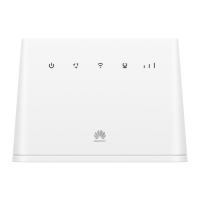
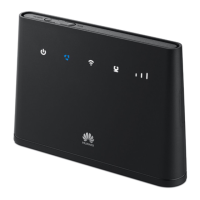
The B315 LTE CPE is primarily an LTE router that connects to mobile data networks via a SIM card, allowing users to access the internet wirelessly. It acts as a central hub for multiple devices, enabling them to share the mobile internet connection. The device also supports wired connections through Ethernet ports, allowing for flexible network setups. Additionally, it features a USB port for connecting storage devices and a landline phone port for making calls, expanding its utility beyond basic internet access.
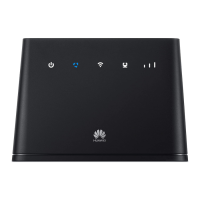
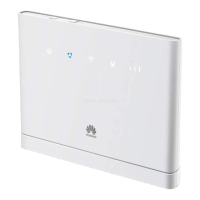
1. Quick Setup and Mobile Network Connectivity: The setup process for the B315 is straightforward. Users insert a SIM card into the designated slot and connect the power adapter. The router automatically powers on and searches for available mobile networks. Once connected, indicators light up to confirm network status and signal strength. The signal strength indicator uses white bars, where more bars signify a stronger signal, while the network status indicator changes color (cyan, blue, or yellow) to show a successful connection to a mobile network. A crucial safety note advises against inserting or removing the SIM card while the router is running to prevent damage or performance issues.
2. Wi-Fi Connectivity: The router broadcasts a Wi-Fi network, allowing computers, mobile phones, and other wireless devices to connect to the internet. The default wireless network name (SSID) and password (WIFI KEY) are found on a label at the bottom of the router. The Wi-Fi/WPS indicator remains steady when Wi-Fi is enabled. Users are strongly advised to change the default Wi-Fi network name and password through the web-based management page to enhance security and prevent unauthorized access. After changing the password, devices will need to reconnect to the updated Wi-Fi network.
3. Router Configuration via Web-Based Management: The B315 router can be configured using a web-based management page. The default IP address, username, and password for accessing this page are also located on the label at the bottom of the router. This interface allows users to customize various settings, including network parameters, security options, and other advanced features. Similar to Wi-Fi credentials, users are urged to change the default login password for the web-based management page to protect router settings from unauthorized modifications.
4. Multiple Device Connectivity: The router supports connecting multiple devices simultaneously. Users can connect computers via Ethernet cables, landline phones to the dedicated phone port, and USB storage devices to the USB port. This versatility allows for internet access, telephone calls, and file sharing across the network.
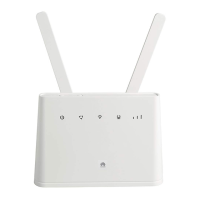
5. External Antenna Support: For improved signal reception, the B315 features external antenna sockets. Users can purchase external antennas from their network service provider and plug them into the designated sockets. If only one antenna is used, it should be plugged into the socket marked with a checkmark. It is important to note that external antennas are suitable only for indoor use and should not be used during thunderstorms. The peak gain of the external antennas is 3 dBi.
6. Ethernet Port for Internet Access: The router includes LAN/WAN ports, one of which can be configured as a WAN port. This allows the router to connect to a wall-mounted Ethernet port, providing internet access even if the mobile data allowance is used up. Users need to configure the relevant settings on the web-based management page before using this feature.
7. Huawei HiLink App Integration: For convenient management, the Huawei HiLink app can be downloaded by scanning a QR code provided in the manual. This app allows users to configure and manage the router directly from their mobile phones, offering a user-friendly interface for various settings and monitoring.
8. Wi-Fi Protected Setup (WPS): The B315 supports WPS, simplifying the process of connecting WPS-enabled devices to the Wi-Fi network. By pressing and holding the WPS button on the router for at least 2 seconds until the Wi-Fi indicator blinks, users can enable WPS. Within 2 minutes, enabling WPS on the client device will establish a connection to the router's Wi-Fi network.
9. Troubleshooting and FAQs: The manual includes sections for frequently asked questions and troubleshooting common issues. For instance, if the network status indicator is red, it suggests checking the SIM card and router placement. If the indicator is steady on cyan, blue, or yellow but the signal strength indicator is off, it indicates poor mobile network reception, advising users to move the router to a location with better reception. Issues with accessing the web-based management page are addressed by ensuring proper cable/Wi-Fi connection, automatic IP/DNS settings, trying a different browser, or restoring factory settings.
1. Restarting and Restoring Factory Settings: If users encounter issues, the first troubleshooting steps include restarting the router or restoring it to its factory settings. Restoring factory settings will clear all customized configurations, so users are advised to proceed with caution. The reset button is typically pressed for approximately 3 seconds using a pointed object until the network status indicator starts to blink.
2. Regular Software Updates: While not explicitly detailed as a user-initiated feature, the mention of "help section on the web-based management page" implies that software updates and maintenance information would be available through this interface, ensuring the router operates with the latest features and security patches.
3. Cleaning and Storage Guidelines: The manual provides detailed instructions for cleaning and storing the device to ensure its longevity and proper functioning.
4. Power Adapter Safety:
5. Safety Information and Environmental Considerations: The manual emphasizes safety, including interference with medical equipment (maintaining 15 cm distance from pacemakers), avoiding flammable/explosive environments, and general operating environment precautions (avoiding dusty, damp, dirty, or magnetic environments). It also covers child safety, advising adult supervision and keeping detachable parts away from children to prevent choking hazards. The device is designed for a minimum distance of 20 cm between the radiator and the user's body during operation.
6. Disposal and Recycling: The device and its accessories are marked with a symbol indicating that they should not be disposed of as household garbage. Instead, they should be taken to a certified collection point for recycling. This aligns with WEEE Directive Recast (2012/19/EU) and Battery Directive (2006/66/EC) to minimize environmental impact and health risks from hazardous substances. Information on REACH and RoHS compliance is also provided.
 General
| Model | Huawei B315 Series |
|---|---|
| Category | Network Router |
| LTE Category | LTE CAT4 |
| Download Speed | 150 Mbps |
| Upload Speed | 50 Mbps |
| Wi-Fi Standard | 802.11b/g/n |
| Wi-Fi Frequency | 2.4 GHz |
| Wi-Fi Speed | 300 Mbps |
| Wi-Fi Users | 32 |
| LAN Ports | 4 |
| Ethernet Ports | 4 |
| USB Port | 1 x USB 2.0 |
| Battery | No |
| Dimensions | 186 x 139 x 46 mm |
| Weight | 275 g |
| SIM Slot | 1 |

 To Next Page