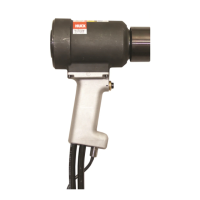
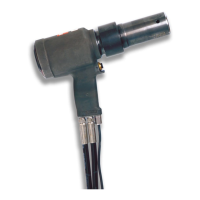
507
HYDRAULIC INSTALLATION TOOL
(HK480)
Huck Model 507 Inline Hydraulic installation Tool is
designed to install C50L HUCKBOLT® Fasteners and HLC50L
HUCKLOK® Fasteners and to operate on PULL pressure of
5400‐5700 psi (372‐393 BAR) and RETURN pressure of
2200‐2400 psi (152‐165 BAR) as supplied by Huck Hydraulic
Powerig® Models 940, 918, or equivalent.
The Model 507, when equipped with the proper Nose
Assembly, which must be purchased separately, is used to
install ‐32 (1” diameter) or ‐36 (1‐1/8 diameter) fasteners.
Each tool has a cylinder and piston assembly. An relief
valve, designed to relieve the hydraulic pressure at both
ends of the stroke, is positioned by the piston. A pintail
ejector is provided to eject the broken pintail from the nose
assembly. The end of the piston rod is threaded and a nose
adapter and retaining rings are included for attaching nose
assemblies.
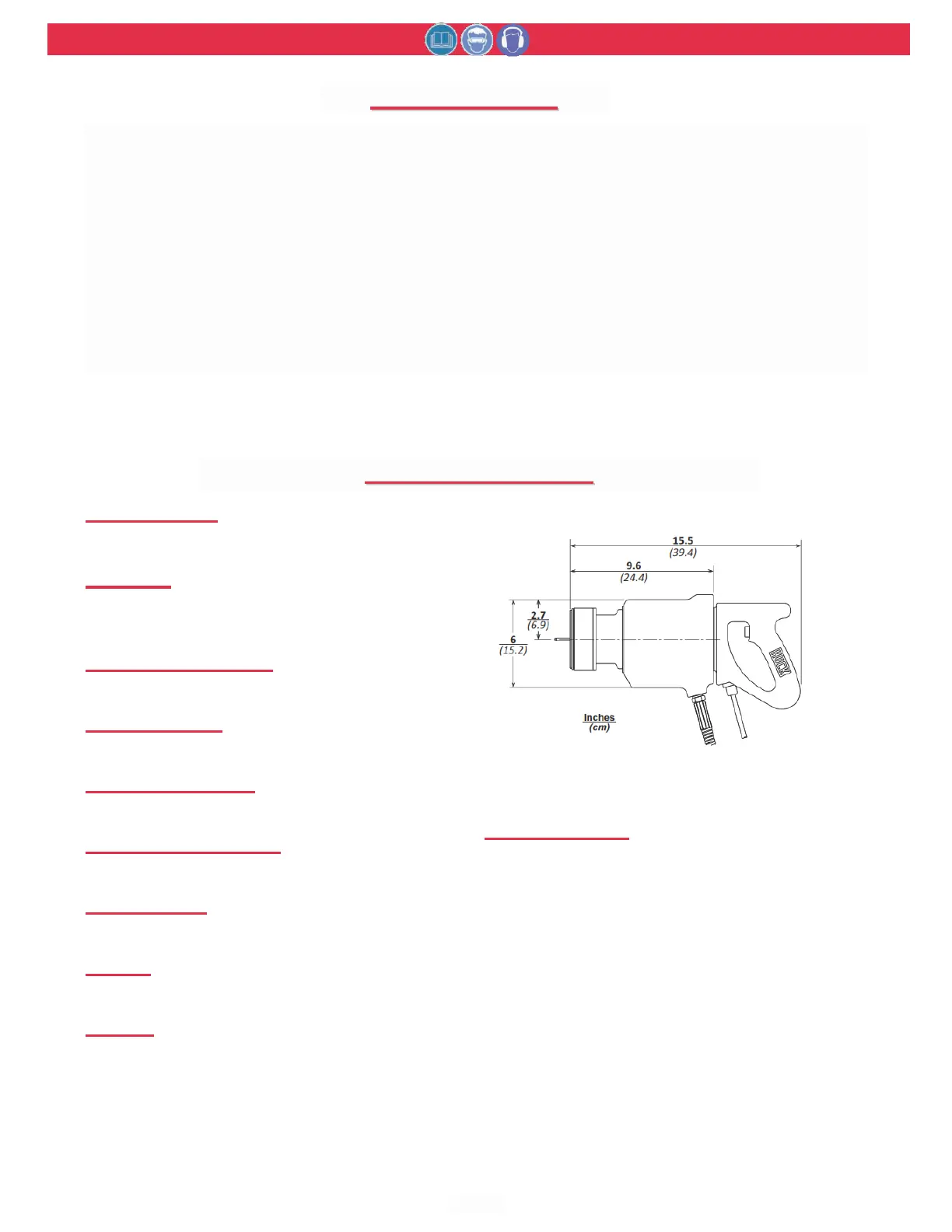
Lengths and weights do not include Nose Assemblies.
Correct PULL and RETURN pressures are important for the
proper function of the Tool and Nose Assemblies, and for
the safety of the operator. HUCK Gage T‐124833CE is avail‐
able for checking these pressures. Instructions are furnished
with the gage and Powerig® Instruction Manuals.
S
S
P
P
E
E
C
C
I
I
F
F
I
I
C
C
A
A
T
T
I
I
O
O
N
N
S
S
POWER SOURCE:
Huck POWERIG Hydraulic Unit
HOSE KITS:
Use only genuine HUCK Hose Kits rated
@ 10,000 psi working pressure.
MAX OPERATING TEMP:
125°F (51.7°C)
MAX FLOW RATE:
2 gpm (7.5 l/m)
MAX PULL PRESSURE:
5700 psi (393 bar)
MAX RETURN PRESSURE:
2400 psi (165 bar)
PULL CAPACITY:
75,700 lbs (337 kN)
STROKE:
2.5 inches (6.35 cm)
WEIGHT:
43 lbs (19.5 kg)
HYDRAULIC FLUID:
ATF meeting DEXRON III, DEXRON IV, MERCON,
Allison C‐4 or equivalent specifications.
Fire resistant hydraulic fluid may also be used,
and is required to comply with OSHA regulation
1926.302 paragraph (d): "the fluid used in
hydraulic power tools shall be fire resistant fluid
approved under schedule 30 of the US Bureau of
Mines, Department of Interior, and shall retain its
operating characteristics at the most extreme
temperatures to which it will be exposed."


 To Next Page