1514
4. SAFETY HARNESS EYEBOLT TESTER KIT
TESTING A SAFETY HARNESS EYEBOLT
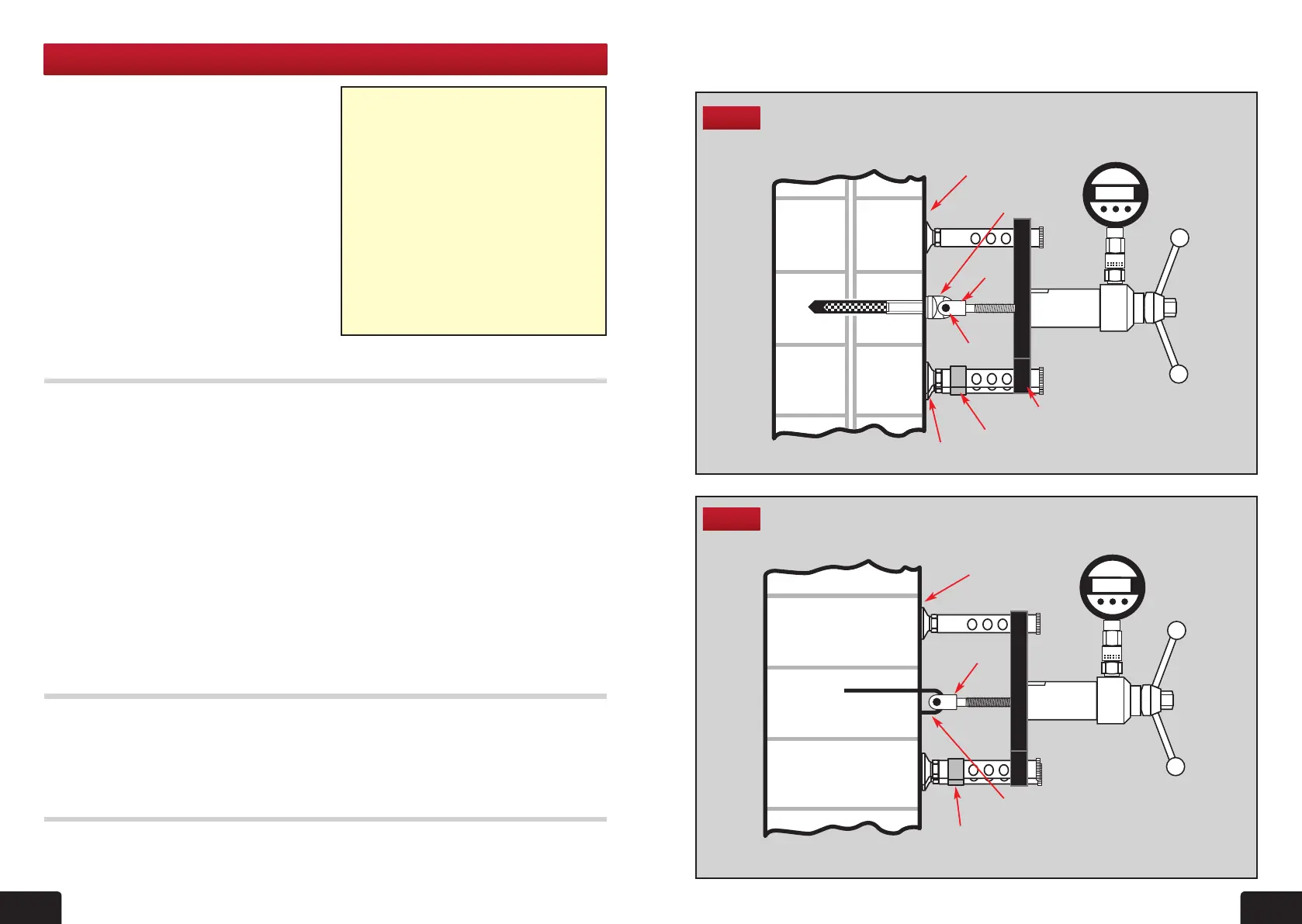
(Fig 22)
TESTING A LADDER RESTRAINT HOOK (Fig 23)
For testing Safety Harness Eyebolts to
the requirements of BS5845 and BS
EN795 Protection Against Falling From
A Height, Anchor Devices - Requirement
for Testing and BS 7883: 2019 code of
practice for Design, Selection, Installation,
Use and Maintenance of Anchor Devices
conforming to BS EN 795. The kit may
also be used for testing Ladder Restraint
Hooks and most Ringbolts in concrete or
masonry.
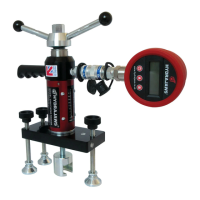
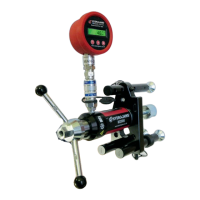
The Tester is factory assembled with the
ringbolt adaptor screwed into the M12
locking adaptor located in the Tester jaw
and the load spreading bridge with the
three telescopic legs with swivel feet with
25mm of ne adjustment.
KIT CONTENTS:
• M2000 Medium Duty Tester with
Digital/Analogue Gauge to 25kN
• 2020 Load Spreading Bridge
• M12 Ringbolt Adaptor with
Locking Adaptor
• Turning handle with integrated
operating 22mm nut
• Calibration Certicate
• Padded Carrying Case
Place the bridge over the eyebolt to be tested. Locate the clevis on the eyebolt and t the
cross pin through the clevis and eyebolt, ensuring that the ball on the pin clicks into place,
having passed through the second fork (see section 2.5 The Clevis Adaptor).
Adjust the swivel feet by unscrewing from the telescopic leg, so that each foot is resting
on the material around the eyebolt and the bridge is square and level. Fit a protection plate
(not supplied by Hydrajaws) between wall and bridge feet if necessary, to protect
soft decorative nishes. Check that the gauge is reading zero.
Commence the test by turning the operating handle on the tester clockwise and observe
the gauge as the load on the eyebolt is increasing. Continue applying the load until the
proof test load of 6kN* is reached. Stop applying the load and observe if the reading falls
back.
If the fall back is minimal, apply the load again until reading is at the proof test load and the
structural anchorage should then sustain the force for a minimum of 60 seconds.
Follow the same setting up procedure as for Safety Harness Eyebolt test, and apply the
load gradually until the required proof load of 2.5kN* is reached or failure occurs. Observe
if the hook withdraws from the structure or the test load cannot be achieved. This would be
considered a failure and must be taken out of service.
In brickwork reaction
loads are directed
away from the brick
under test
Eyebolt
15kN
gauge
Cross pin
150 load
spreading bridge
75mm hex legs
Clevis
Swivel foot
Reaction loads away
from brick under test
Clevis
Ladder restraint
hook under test
150 load spreading
bridge with 75mm
hex legs
Reaction loads away
from brick under test
Clevis
Ladder restraint
hook under test
In brickwork reaction
loads are directed
away from the brick
under test
Eyebolt
Leg brace
Cross pin
load
spreading bridge
Clevis
Swivel foot
In brickwork reaction
loads are directed
away from the brick
under test
Eyebolt
15kN
gauge
Cross pin
150 load
spreading bridge
75mm hex legs
Clevis
Swivel foot
Reaction loads away
from brick under test
Clevis
Ladder restraint
hook under test
150 load spreading
bridge with 75mm
hex legs
Reaction loads away
from brick under test
Clevis
Ladder restraint
hook under test
In brickwork reaction
loads are directed
away from the brick
under test
Eyebolt
Leg brace
Cross pin
load
spreading bridge
Leg brace
Fig 22
Fig 23
* Under the latest requirements of BS 7883:2019 BSI Standards, allow 5% extra on the load
when using a digital gauge to allow for settling.


 To Next Page