(
(
It>.
_/
c
Following are
three
examples
of
how
the
DSVO function can be
entered:
•
:!.
[lBVO
'DATA'
•
At-'DATA'
1
[]SVO
A
•
SHAREt-3
:!.p'ABC'
l.
[]SV()
SHA
Ix
I:::
'Establishes three names (A,
B,
and
C)
to
be shared.
The
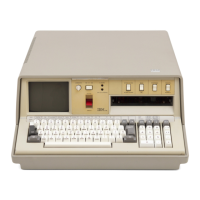
5100
will respond with a 2 for each shared variable
that
is
successfully estab-
lished
and
a 0
or
1 for each variable
that
is
not.
If
a 1
is
displayed, a value
other
than
1 was specified as
the
left
argument
for
the
DSVO
function.
In
this case,
the
variable name must be retracted (see Retracting
the
Variable
Name
being Shared
later in this chapter)
and
reestablished as a shared variable before it can be used
for
input/output.
If a 0
is
displayed, an
error
message (see Chapter 11) will also
be displayed.
Note: The instruction +/O;tDSVO
DNL
2 will display
the
existing
number
of
shared variables
in
the
system,
and
the
instruction (O;tDSVO
DNL
2)/[1]
DNL
2
will display
the
existing shared variable names.
OPENING A DATA FILE
OR
SPECIFYING PRINTER OUTPUT
The first value assigned
to
the
shared variable must be information required
to
open a
data
file
on
tape
or
to
specify printer
output.
When opening a
data
file,
this information specifies
the
following:
• Data
to
be transferred
to
tape
or
from
tape
• Device/file
number
• File 10
• Data
format
to
be used
Note: If this
information
has already been assigned
to
a variable name
that
is
being used
as
the
right
argument
for
the
DSVO function,
the
5100
will establish
the
variable name
to
be shared,
then
open
the
data
file
or
specify
printer
output.
The
return codes are described later
in
this chapter.
159


 To Next Page
 Loading...