Q770 Technical Service Manual
--1--
Safety Precaution
WARNING
Service should not be attempted by anyone unfamiliar with the necessary precautions on this monitor.
The followings are the necessary precautions to be observed before servicing.
1. Always discharge the high voltage to the CRT conductive coating before handling the CRT. The
picture tube is highly evacuated and if broken, glass fragments will be violently exploded. Use
shatter proof goggles and keep picture tube away from the bare body while handling.
2. When replacing a chassis in the cabinet, always be certain that all the protective devices are put back
in place, such as nonmetallic control knobs, insulating covers, shields, isolation resistor capacitor
network etc.
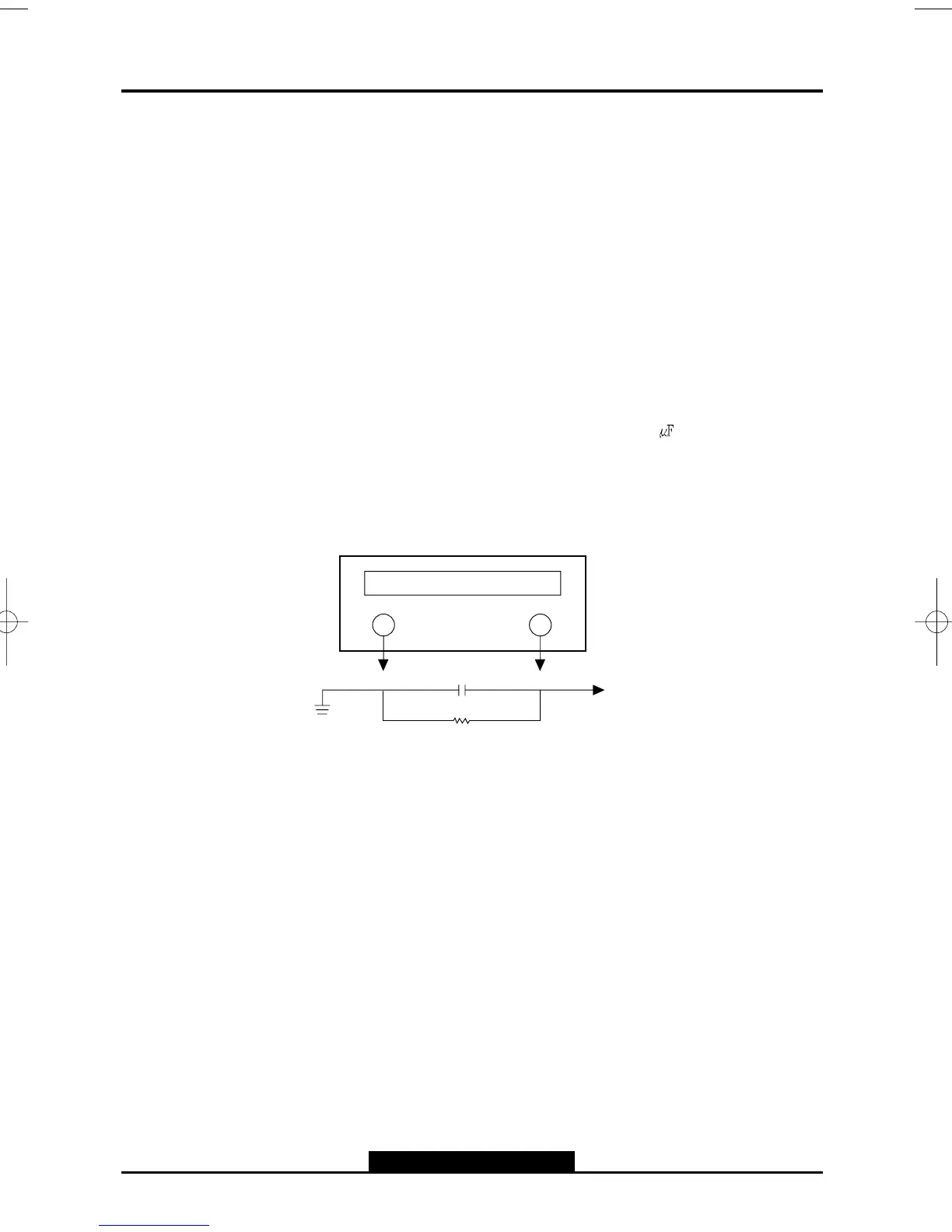
3. Before returning the monitor to the customer, always perform an AC leakage current check on the
exposed metallic parts of the cabinet, such as signal connectors, terminals, screw heads, metal
overlays, control shafts etc, to be sure the monitor is safe to operate without danger of electrical
shock. Plug the AC line cord directly into a AC outlet (do not use a line isolation trasformer during
this check.). Use an AC voltmeter having 1500 ohm per volt or more sensitivity in the following
manner : Connect ground(water pipe, conduit, etc.) and the exposed metallic parts, one at a time.
Measure the AC Voltage across the combination of 1500 ohm resistor and 0.15
capacitor. Reverse
the AC plug at the AC outlet and repeat AC voltage measurements for each exposed metallic part.
The Voltage must not exceed 0.3 volts RMS. This corresponds to 0.2 milliamp AC. Any value
exceeded this limit constitutes a potential shock hazard and must be corrected immediately.
INSTRUCTIONS TO USER
This equipment generates and uses radio frequency energy and if not installed and used properly, that
is, in strict accordance with the manufacturer's instruction, may cause interference to radio and
television. It has been tested and found to comply with the limits for the specifications in Subpart J of
Part 15 FCC Rules, which are designed to provide reasonable protection against such interference in a
residential installation. However, there is no guarantee that interference will not occur in a particular
installation.
If this equipment does cause interference to radio or television reception, which can be determined
by turning the equipment off and on, the user is encouraged to try to correct the interference by one or
more of the following measures.
• reorient the receiving antenna
• relocate the computer with respect to the receiver
• plug the computer into a different outlet so that computer and receiver are on different branch
circuits.
AC VOLTMETER
Good earth ground
such as the water pipe,
conduit, etc
1500 ohm
10 WATT
0.15µF
Place this probe
on each exposed
metallic part.
0.15µF



 To Next Page