6 7
Important Information
Table of contents
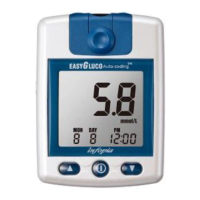
The EASYGLUCO Auto-coding
TM
EASYGLUCO Auto-coding
TM
Blood Glucose Monitoring System is intended
for use outside the body (in vitro diagnostic use only). It should be used only for
testing blood glucose and only with fresh capillary whole blood samples. It
should not be used for the diagnosis of diabetes.
Consult your physician or diabetic healthcare professional about daily
management of your diabetes and proper use of the glucometer.
Please pay close attention when handling blood. Improper procedures may
cause serious hazards to your health.
The EASYGLUCO Auto-coding
TM
Blood Glucose Monitoring System contains
small parts. Please keep your monitoring system out of reach of children
Note
< Maintaining the blood glucose test meter >
1. Do not assemble or disassemble the blood glucose test meter.
2. It will have to keep in the place where the water does not reach.
3. Avoid getting dirt and moisture.
4. It does not have to keep in storage place of the chemicals or the place where
gas etc occurs.
5. Keep out of direct sunlight.
1. Learning the System
EASYGLUCO Auto-coding
TM
Blood Glucose Monitoring System KIT Contents 8
EASYGLUCO Auto-coding
TM
9reteM esoculG doolB
EASYGLUCO Auto-coding
TM
Blood Glucose Meter Display10
EASYGLUCO Auto-coding
TM
11pirtS tseT esoculG doolB
Important
EASYGLUCO Auto-coding
TM
Test Strip Information 12
2. Before Testing
51 - 31reteM eht gnitteS
61Automatic code recognition
Checking the System with the
EASYGLUCO Auto-coding
TM
17-18noituloS lortnoC
3. Testing Your Blood Glucose
91noitaraperP - doolB ruoY gnitseT
22 - 02doolB fo porD a gnitcelloC
62 - 32erudecorP gnitseT
72noitcnuF rotcejE pirtS tseT
4. Reviewing Your Results
28 - 29
5. Deleting Test Results
7.Performing a Blood Test Using and Alternate Site
8.Blood Glucose Program
30
34
6.
EASYGLUCO Auto-coding
TM
Alternate Site Testing 31
32-33
7. Taking Care of Your Blood Glucose Meter
EGAPstnetnoC
53ecnanetniaM dna reteM ruoY gninaelC
63seirettaB eht gnicalpeR
63seirettab dna retem fo Disposal
8. Troubleshooting 37-40
10. Specifications 42
11. Conversion table mmol/L <––> mg/dL 43
12. Warranty 44
13. Symbols Reference 45
9. Test Principle and Performance
41


 To Next Page