13
Interpreting The Forward Vertical
Display
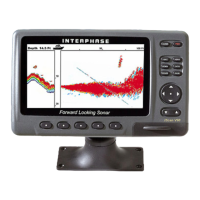
The Interphase SE-200 provides a video or VGA display
output which shows acoustic echo returns from the
underwater area beneath and ahead of the vessel. The
Phased Array Transducer typically steers an acoustic beam
over a 90 degree segment. The SE-200 steers the beam to
different positions, transmits a pulse of energy, then waits
a defined period of time (depending on the range selected)
and listens for any return echoes. As the energy from this
acoustic beam strikes underwater objects or the bottom, a
small portion of the energy is reflected as an echo back to
the transducer. When the echo is received at the
transducer, it’s converted into a small electrical signal,
processed and displayed on the display connected to the
SE-200
The unit knows the direction in which it sent the transmit
pulse and the time it took to receive the return echo, so it
can determine the location of the object or bottom that
created the return echo. As the SE-200 sequentially steps
the acoustic beam from directly forward to the bottom, the
display shows a continuously updated display of the return
echoes in their approximate position in relation to the
vessel.
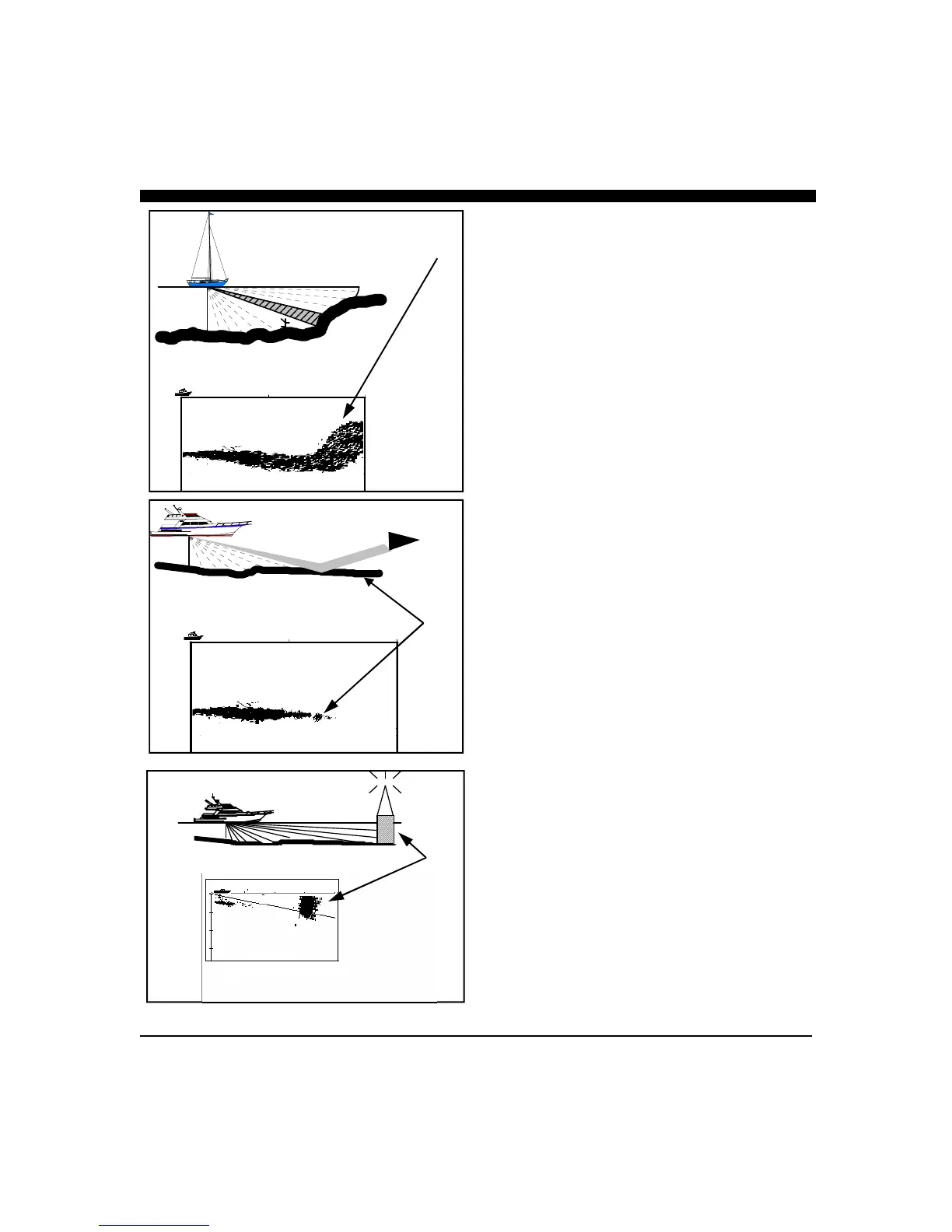
Because the display is only showing the acoustic echoes
that are returned to the transducer, it can not show forward
bottom conditions that are hidden from its field of view or
are hidden due to obstructions in the acoustic beam’s path
through the water. In addition, smooth bottom conditions
far forward of the vessel are difficult to see as very little of
the acoustic energy is reflected back as an echo. See the
sketch at left.
Bottoms that are rough and rocky or are sloping upwards
will reflect more acoustic energy back to the transducer
and will show up better far-forward of the vessel than
bottoms that are very smooth or slope downward.
However, even though the bottom may be smooth and
does not show up far forward, large obstructions (sea wall,
large rocks, underwater shelves, etc.) will typically send
back strong echoes that can be seen far forward, as the
sketch at left indicates.
Strong Return from
Up-sloping Bottom
Weak Return From Far-Forward
Strong Return from Wall Far-Forward



 To Next Page