28
GUIDE TO MIG/MAG WELDING
Before starng any welding acvity ensure that you have suitable eye protecon and
protecve clothing. Also take the necessary steps to protect any persons within the welding
area.
MIG controls
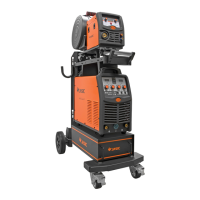
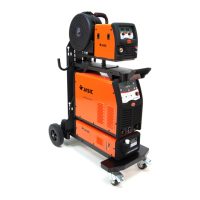
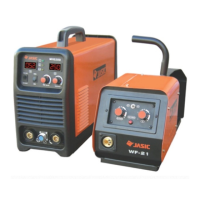
The controls for the MIG/MAG system are as follows. Controls can be electro mechanical or electronic but
the eects will be the same.
Wire feed speed
The wire speed is directly related to the current. The higher the wire speed the more wire is deposited
and hence more current is required to burn o the consumable wire.
Wire speed is measured in m/min (metres per min) or somemes in ipm (inches per minute).
The diameter of the wire also forms part of the current demand e.g. a 1.0mm wire feeding at 3m per min
will require less current than a 1.2mm wire feeding at the
same rate.
The wire feed is set according to the material to be
welded.
If the wire feed rate is too high in comparison to the
voltage then a “stubbing” eect happens where unmelted
consumable contacts the work piece creang large
amounts of weld spaer.
Too lile wire feed comparison to the voltage will result in
a long arc being created with poor transfer and eventual
burning back of the wire onto the contact p.
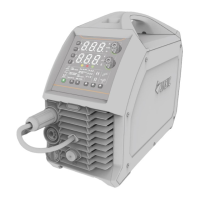
Wire Speed Voltage Mode Switch
Voltage seng
The voltage polarity in MIG/MAG welding is in the majority of cases with the posive (+). This means
that the majority of the heat is in the electrode wire. Certain special wires may require the polarity to be
reversed i.e. electrode wire negave (-) polarity. Always consult the manufacturer's data sheet for the
best operang parameters.
The voltage is oen referred to as the “heat seng”. This will be altered dependent on the material type,
thickness, gas type, joint type and posion of the weld. Combined with the wire speed it is the main
control adjusted by the welder. The voltage seng varies depending on the type and size of electrode
wire being used.
Most MIG/MAG welders are CV or Constant Voltage power sources which means the voltage does
not vary much during welding. Modern inverter power sources also have control circuits to monitor
condions to ensure voltage remains constant.
The voltage determines height and width of the weld bead. If the operator has no reference to sengs
required the best method of set up is to use scrap material of the same thickness to obtain the correct
seng. If there is too much voltage the arc will be long and uncontrollable and cause the wire to fuse
to the contact p. If the voltage is too low then there will not be enough heat to melt the wire and then
stubbing occurs.
To obtain a sasfactory weld a balance needs to be made between voltage and wire speed.
Characteriscs of the voltage are that the higher voltage produces a aer and wider weld bead but
care must be taken to avoid undercut. The lower the voltage the weld bead becomes narrow and higher.



 To Next Page
 Loading...