8-5
Make sure the water heater is filled with water before use; even momentary
operation of the water heater without water in it may result in damage to the tank
heating element and/or controls. Double check the bypass valves, make sure
they are set properly.
Always open both the hot and cold water faucets, along with outside shower
faucets (if so equipped) when filling fresh water tank to allow air pockets to be
forced out of the water heater.
Draining and winterization:
If the RV is to be stored over the winter months, the water heater must be drained
to prevent damage from freezing. It is recommended the water heater be drained
and bypassed during the winterization process, particularly if introducing RV
antifreeze into the plumbing system.
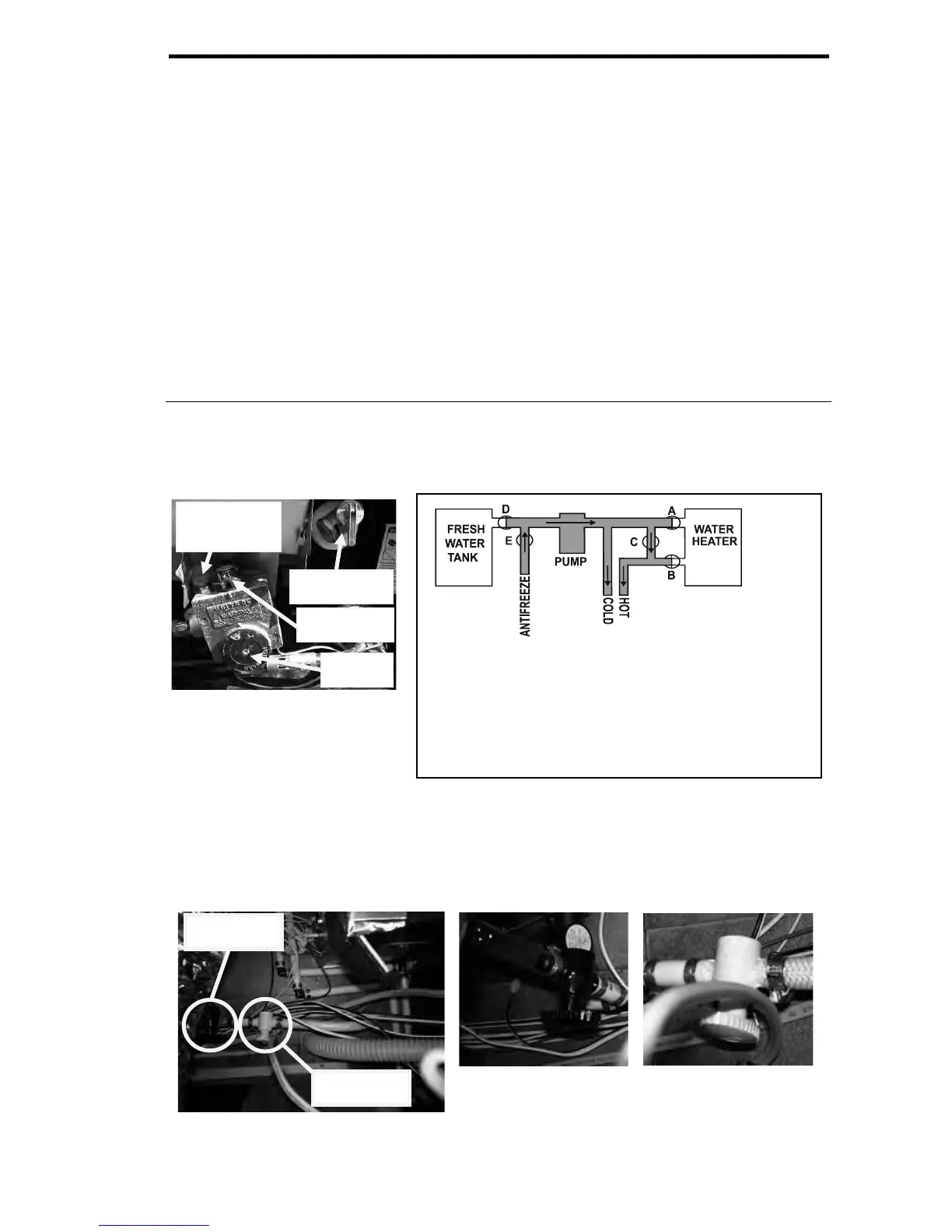
WATER HEATER BYPASS VALVES (IF SO EQUIPPED)
Use the factory installed water heater bypass, available in most floor plans, to
avoid filling the water heater with RV antifreeze. Bypass valves are normally
located in close proximity to the water heater.
NOTE: In Fig 8.6a-c, valve D is the fresh water tank shutoff, and valve E is
used to introduce RV antifreeze into the lines to Winterize the system. (See
section on Winterizing the Plumbing System) Valve D is normally open to
supply fresh water to the supply lines. Valve E is normally closed.
Valves D & E are located near the water pump under a bed or dinette bench.


 To Next Page