EasyManua.ls Logo

Johnson Controls M4-CGM09090 - User Manual

Johnson Controls M4-CGM09090
26 pages
Print Icon
To Next Page IconTo Next Page
Loading...
M4-CGM General Purpose Application
Controllers Installation Guide
Application
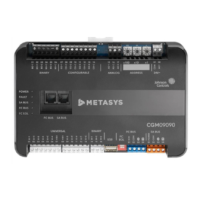
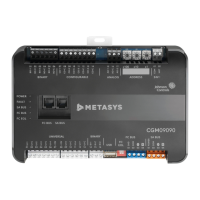
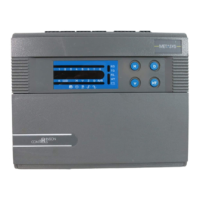
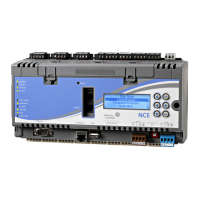
The CGM09090 General Purpose Application MS/
TP Controller (CGM) are equipment controllers
that run pre-engineered and user-programmable
applications, and provides the inputs and outputs
required to monitor and control a wide variety of
HVAC and other facility equipment. CGM controllers
operate on an RS-485 BACnet® MS/TP Bus as
BACnet Advanced Application Controllers (B-AACs)
and integrate into Johnson Controls® and third-
party BACnet systems.
CGM equipment controllers include an integral real-
time clock, which enables the controllers to monitor
and control schedules, calendars, and trends, and
operate for extended periods of time as stand-alone
controllers when offline from the Metasys
®
system
network.
Communications Protocols
The CGM controllers can communicate using BACnet
MS/TP, N2, or wireless Zigbee
®
. By default, the
CGM controllers communicate using the BACnet
MS/TP protocol. The BACnet protocol is a standard
for ANSI, ASHRAE, and the International Standards
Organization (ISO) for building controls.
The CGM controllers can be used as functional
replacements for legacy N2 controllers. The N2-
capable MS/TP equipment controller models
provide a cost-effective upgrade and modernization
path for customers with existing N2 controllers.
For installation and commissioning support,
and tips for efficient and safe replacement,
refer to the Modernization Guide for Legacy N2
Controllers (LIT-12012005) and the controller-
specific documentation. For information about
mapping N2 Objects in controllers with switchable
communications protocols, refer to the N2
Compatibility Options chapter of the Controller Tool
Help (LIT-12011147).
To configure CGM controllers to communicate using
the N2 communications protocol, see Configuring
N2 communications.
The CGM controller can also be installed in a
wireless application using aZFR/ZFR Pro Wireless
Field Bus Router. To configure these controllers to
communicate using the wireless communications
protocol, see Configuring wireless communications.
North American Emissions
Compliance
United States
This equipment has been tested and found to
comply with the limits for a Class A digital device
pursuant to Part 15 of the FCC Rules. These limits
are designed to provide reasonable protection
against harmful interference when this equipment
is operated in a commercial environment. This
equipment generates, uses, and can radiate radio
frequency energy and, if not installed and used in
accordance with the instruction manual, may cause
harmful interference to radio communications.
Operation of this equipment in a residential area
may cause harmful interference, in which case the
users will be required to correct the interference at
their own expense.
Canada
This Class (A) digital apparatus meets all the
requirements of the Canadian Interference-
Causing Equipment Regulations.
Cet appareil numérique de la Classe (A) respecte
toutes les exigences du Règlement sur le matériel
brouilleur du Canada.
Installation
Observe the following guidelines when installing a
CGM Controller:
To minimize vibration and shock damage to the
controller, transport the controller in the original
container.
Verify that all parts shipped with the controller.
Do not drop the controller or subject it to physical
shock.
*241014301698B*
Part No. 24-10143-01698 Rev. B
2019-10-18
(For factory use only)
M4-CGM09090
Question and Answer IconNeed help?

Do you have a question about the Johnson Controls M4-CGM09090 and is the answer not in the manual?

Johnson Controls M4-CGM09090 Specifications

General IconGeneral
Enclosure RatingIP20
Supply Voltage24 VAC
Operating Temperature-40 to 70 °C
Humidity Range10% to 90% non-condensing
Communication ProtocolBACnet MS/TP

Summary

Application and Emissions Compliance

North American Emissions Compliance

Compliance with FCC rules for commercial environments.

United States Emissions Compliance

FCC compliance for Class A digital devices.

Canada Emissions Compliance

Canadian interference-causing equipment regulations.

Installation Guidelines

General Installation Precautions

General guidelines for safe installation and handling.

Mounting the CGM Controller

Mounting Surface and Environmental Considerations

Surface support, orientation, and environmental factors.

Mounting Methods: DIN Rail and Wall

Recommended techniques for different mounting types.

DIN Rail Mounting Procedure

Secure DIN Rail and Prepare Mounting Clips

Install rail and extend mounting clips.

Wall Mounting Securing and Wiring Introduction

General Wiring Safety and Best Practices

Disconnect power, check wiring, use copper.

Terminal Blocks and Bus Ports Overview

General Terminal and Port Wiring Guidelines

Rules for wiring terminals and ports.

SA Bus Port and Power Supply Wiring

Uniform 24 VAC Power Supply Phasing Importance

Importance of consistent power phasing.

Terminal Wiring and Cable Length Guidance

Guidelines for Input;Output Wiring

Information on wiring, load current, and cable lengths.

I;O Terminal Block Specifications

Comprehensive I;O Terminal Data Table

Table of terminal functions, ratings, and cables.

Detailed I;O Terminal Block Functions

Universal Input Terminal Specifications

Functions and requirements for Universal Inputs.

Binary Input Terminal Specifications

Functions and requirements for Binary Inputs.

Configurable Output Terminal Specifications

Functions and requirements for Configurable Outputs.

Analog Output Terminal Specifications

Functions and requirements for Analog Outputs.

Binary Output Terminal Specifications

Binary Output Terminal Functions and Requirements

Functions and requirements for Binary Outputs.

Cable and Wire Length Guidelines

Low-Voltage I;O Cable Length Guidelines

Table defining cable length guidelines.

Cable Length vs. Wire Size Recommendations Table

Specific cable length and wire size data.

Cable Length Estimation using Load Current

Figure 8: Max Wire Length vs. Load Current Chart

Graphical tool for cable length estimation.

Communications Bus and Power Wiring Guidelines

Table 7: Bus and Power Terminal Specifications

Information on bus and power terminals.

Communications Bus and Power Terminal Specifications

Termination Diagrams for Inputs and Outputs

Table 8: Termination Detail Overview

Introduction to wiring diagrams.

Setup and Configuration Procedures

Switching Protocol from N2 to MS;TP

Procedure for protocol conversion.

Device Address Configuration

Setting Controller Rotary Switches Correctly

Matching addresses with software.

Setting the Device Address: Importance and Process

Importance and process of setting unique addresses.

Switch Device Address Table Reference

Valid address ranges for different modes.

Setting the End-of-Line (EOL) Switch

EOL Switch Functionality and Location

Purpose and physical location of the switch.

EOL Switch Determination and Input Jumpers

Equipment Controller Commissioning Process

Commissioning with CCT Software

Using CCT for controller setup.

Troubleshooting Equipment Controllers

Using Status LEDs for Troubleshooting

Interpreting LED indicators.

LED Status and States Reference Guide

Detailed LED Status Table Description

Comprehensive guide to LED behavior.

Technical Specifications Summary

Comprehensive Technical Specifications Table

Detailed specs for the controller.

Technical Specifications and Compliance Details

Regulatory Compliance Information

List of certifications and standards.

Related product manuals