Need help?
Do you have a question about the Jorvik Elite JET-E2 and is the answer not in the manual?
Introduction to the Jorvik Elite Tricycle and a note that the manual is not for detailed service or repair.
Details risks of electric trikes, component wear, and provides contact info for parts and assistance.
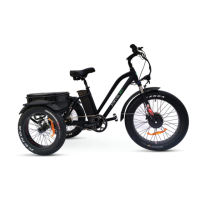
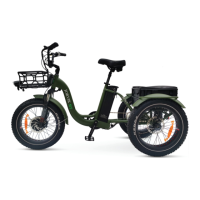
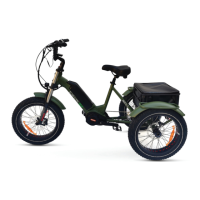
Diagram identifying key parts of the Jorvik JET-E2 Elite tricycle, including motor, battery, and display.
Instructions for removing the trike from packaging, setting aside accessories, and installing the front wheel.
Detailed steps for correctly tightening the quick release skewer for the front wheel.
Ensuring lever movement is not restricted and guidance on wheel truing using a spoke key.
Steps to adjust and secure the handlebar height to the headtube using Allen keys.
Instructions for attaching the front fender and front light to the trike's forks.
Guidance on fitting the rear fender brackets to the axle and fender using Allen key bolts.
Steps for attaching the front basket to the trike's frame, likely using bolts.
Instructions for placing and tightening the rear basket onto the trike's axle.
How to properly tighten and adjust the seat post, ensuring it is secure and within height limits.
Instructions for attaching pedals, noting left/right orientation and tightening direction.
Explanation of how disc brakes work, proper usage, and warnings about hot rotors and wet weather.
Ensuring proper brake lever function and the necessary procedure for bedding in new brakes.
Definition of suspension sag and its importance for rider comfort and performance based on weight and use.
Details on the 7-speed nexus hub gear system, gear selection, and best practices for shifting.
Important notes on keeping keys safe, general cleaning, lubrication, and checking parts.
Information on the battery fuse function and proper tyre inflation and inspection for safety.
How to activate and use the throttle/walk mode on the control unit, including how to stop it.
Details about the included lithium-ion battery and charger, emphasizing the use of designated chargers.
Instructions on how to charge the battery, whether on or off the trike, and understanding the LED indicators.
Best practices for charging, care, and maintenance of the battery and charger to ensure longevity and safety.
Instructions on how to switch the power button on and manage dual batteries for operation.
Procedure for removing and re-installing the battery using the key, including locking mechanisms.
Instructions on turning on/off the display and changing pedal assistance levels using handlebar controls.
Importance of wearing an approved helmet and complying with local riding laws.
Pre-ride checks for loose parts, tyre pressure, brakes, and scheduled servicing for new trikes.
Tips for a safe first ride, addressing potential instability and familiarization with controls.
Information that the trike is for one rider only and its maximum weight capacity limit.
Advice on gaining experience with loads and long-wheelbase trikes, and risks associated with heavy loads.
Strong recommendations against children riding the trike and general safety checks for components and frame.
Details of the 12-month parts warranty, exclusions, and customer responsibilities for returns and servicing.

 To Next Page
 General