EasyManua.ls Logo

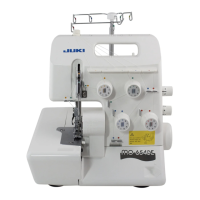
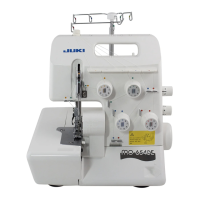
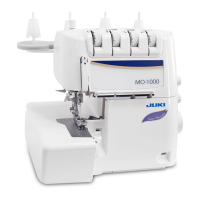
JUKI MO-2000QVP - User Manual

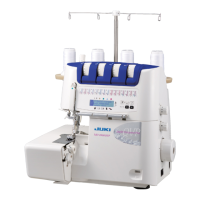
JUKI MO-2000QVP
40 pages
Print Icon
To Next Page IconTo Next Page
Loading...
MO-2000QVP
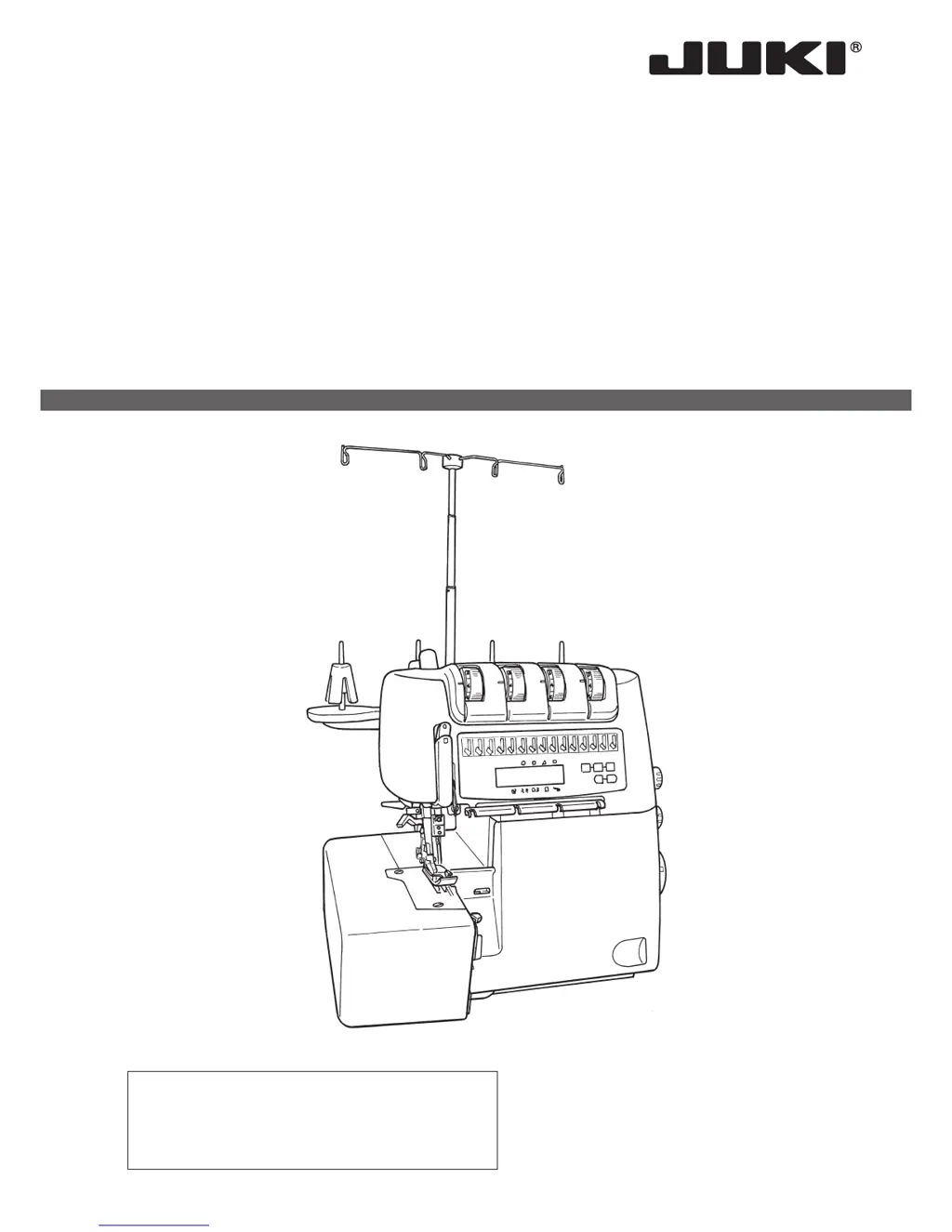
2-Needle, 2/3/4-Thread Overlock Sewing Machine
IMPORTANT:
Read all safety regulations carefully and understand
them before using your sewing machine.
Retain this instruction manual for future reference.
INSTRUCTION MANUAL

Questions and Answers

Summary

IMPORTANT SAFETY INSTRUCTIONS

DANGER _ To reduce the risk of electric shock:

Critical warnings about electrical hazards, including unattended operation and unplugging procedures.

WARNING To reduce the risk of burns, fire, electric shock, or injury to persons:

General safety advisories covering appliance use, children, maintenance, and operating environment.

To use the sewing machine safely

WARNING Symbols

Explanation of warning symbols indicating potential risks of death or serious injury if ignored.

CAUTION Symbols

Explanation of caution symbols indicating potential risks of personal injury or physical damage.

WARNING Regarding Material and Needle Combinations

Details of the machine

Machine Components Overview

Identification and labeling of key parts and components of the sewing machine shown in diagrams.

Included Accessories

List of essential accessories provided with the sewing machine for various sewing tasks.

Preparing the machine; Using the machine

Attaching the Foot Control

Steps for connecting the foot control to the machine and power outlet for speed regulation.

Using the machine

Main Power;Light Switch Operation

Instructions on locating and operating the main power and light switch for machine startup.

Looper Cover Operation

How to open and close the looper cover, including information about the machine's safety device.

Needle and thread Selection

Needle and Thread Guide

Adjustments and Settings

Threading Preparations and Tips

Threading 4;3 Thread OL

Trial Sewing Procedure

Thread Tension Adjustment

Adjusting Thread Tensions

Guidance on adjusting tension dials (1-9) for optimal stitch formation on various fabrics.

Practical Sewing - Overlock

LCD Indication and Operation

Stitch Chart

Maintenance Procedures

Troubleshooting Guide

Machine Does Not Sew

Solutions for common issues preventing the machine from sewing, like power or cover problems.

Needle Breakage Causes

Identifying reasons for needle breakage, such as bent needles or incorrect insertion.

Seam Wave or Puckering Issues

Solutions for seams that flute, wave, or pucker, often related to fabric handling or feed settings.

Uneven Fabric Feeding

Troubleshooting steps for fabric feeding issues related to differential feed or presser foot pressure.

Skipped Stitches Solutions

How to resolve skipped stitches by checking needles, thread, and presser foot pressure.

Fabric Edge Curling

Fixes for fabric edges curling during sewing, involving cutting width and stitch selection.

Thread Breakage Issues

Causes and solutions for thread breaks, including tension, threading, and needle insertion errors.

Poor Stitch Formation

Addressing issues leading to poor stitch formation, including thread tension and caught threads.

Technical Data

Summary

IMPORTANT SAFETY INSTRUCTIONS

DANGER _ To reduce the risk of electric shock:

Critical warnings about electrical hazards, including unattended operation and unplugging procedures.

WARNING To reduce the risk of burns, fire, electric shock, or injury to persons:

General safety advisories covering appliance use, children, maintenance, and operating environment.

To use the sewing machine safely

WARNING Symbols

Explanation of warning symbols indicating potential risks of death or serious injury if ignored.

CAUTION Symbols

Explanation of caution symbols indicating potential risks of personal injury or physical damage.

WARNING Regarding Material and Needle Combinations

Details of the machine

Machine Components Overview

Identification and labeling of key parts and components of the sewing machine shown in diagrams.

Included Accessories

List of essential accessories provided with the sewing machine for various sewing tasks.

Preparing the machine; Using the machine

Attaching the Foot Control

Steps for connecting the foot control to the machine and power outlet for speed regulation.

Using the machine

Main Power;Light Switch Operation

Instructions on locating and operating the main power and light switch for machine startup.

Looper Cover Operation

How to open and close the looper cover, including information about the machine's safety device.

Needle and thread Selection

Needle and Thread Guide

Adjustments and Settings

Threading Preparations and Tips

Threading 4;3 Thread OL

Trial Sewing Procedure

Thread Tension Adjustment

Adjusting Thread Tensions

Guidance on adjusting tension dials (1-9) for optimal stitch formation on various fabrics.

Practical Sewing - Overlock

LCD Indication and Operation

Stitch Chart

Maintenance Procedures

Troubleshooting Guide

Machine Does Not Sew

Solutions for common issues preventing the machine from sewing, like power or cover problems.

Needle Breakage Causes

Identifying reasons for needle breakage, such as bent needles or incorrect insertion.

Seam Wave or Puckering Issues

Solutions for seams that flute, wave, or pucker, often related to fabric handling or feed settings.

Uneven Fabric Feeding

Troubleshooting steps for fabric feeding issues related to differential feed or presser foot pressure.

Skipped Stitches Solutions

How to resolve skipped stitches by checking needles, thread, and presser foot pressure.

Fabric Edge Curling

Fixes for fabric edges curling during sewing, involving cutting width and stitch selection.

Thread Breakage Issues

Causes and solutions for thread breaks, including tension, threading, and needle insertion errors.

Poor Stitch Formation

Addressing issues leading to poor stitch formation, including thread tension and caught threads.

Technical Data

JUKI MO-2000QVP Specifications

General IconGeneral
TypeOverlock
Maximum Sewing Speed1500 stitches per minute
Stitch Length1-4 mm
Differential Feed Ratio0.7 - 2.0
Differential FeedYes
Automatic Needle ThreadingYes
Foot ControlYes
LightingLED
Stitch TypeOverlock, Rolled hem, Flatlock
Number of Needles2
Number of Threads4

Related product manuals