11
5. Residual Current Device (RCD) Test
5.1 RCD test
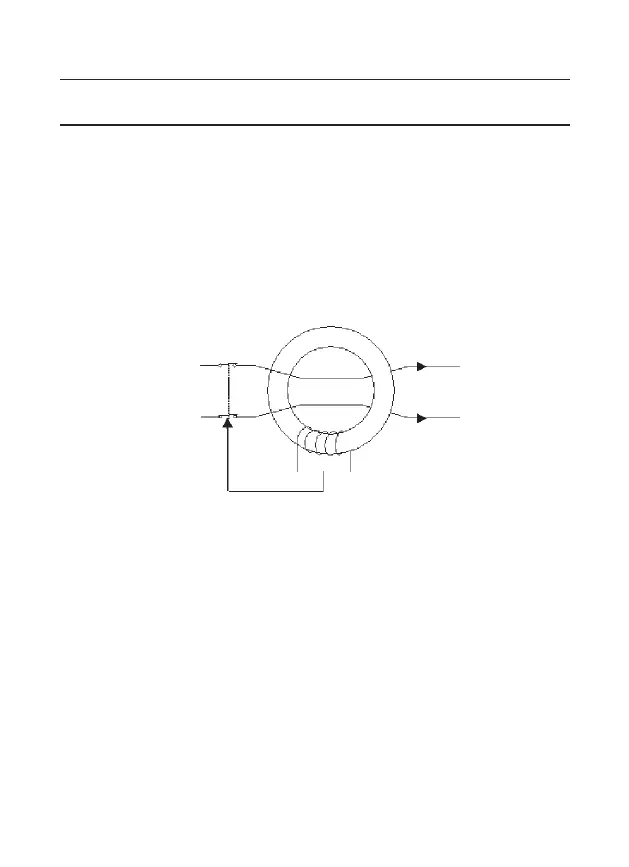
RCD is a switching device designed for breaking currents (opening the
contacts)whentheresidualcurrentattainsaspecificgivenvalue.Itworkson
basisofcurrentdifferencebetweenphasecurrentsflowingtodifferentloads
and returning current flowing through neutral conductor (for a single phase
installation).
IncasethecurrentdifferenceishigherthanRCDtrippingcurrent,thedevice
willtripdisconnectingthemainvoltage.
Fig.5
Basicallythere aretwo classificationsforRCD's :The firstone due tothe
shape of residual current waveform sensibility (Type AC and A) and the
secondduetothetrippingtime(TypeGandS).
●
RCD typeAC, RCD forwhich trippingis ensuredfor residualsinusoidal
alternatingcurrents,whether suddenly appliedor slowlyrising.Thistype
isthemostfrequentlyusedonelectricalinstallations.
●
RCD type A, RCD for which tripping is ensured for residual sinusoidal
alternating currents (like type AC) and residual pulsating direct currents
(DC), whether suddenly applied or slowly rising. It is not very used in
practice even if it is becoming more and more popular and in some
countriesitisrequestedbythenationalregulationinsteadoftypeAC.
●
RCDtypeG=Generaltype(withouttripouttime-delay),forgeneraluse
andapplication.
OUTPUT
L
N
N
L
INPUT


 To Next Page