5. Field Calibration
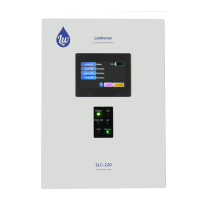
Turn power on. One of the indicating lights on the front panel of PS-220 should
turn on, and the FAIL / DETECTOR DISCONNECTED light should be off.
The System has been pre-calibrated at the factory.
The following is a fast field calibration procedure for small on-site adjustments. If
only an oil detection sensitivity change is desired, refer directly to Paragraph 5.1.3.
Calibration should be done with site water and oil, in a sump or a simulation
tank/tube.
If field calibration adjustments do not give satisfactory results, follow the
LABORATORY CALIBRATION PROCEDURE (Section 4.1).
Bar-Graph and/or 4-20mA output adjustments may be done only with the
LABORATORY CALIBRATION PROCEDURE.
IMPORTANT!
REFER TO THE SENSOR USER GUIDE FOR SPECIFIC NOTES RELATED TO
FLOATATION AND CALIBRATION.
IMPORTANT!
THE WINDOW OF THE NEMA 7 or Exd ENCLOSURE MAY BE OPENED
ONLY WHEN THE EXTERNAL ENVIRONMENT IS NONEXPLOSIVE!
5.1 Calibration Adjustments
5.1.1 Water Detection
• If water is normally contaminated with a layer of oil, put the sensor in oil for 2
seconds, take it out of oil, and let oil trickle down for 15-20 seconds.
• Have a correct water level for proper sensor floatation.
• Put the sensor in the vessel (without cleaning), and let it float freely with the
cable secured at the top of the vessel.
If OIL light is on:
Rotate R5 counter-clockwise, until WATER light turns on.
(For some demo units only: R5 is the calibration screw next to WATER
light).
If WATER light is on:
Rotate R5 clockwise until OIL light turns on, and then slightly counter-
clockwise until WATER light turns on.



 To Next Page