ASYMMETRIC DOVETAILS
50
Chapter 14 D4R Pro User Guide
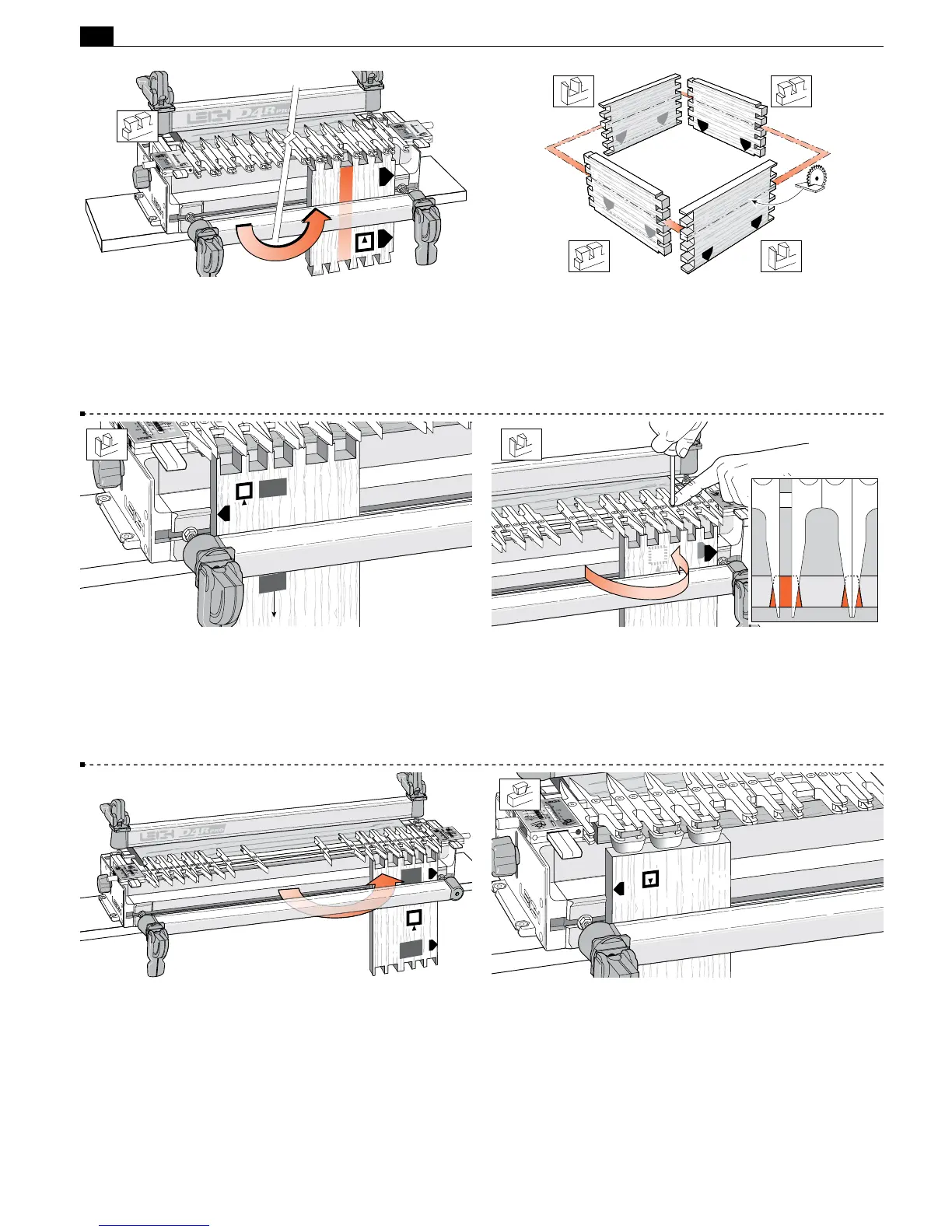
14-5 Deliberately asymmetrical joints must therefore be routed
on both ends of the jig using two separate, almost mirror-image
layouts.
14-6 The layouts need not be exact mirror images because the
parts that fit together will be made on the same end of the jig.
For a typical blanket chest you would rout corners A and C on
one end of the jig and corners B and D on the other end. As long
as the side stop marks all face up (or all down), the box will go
together.
A
A
B
B
C
C
D
D
14-7 Here is an easy way to cut these near-mirror-image joints.
Lay out the A and C corner joints in the usual way (i.e., in the
d
TD PINS mode). Rout the A and C corners’ tails and pins.
Leave the guidefingers set and in the
d
TD PINS mode.
A/C
B/D
14-8 Simply flip a completed A or C pin board from one end of
the jig (like turning a page) to the other end, and center each pair
of guidefingers over a pin.
14-9 Now rout the B and D corners’ tails and pins using this
guidefinger pattern. When you assemble the case, the A and
/
or C
ends will fit each other, and the B and
/
or D ends will also fit each
other. Keep the boards inside face
i
inwards on the case and the
side stop edges all turned the same way, and the parts are sure to
match (see 14-6).
B/D
A/C
14-10 To transfer a mirror image asymmetrical half-blind
joint…



 To Next Page