D4R Pro - CHAPTER 14
For certain procedures, you will need to use both ends of the Leigh D4R Pro jig. Asymmetrical joint layouts are one
example. On the Leigh Jig, no joints will be truly symmetrical, but they can look symmetrical. Apparent symmetry
is only required for aesthetic reasons, and not for strength. Be sure you have read and understood chapters 8
through 14 before attempting these procedures.
49
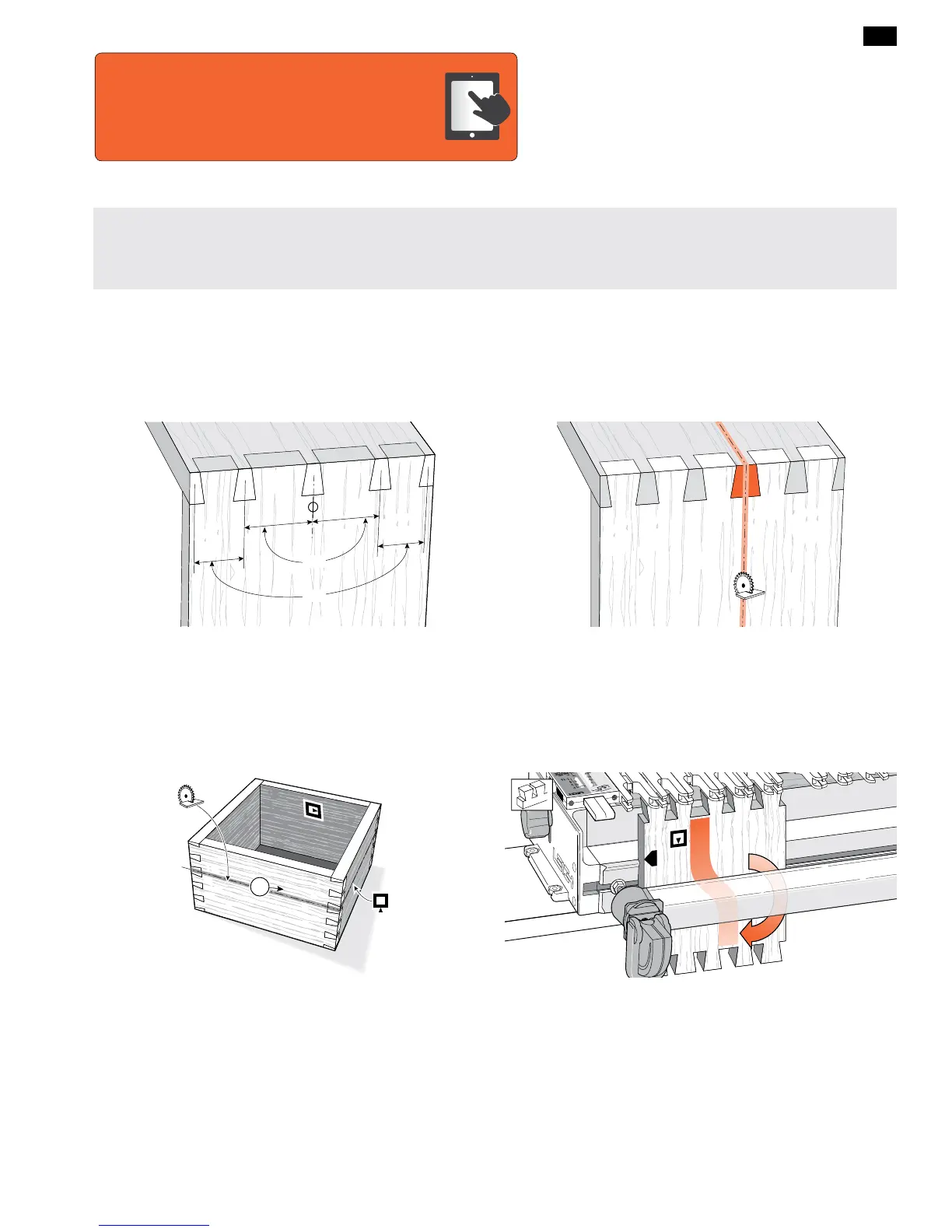
14-1 By symmetrical we mean a joint that looks or is approximately
symmetrical about its center line but is probably not, and need
not be precisely symmetrical. Using the Leigh jig, it is easy to cut
a joint that looks symmetrical; the pins will always align perfectly
with the tails cut at the same spacing. Remember, symmetry is
only required for appearance, not for joinery reasons.
~=
~=
14-2 By asymmetrical we mean a deliberately uneven layout of
pins and tails required by the project design. For example, asym-
metrical joints may be used for blanket chests or boxes. One pin
is made wider for a saw-cut allowance…
14-3 So the chest and lid half-pins all look the same width after
the lid portion
➀
is cut off.
1
14-4 In the chest example you can see that if both ends of the
board are cut under the same guidefingers, the wide sockets and
pins at opposite ends will not line up. Remember, the same inside
face
i
of the through dovetail tail board has to face away from
the jig for each cut.
Asymmetric
Dovetails
The online video will reduce your learning time
dramatically!
Stream to your smart phone or tablet to use in
your shop as a visual reference. Find the video in the Instructional
Videos section of the Support menu at leighjigs.com.
Watch the Online Instructional Video



 To Next Page