EasyManua.ls Logo

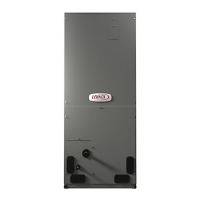
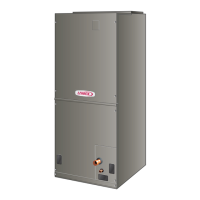
Lennox Merit CBA25UHE - User Manual

Lennox Merit CBA25UHE
21 pages
Print Icon
To Next Page IconTo Next Page
Loading...
©2023 Lennox Industries Inc.
Dallas, Texas, USA
Page 1
THIS MANUAL MUST BE LEFT WITH THE
HOMEOWNER FOR FUTURE REFERENCE
WARNING
Improper installation, adjustment, alteration, service
or maintenance can cause property damage, personal
injury or loss of life. Installation and service must be
performed by a licensed professional HVAC installer or
equivalent, service agency, or the gas supplier.
IMPORTANT
The Clean Air Act of 1990 bans the intentional venting of
refrigerant (CFCs, HCFCs and HFCs) as of July 1, 1992.
Approved methods of recovery, recycling or reclaiming
must be followed. Fines and/or incarceration may be
levied for noncompliance.
WARNING
To prevent serious injury or death:
1. Lock-out/tag-out before performing maintenance.
2. If system power is required (e.g., smoke detector
maintenance), disable power to blower, remove fan
belt where applicable, and ensure all controllers
and thermostats are set to the “OFF” position before
performing maintenance.
3. Always keep hands, hair, clothing, jewelry, tools, etc.
away from moving parts.
INSTALLATION
INSTRUCTIONS
MULTI-POSITION AIR HANDLERS
508370-01
6/2023
Merit
®
Series
CBA25UHE Air Handler Units
Shipping and Packing List
Package 1 of 1 contains:
1 – Assembled air handler unit factory-equipped for upow
or horizontal air discharge application (includes upow
and horizontal drain pans and preinstalled air lter).
Check the air handler for shipping damage; if found, im-
mediately contact the last carrier. Check the unit rating
plate to conrm that delivered unit matches order.
IMPORTANT: Special procedures are required for clean-
ing the all-aluminum coil in this unit. See page 19 in this
instruction for information.
Table of Contents
Unit Dimensions – Upow Position.................................2
Unit Dimensions – Horizontal Position ..........................3
General Information .......................................................4
Requirements ................................................................4
Installation Clearances ..................................................5
Installation .....................................................................5
Condensate Drain...........................................................8
Duct System and Filters ...............................................9
Brazing Refrigerant Lines ............................................ 10
Sealing the Unit ...........................................................13
Electrical Connections ................................................. 13
Air Flow – Cooling Blower Speed ................................ 16
Blower Data ................................................................17
Check-out Procedures .................................................18
Operation ....................................................................18
Homeowner Maintenance ............................................19
Repairing or Replacing Cabinet Insulation ..................19
Professional Maintenance ...........................................19
Use of Air Handler During Construction .......................19
Question and Answer IconNeed help?

Do you have a question about the Lennox Merit CBA25UHE and is the answer not in the manual?

Summary

Unit Dimensions and Specifications

Unit Dimensions - Upflow Position

Provides detailed dimensions and diagrams for the air handler in an upflow installation.

Unit Dimensions - Horizontal Position

Provides detailed dimensions and diagrams for the air handler in a horizontal installation.

Installation Overview and Requirements

General Information

Describes the air handler's design, intended use, and general installation guidance.

Requirements

Outlines critical requirements and codes for installation, including safety warnings.

Installation Clearances

Specifies required clearances for various installation scenarios, including closet installations.

Installation Procedures and Configurations

UPFLOW APPLICATION

Details specific steps for installing the unit in an upflow configuration, including drain pan modification.

HORIZONTAL APPLICATIONS

Provides important notes and recommendations for horizontal installations, including drain pan requirements.

RIGHT-HAND DISCHARGE

Instructions for configuring the unit for right-hand discharge, including drain plug modifications.

LEFT-HAND AIR DISCHARGE

Field modifications required for left-hand air discharge installation, including coil assembly handling.

DOWNFLOW APPLICATION

Notes on downflow applications, including the need for a separate kit and specific breaker rotation.

Condensate Drainage System

Condensate Drain

Detailed instructions and diagrams for installing main and overflow condensate drains, including trap requirements.

SLOPING THE UNIT

Guidance on properly sloping the unit to ensure complete condensate drainage.

INSTALL CONDENSATE DRAIN

Step-by-step instructions for connecting condensate drain lines and testing for leaks.

Ductwork and Filters

Duct System and Filters

Details duct system sizing, insulation, and filter specifications for the unit.

INSTALLING DUCT SYSTEM

Instructions for connecting the supply air duct and fabricating return air duct flanges.

Refrigerant Line Installation

Brazing Refrigerant Lines

Crucial safety warnings and procedures for brazing refrigerant lines.

Refrigerant Lines

Guidance on routing, insulating, and connecting refrigerant lines, including protection during brazing.

Brazing Connections

Detailed steps and diagrams for making refrigerant line connections using brazing and nitrogen purge.

Electrical System Setup

Sealing the Unit

Importance of sealing the unit to prevent moisture issues and ensure proper insulation.

Electrical Connections

Critical safety guidelines for electrical wiring, grounding, and circuit protection.

Control Panel Relocation

Instructions for relocating the control panel in specific configurations.

208 VOLT CONVERSION

Steps to convert the unit's power supply from 240V to 208V.

Typical Wiring Diagram - Electric Heat

Detailed wiring diagrams for electric heat configurations, including component identification and timing.

Blower and System Operation

Thermostat Designations

Explains thermostat wiring designations and their relation to indoor unit functions.

Air Flow - Cooling Blower Speed

Guidance on setting blower speed for optimal cooling performance.

Blower Data

Provides performance data tables for various blower speeds, static pressures, and CFM/Watts.

Check-out Procedures

A comprehensive checklist for pre-start-up checks, blower, cooling, and electric heat operation.

Operation

Describes the operational logic for cooling and heating modes.

Maintenance and Special Use Guidelines

Homeowner Maintenance

Routine maintenance for homeowners, focusing on air filters.

Repairing or Replacing Cabinet Insulation

Instructions for repairing or replacing damaged cabinet insulation.

Professional Maintenance

Guidelines for professional cleaning of the aluminum coil, including pH levels.

Use of Air Handler During Construction

Conditions for using the unit during construction to prevent damage.

Start-Up and Performance Verification

Start-up and Performance Checklist (Upflow Configuration)

A checklist for verifying system installation and performance during start-up in upflow mode.

Start-Up and Performance Checklist (Horizontal Configuration)

A checklist for verifying system installation and performance during start-up in horizontal mode.

Overview

This document provides comprehensive installation and maintenance instructions for the Lennox Merit® Series CBA25UHE Air Handler Units, which are multi-position air handlers. The manual emphasizes proper installation, safety warnings, and routine maintenance to ensure optimal performance and longevity of the unit.

Function Description

The Lennox Merit® Series CBA25UHE air handler units are designed for indoor installation in both conditioned and unconditioned spaces. These units are factory-equipped for multi-position air discharge applications, including upflow, horizontal left-hand, and horizontal right-hand configurations. They feature an all-aluminum coil and are designed to work as part of a matched system with outdoor units of varying capacities, as outlined in the CBA25UHE Product Specification bulletin. The air handler's primary function is to circulate conditioned air throughout a building, working in conjunction with an outdoor unit for cooling and, if equipped, with electric heat for heating.

The unit includes a blower assembly, a refrigerant coil, and controls, all housed within an insulated galvanized steel enclosure. Knockouts are provided for electrical wiring entrance, and flanges are integrated for connecting the duct system. A factory-installed check/expansion valve ensures optimal refrigerant control and system performance. The unit is designed to integrate with a thermostat for controlling cooling, heating (electric heat or heat pump), and continuous fan operation.

Usage Features

The CBA25UHE air handlers offer flexible installation options, accommodating various site conditions and space constraints.

  • Multi-Position Installation: The unit ships ready for upflow, horizontal left-hand, or horizontal right-hand air discharge. Downflow applications require a separate kit. This adaptability allows installers to configure the unit to best suit the building's layout, considering clearances, refrigerant line routing, condensate disposal, filter access, and service accessibility.
  • Duct System Integration: The unit is provided with flanges for easy connection to the supply air plenum. The manual stresses the importance of adequately sizing the supply and return duct systems to meet air requirements and static pressure capabilities. Proper insulation of ductwork is also highlighted to prevent energy loss.
  • Condensate Management: The air handler includes 3/4" NPT condensate drain connections and is equipped with both main and secondary drain plugs. For units where the blower "draws" air through the coil, traps must be installed in the condensate drain lines to prevent air from being drawn into the air supply. A field-fabricated secondary drain pan with an external drain pipe is recommended or required by local codes for installations over finished living spaces or areas susceptible to water damage. The unit must be sloped to ensure complete drainage of the pan.
  • Electrical Connections: The unit is factory-configured for 240-volt, single-phase, 60-cycle operation, with provisions for 208-volt conversion. Separate openings are provided for low voltage (24V Class II) and line voltage wiring to prevent voltage mixing. All wiring must conform to national and local electrical codes.
  • Blower Speed Adjustment: The blower speed is factory-configured for nominal tonnage match-ups. However, if the outdoor unit's cooling capacity differs from the air handler's maximum rating, the blower speed may need adjustment to achieve approximately 400 CFM per ton. The manual provides a table detailing various blower speed taps and their corresponding air volumes and wattages under different static pressures.
  • Thermostat Compatibility: The unit is designed to work with standard thermostats for controlling various modes of operation, including continuous fan, lower tonnage speed, A/C or heat pump without electric heat, A/C or heat pump with electric heat, and high static applications. Specific wiring diagrams are provided for non-communicating thermostat setups.
  • Optional Electric Heat: Electric heat sections (ECBA25) can be installed for heating functionality. If installed in a downflow application, the circuit breakers must be rotated 180° to the UP position.

Maintenance Features

The manual outlines both homeowner and professional maintenance procedures to ensure the air handler's efficient and safe operation.

  • Homeowner Maintenance:
    • Filter Replacement/Cleaning: A critical maintenance task is regularly inspecting and replacing or cleaning the air filter, at least once a month. Dirty filters are identified as a common cause of inadequate heating or cooling performance. The manual advises installing new/clean filters with the arrows pointing in the direction of airflow and cautions against replacing a high-velocity cleanable filter with a low-velocity disposable filter unless the return air system is properly sized.
    • Condensate Drain Monitoring: Homeowners are instructed to monitor the secondary drain line. If water starts draining from it, it indicates a problem that requires investigation and correction by a qualified service technician.
  • Professional Maintenance:
    • Cabinet Insulation Repair/Replacement: Damaged insulation must be repaired or replaced before the unit is put back into operation. Insulation loses its insulating value when wet, damaged, separated, or torn, leading to condensation and potential component failure. The manual provides instructions for repairing insulation by cutting an X pattern, applying all-purpose glue, and pressing the tabs back against the cabinet surface. For foil-faced insulation, any cuts or tears must be taped with a similar foil-faced tape.
    • Coil Cleaning: The unit is equipped with an all-aluminum coil, which requires special cleaning procedures. Aluminum coils can be damaged by exposure to solutions with a pH below 5 or above 9. Professionals are instructed to clean the coil using potable water at a moderate pressure (less than 50 psi). If water alone is insufficient, a coil cleaner with a pH in the range of 5 to 9 is recommended, followed by thorough rinsing. For units in coastal areas, the coil should be cleaned several times per year with potable water to prevent corrosive salt buildup.
    • Pre-Start-Up Checks: Before initial operation, a series of checks must be performed, including verifying proper installation, unit sloping (for horizontal configurations), accessibility for servicing, auxiliary pan provision, proper plugging of unused drain pan ports, correct sizing and installation of condensate lines, proper sizing and sealing of ductwork, sealing of cabinet openings, correct TXV sizing, and proper disposal of unused parts and packaging.
    • System Operation Checks: Procedures are detailed for checking blower operation (setting thermostat to FAN ON), cooling operation (forcing a call for cooling and observing outdoor unit and blower start-up), and electric heat operation (forcing a call for auxiliary heat and observing blower and heating element activation).
    • Refrigerant Line Brazing: Refrigerant lines must be connected by a qualified technician following established procedures, including purging with low-pressure nitrogen during brazing to prevent oxidation and moisture introduction. Wet rags should be used to protect surrounding components from heat.
    • Sealing the Unit: It is crucial to seal the unit to prevent warm air from entering the cabinet, which can lead to moisture blow-off problems. Sealant should be applied around electrical wires, refrigerant tubing, and condensate lines where they enter the cabinet, especially in unconditioned spaces. An airtight seal between the air handler and the return air plenum is essential, using fiberglass sealing strips, caulking, or similar methods.
    • Construction Use Guidelines: The manual advises against using the air handler during construction but provides conditions under which it may be used, such as control by a room thermostat (no fixed jumpers), continuous installation and maintenance of an air filter, and thorough cleaning of the evaporator coil, supply fan, and duct system after construction.

The document emphasizes safety warnings throughout, including precautions against electrical shock, excessive weight hazards, fire/explosion risks, and the importance of proper grounding and professional installation. It also highlights the environmental regulations regarding refrigerant venting.

Lennox Merit CBA25UHE Specifications

General IconGeneral
ModelCBA25UHE
TypeAir Handler
RefrigerantR-410A
ConfigurationUpflow/Horizontal
Voltage208/230V
StagesSingle stage
SEER RatingUp to 16 SEER
DimensionsVaries by model
Nominal Cooling Capacity2.5 Tons
AirflowVaries by model
Motor TypeECM
HeightVaries by model
WidthVaries by model
DepthVaries by model
WeightVaries by model

Related product manuals