EasyManua.ls Logo

Lewmar Fish 700 - User Manual

Lewmar Fish 700
16 pages
Print Icon
To Next Page IconTo Next Page
Loading...
Pro-Series /Fish Windlasses
Product manual
Question and Answer IconNeed help?

Do you have a question about the Lewmar Fish 700 and is the answer not in the manual?

Summary

1- Introduction

Product Support

Information on obtaining technical support through Lewmar's distributor network.

CE Approvals

Instructions on how to contact Lewmar for CE approval certificates.

Important Information About This Manual

Highlights the importance of following safety and product damage warnings in the manual.

2- Specification

3- Safety Notice

Windlass General Safety

General safety precautions, responsibilities, and warnings for windlass operation and maintenance.

Fitting Safety

Safety guidelines and warnings pertinent to the installation process of the windlass.

Electrical Safety

Safety requirements for electrical installation, emphasizing the need for a qualified engineer.

4- Installation

Basic Installation Requirements

Lists essential tools required for both windlass and electrical wiring installation.

Recommended Accessories

Emphasis on using genuine Lewmar parts to ensure performance and maintain warranty.

Gypsy Suitability

Guidance on selecting the correct gypsy for ropes/chains and seeking expert advice.

Above Deck Preparation

Instructions for careful planning and preparation of the deck mounting location.

Below Deck Preparation

Considerations for positioning the windlass below deck, including vertical fall requirements.

Above Deck Fitting Procedure

Steps for cutting holes and securing the windlass base onto the deck surface.

Under Deck Fastening

Instructions for attaching the windlass to the deck and tightening mounting nuts.

Loading Rope;Chain

Procedure for feeding and securing the anchor rope or chain onto the windlass gypsy.

5- Electrical Wiring

Electric Cable Selection

Guidelines for selecting appropriate cable size based on length and vessel, considering voltage drop.

Wiring System Recommendations

Advice on wiring system type, materials, and the necessity of overload protection.

Control Switch Installation

Details on supplied control switches and optional accessories like footswitches and remotes.

Wiring Diagram (Contactor Provided)

Electrical wiring diagram illustrating component connections using a provided contactor.

Wiring Diagram (Contactor Box)

Wiring diagram for installations utilizing a separate Lewmar contactor box.

Wiring Diagram (Pre-Wired Control Box)

Wiring diagram applicable when a pre-wired control box is part of the installation.

6- Operation

Manual Controlled Freefall

Procedure for manual freefall anchor deployment and recovery, including safety warnings.

Pro-Fish Manual Freefall Operation

Step-by-step guide for manual freefall operation specific to the Pro-Fish model.

Pro-Series Manual Freefall Operation

Step-by-step guide for manual freefall operation specific to the Pro-Series model.

Manual Anchor Recovery

Detailed instructions for manually recovering the anchor using a wrench.

Powered Anchor Up;Down

General procedure for powered anchor release and retrieval using the windlass controls.

Pro-Fish Powered Operation

Step-by-step guide for powered anchor operation specific to the Pro-Fish model.

Pro-Series Powered Operation

Step-by-step guide for powered anchor operation specific to the Pro-Series model.

General Windlass Operating Procedures

Important operational procedures, recovery methods, and warnings for windlass use.

7- Servicing

Servicing Schedule

Schedule for routine servicing based on usage frequency, including initial bedding-in.

Gypsy Replacement and Service

Detailed instructions for removing, servicing, and replacing the windlass gypsy.

Parts List

Illustrated list of all available spare parts for the windlass models.

8- Troubleshooting

Anchor Rode Pays Out Independently

Troubleshooting steps for when the anchor rode pays out without windlass operation.

Failure to Operate or Sluggish Operation

Diagnosing and resolving issues related to windlass failure or slow, sluggish operation.

Electrical System Checks for Failure

Specific electrical checks for diagnosing failure to operate, including voltage and connections.

9- Warranty

Conditions and Limitations

Defines the terms, conditions, and limitations of the Lewmar product warranty.

Warranty Exceptions

Lists specific product categories or usage types with a limited warranty period.

Liability

Clarifies the extent of Lewmar's liability concerning warranty claims and product usage.

Warranty Claim Procedure

Outlines the process for submitting a warranty claim and obtaining service.

Summary

1- Introduction

Product Support

Information on obtaining technical support through Lewmar's distributor network.

CE Approvals

Instructions on how to contact Lewmar for CE approval certificates.

Important Information About This Manual

Highlights the importance of following safety and product damage warnings in the manual.

2- Specification

3- Safety Notice

Windlass General Safety

General safety precautions, responsibilities, and warnings for windlass operation and maintenance.

Fitting Safety

Safety guidelines and warnings pertinent to the installation process of the windlass.

Electrical Safety

Safety requirements for electrical installation, emphasizing the need for a qualified engineer.

4- Installation

Basic Installation Requirements

Lists essential tools required for both windlass and electrical wiring installation.

Recommended Accessories

Emphasis on using genuine Lewmar parts to ensure performance and maintain warranty.

Gypsy Suitability

Guidance on selecting the correct gypsy for ropes/chains and seeking expert advice.

Above Deck Preparation

Instructions for careful planning and preparation of the deck mounting location.

Below Deck Preparation

Considerations for positioning the windlass below deck, including vertical fall requirements.

Above Deck Fitting Procedure

Steps for cutting holes and securing the windlass base onto the deck surface.

Under Deck Fastening

Instructions for attaching the windlass to the deck and tightening mounting nuts.

Loading Rope;Chain

Procedure for feeding and securing the anchor rope or chain onto the windlass gypsy.

5- Electrical Wiring

Electric Cable Selection

Guidelines for selecting appropriate cable size based on length and vessel, considering voltage drop.

Wiring System Recommendations

Advice on wiring system type, materials, and the necessity of overload protection.

Control Switch Installation

Details on supplied control switches and optional accessories like footswitches and remotes.

Wiring Diagram (Contactor Provided)

Electrical wiring diagram illustrating component connections using a provided contactor.

Wiring Diagram (Contactor Box)

Wiring diagram for installations utilizing a separate Lewmar contactor box.

Wiring Diagram (Pre-Wired Control Box)

Wiring diagram applicable when a pre-wired control box is part of the installation.

6- Operation

Manual Controlled Freefall

Procedure for manual freefall anchor deployment and recovery, including safety warnings.

Pro-Fish Manual Freefall Operation

Step-by-step guide for manual freefall operation specific to the Pro-Fish model.

Pro-Series Manual Freefall Operation

Step-by-step guide for manual freefall operation specific to the Pro-Series model.

Manual Anchor Recovery

Detailed instructions for manually recovering the anchor using a wrench.

Powered Anchor Up;Down

General procedure for powered anchor release and retrieval using the windlass controls.

Pro-Fish Powered Operation

Step-by-step guide for powered anchor operation specific to the Pro-Fish model.

Pro-Series Powered Operation

Step-by-step guide for powered anchor operation specific to the Pro-Series model.

General Windlass Operating Procedures

Important operational procedures, recovery methods, and warnings for windlass use.

7- Servicing

Servicing Schedule

Schedule for routine servicing based on usage frequency, including initial bedding-in.

Gypsy Replacement and Service

Detailed instructions for removing, servicing, and replacing the windlass gypsy.

Parts List

Illustrated list of all available spare parts for the windlass models.

8- Troubleshooting

Anchor Rode Pays Out Independently

Troubleshooting steps for when the anchor rode pays out without windlass operation.

Failure to Operate or Sluggish Operation

Diagnosing and resolving issues related to windlass failure or slow, sluggish operation.

Electrical System Checks for Failure

Specific electrical checks for diagnosing failure to operate, including voltage and connections.

9- Warranty

Conditions and Limitations

Defines the terms, conditions, and limitations of the Lewmar product warranty.

Warranty Exceptions

Lists specific product categories or usage types with a limited warranty period.

Liability

Clarifies the extent of Lewmar's liability concerning warranty claims and product usage.

Warranty Claim Procedure

Outlines the process for submitting a warranty claim and obtaining service.

Overview

This document is a product manual for the Lewmar Pro-Series/Fish Windlasses, which are designed for anchor control in marine applications.

Function Description:

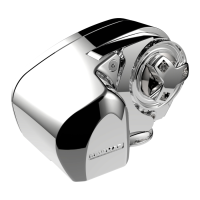
The Lewmar Pro-Series/Fish Windlasses are electromechanical devices used for the deployment and recovery of anchors on boats. They are specifically designed for marine use and are not intended for any other purpose, such as mooring bollards. The windlasses facilitate both manual and powered operation for anchor handling, offering features like controlled freefall and powered retrieval. They are compatible with various rope/chain combinations, including Lewmar's factory-made rope/chain combination rodes.

Important Technical Specifications:

The manual provides detailed specifications for different models, including the Pro-series/Fish 700, Pro-series/Fish 1000, and Pro-Fish Pb.

  • Gypsy Suitability:

    • Dual Gypsy:
      • 12 mm (1/2") 3 Strand and 8 Plait: Compatible with 6mm DIN 766, 7mm DIN 766, 1/4" ISO G4, and 1/4" BBB chains.
      • Dimensions (D, P, W): Ranges from 6mm to 7.14mm (D), 18.5mm to 22.1mm (P), and 20.4mm to 25.2mm (W).
    • RC0860 Gypsy No. 504:
      • 14-16 mm (9/16"-5/8") 3 Strand and 8 Plait (5/8" only): Compatible with 8mm DIN 766, 8mm ISO 4565, and 5/16" BBB chains.
      • Dimensions (D, P, W): Ranges from 8mm to 8.73mm (D), 24mm to 25.4mm (P), and 27.2mm to 30.1mm (W).
    • RC0864 Gypsy No. 516:
      • 14-16 mm (9/16"-5/8") 3 Strand and 8 Plait (5/8" only): Compatible with 8mm DIN 766, 8mm ISO 4565, and 5/16" ISO G4 chains.
      • Dimensions (D, P, W): Ranges from 8mm to 8.36mm (D), 24mm to 26.16mm (P), and 27.2mm to 28.4mm (W).
    • Pb Gypsy:
      • 14-16 mm Lead-core line.
  • Electric Specifications (12VDC):

    • Pro-series/Fish 700:
      • Max Chain: 7mm (1/4")
      • Motor Power: 500 Watt
      • Maximum Pull: 320 kg (700 lb)
      • Maximum Line Speed: 32 m/min (105 ft/min)
      • Working Load Limit: 79 kg (175 lb)
      • Normal Current Draw: 35 Amp
      • Circuit Breaker: 50 Amp
      • Weight: 8.5 kg (19 lb)
    • Pro-series/Fish 1000:
      • Max Chain: 8mm (5/16")
      • Motor Power: 700 Watt
      • Maximum Pull: 454 kg (1000 lb)
      • Maximum Line Speed: 32 m/min (105 ft/min)
      • Working Load Limit: 114 kg (250 lb)
      • Normal Current Draw: 50 Amp
      • Circuit Breaker: 70 Amp
      • Weight: 9.5 kg (21 lb)
  • Cable Sizing for Length of Cable Run (12VDC):

    • Up to 14 m: 10 AWG (6 mm²)
    • 15 - 24 m: 10 AWG (10 mm²)
    • 41 - 66 ft: 8 AWG

Usage Features:

  • Installation: Requires careful planning for deck and below-deck clearance, ensuring sufficient vertical fall (minimum 300mm/12") for the rode. Deck reinforcement may be necessary for thin or laminate constructions. Lewmar recommends a minimum deck thickness of 25mm (1").
  • Above Deck Fitting: Involves drilling holes for mounting studs, motor cables, and the rode, followed by sealing and securing the windlass base.
  • Under Deck Fastening: Trimming studs and tightening nuts, with a note on sealant curing before final tightening.
  • Loading Rope/Chain: Involves feeding the rode into the entry hole, tying it off in the anchor locker, aligning it in the gypsy, and then powering the rest of the rode in.
  • Manual Controlled Freefall (Pro-Fish): Allows for quicker anchor deployment, emergency use, or battery saving. This involves disengaging the capstan drive, releasing anchor locks, inserting a wrench, and rotating anticlockwise to free the gypsy. The clutch can be locked by turning the drive cap clockwise.
  • Manual Controlled Freefall (Pro-Series): Similar to Pro-Fish, involving releasing anchor locks, inserting a wrench, rotating anticlockwise to free the gypsy, and locking the clutch by turning the drive cap clockwise.
  • Manual Anchor Recovery: Requires ensuring the capstan drive cap is tight, releasing anchor locks, inserting a wrench into the driveshaft socket, and turning clockwise to retrieve the anchor.
  • Powered Operation (Pro-Fish):
    • To Release Anchor: Check the unit is not in manual mode, release anchor locks, engage the circuit breaker/isolator, and press the DOWN button for 2 seconds for freefall. Continuous pressing for over 5 seconds will result in a longer clutch re-engagement time.
    • To Retrieve Anchor: Press the UP button continuously.
  • Powered Operation (Pro-Series):
    • To Release Anchor: Check clutch nut is tight, release anchor locks, engage the circuit breaker/isolator, and press the DOWN button.
    • To Retrieve Anchor: Press the UP button continuously.
  • Windlass Operating Procedures: Emphasizes that the windlass is an anchor recovery device and should not be used to pull the boat to the anchor. Best practice involves using a bollard or strong point when at anchor and using vessel engines to break the anchor free. It also advises moving the vessel towards the anchor during recovery to avoid excessive load and damage. Proper stowage of the rode with at least 300mm (12") of free space below the windlass is crucial to prevent jamming and damage.
  • Safety Warnings: Throughout the manual, warnings are provided regarding trapping, crushing, or entanglement dangers, the importance of isolating the windlass with a circuit breaker/isolator, always removing the wrench handle after use, and ensuring adequate security of the rode to an independent strong point. It also stresses that windlasses should not be operated under the influence of alcohol or drugs.

Maintenance Features:

  • Servicing Schedule: The service period depends on the frequency of use.
    • Bedding-in Period: Frequent checks of electrical connections, mounting studs, and overall movement.
    • After Use: Wash down with fresh water, ensure rode is at least 300mm (12") below the windlass, check anchor locker drain, and inspect rode and splice for wear.
    • Annually (or more often for frequent users): Examine all electrical connections for soundness and corrosion, tighten if necessary. Check mounting studs, rode and splice for wear, gypsy for wear (as it's a high-wear item), and the main case for damage, especially around the seal and cover.
  • Gypsy Replacement/Service:
    • Involves removing the shoulder screw, clutch nut, and gypsy cone.
    • Unscrewing bolts and removing the stopper cam (Pro-Fish only) and rope guard.
    • Sliding away the stripper and removing the gypsy and drive pins.
    • Checking parts for wear and replacing as appropriate.
    • Thorough cleaning without solvent or wire brush, drying, and lubricating the Pro-Fish plunger.
    • Reassembly using grease to hold drive pins and a small amount on mating faces. Loctite® is used on screws and the Pro-Fish cap screw, ensuring no residue gets on the thread to prevent freefall function issues.
  • Troubleshooting:
    • Anchor rode pays out independently: Tighten the gypsy drive cap and secure the rode independently.
    • Failure to operate or sluggish operation: Check proper voltage (13.5V for 12V system), cable size, control switches, connections, battery condition, isolator switch, fuse, and motor.
    • Failure to operate (detailed electrical checks): Verify voltage at input terminals to contactor and switches, check circuit breaker/isolator and fuses. Operate the switch and check voltage at positive switch terminal on solenoid. If not, the switch or wiring is defective. Keep the switch activated and check voltage at main output terminal on contactor. If not, check the contactor coil ground circuit or replace the contactor. Check voltage at the motor; if 12.5V is present and the motor doesn't operate, the motor is defective.

Lewmar Fish 700 Specifications

General IconGeneral
BrandLewmar
ModelFish 700
CategoryFishing Equipment
LanguageEnglish

Related product manuals